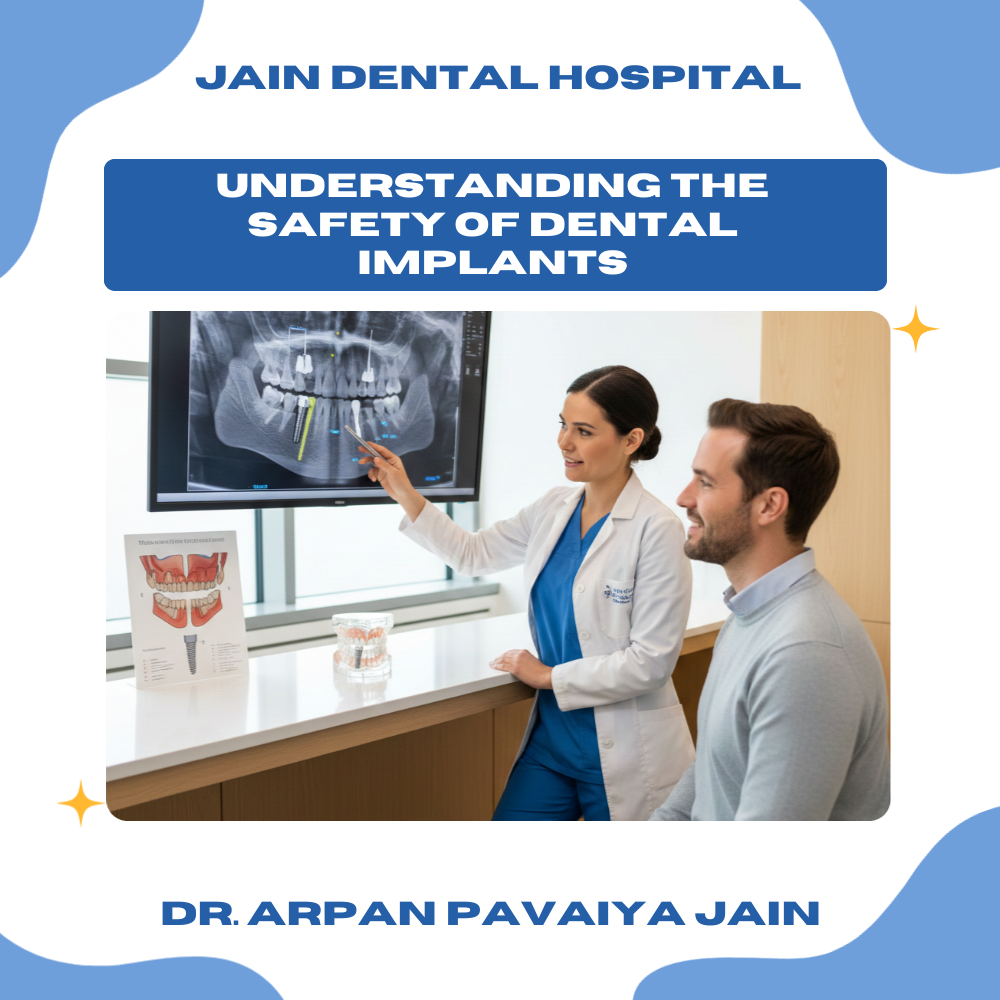
Are Dental Implants Safe Long Term? Science-Based Answers
Understanding the Real Question Behind Dental Implant Safety
Dental implants have become one of the most trusted solutions for replacing missing teeth. Yet, one question continues to surface in almost every consultation:
Are dental implants safe?
This concern is completely valid. Any treatment that involves surgery, materials placed inside the body, and long-term results deserves careful thought. Most patients asking this question are not new to dental implants. They already know what implants are. What they truly want to understand is whether implants are safe for their body, their age, and their long-term health.
This article explains dental implant safety using scientific evidence, clinical data, and real-world dental experience. You will learn about success rates, materials, risks, long-term outcomes, and how dentists evaluate safety before treatment—so you can make a confident, informed decision.
What Are Dental Implants and How Do They Work?
Dental implants are medical-grade tooth replacements designed to function like natural teeth.
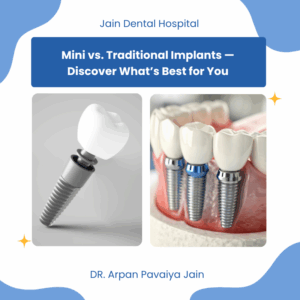
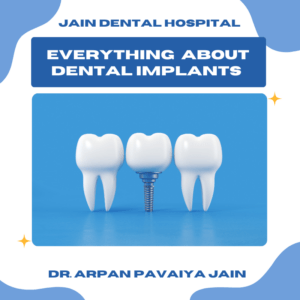
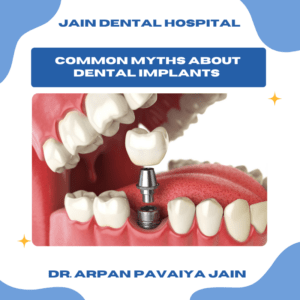
A standard dental implant has three parts:
- Implant post – a titanium screw placed into the jawbone
- Abutment – a connector that sits above the gum
- Crown – the visible tooth replacement
After placement, the implant undergoes osseointegration, a natural process where the bone bonds tightly to the titanium surface. This creates a stable foundation that allows the implant to function like a real tooth root.
Because dental implants integrate with bone, they are considered a biological and structural solution, not just a cosmetic one.
What Does Science Say About Dental Implant Safety?
Clinical Studies and Success Rates
Scientific research consistently shows that dental implants are a safe and predictable treatment.
- The dental implant success rate ranges between 95–98%
- Long-term studies show implants remaining functional 10–20 years or longer
- Most failures occur early and are linked to healing factors, not the implant itself
This high success rate is one of the strongest indicators of dental implants safety when treatment is planned correctly.
FDA Approval and Medical Standards
Dental implants used today meet strict international safety standards.
- Implant systems are FDA-approved
- Materials are tested for biocompatibility
- Global dental organizations recognize implants as a standard of care
The most commonly used material, titanium, has been safely used in medical implants for decades.
Are Titanium Dental Implants Safe Inside the Body?
Yes. Titanium dental implants are considered extremely safe.
Titanium is:
- Biocompatible
- Non-toxic
- Resistant to corrosion
- Accepted by bone tissue
The body does not treat titanium as a foreign threat. Instead, bone cells attach to it naturally. This is why concerns about rejection or metal toxicity are largely myths when proper materials are used.
Are Dental Implants Safe Long Term?
When patients ask if implants are safe, they are often asking about the future.
Long-Term Safety Benefits
Dental implants offer long-term advantages that other options cannot:
- Preserve jawbone by preventing bone loss
- Maintain facial structure and prevent a sunken appearance
- Protect nearby teeth from shifting
- Support natural chewing forces
With proper care, implants often last 15–25 years or more.
Dental Implants vs Dentures and Bridges: Safety Comparison
| Treatment | Safety Level | Bone Preservation | Average Lifespan |
| Dental Implants | High | Yes | 15–25+ years |
| Dental Bridges | Moderate | No | 8–12 years |
| Dentures | Moderate | No | 5–8 years |
From a safety and health perspective, implants are often considered the most stable long-term option.
Common Risks and Complications (Honest and Transparent)
While dental implants are safe, no medical procedure is completely risk-free. Understanding risks helps patients prepare properly.
Surgical Risks (Short-Term)
- Mild swelling or discomfort
- Infection (rare with sterile protocols)
- Nerve irritation (very rare)
- Sinus issues in upper jaw cases
These risks are uncommon and usually manageable when surgery is performed by an experienced dentist.
Long-Term Risks
- Peri-implantitis (gum infection around implants)
- Implant loosening due to poor bone integration
- Implant failure linked to lifestyle or health factors
Most long-term complications are preventable with proper planning and oral hygiene.
Who May Face Higher Risks With Dental Implants?
Certain factors can increase risk, but they do not automatically disqualify patients.
Higher-risk groups include:
- Smokers
- Patients with uncontrolled diabetes
- Severe bone loss cases
- Poor oral hygiene habits
- Certain systemic medical conditions
In many cases, dentists manage these risks through personalized treatment planning.
Are Dental Implants Safe for Seniors?
Age alone does not make implants unsafe.
In fact:
- Dental implants are often safe for seniors
- Bone quality and overall health matter more than age
- Many seniors experience improved nutrition and comfort after implants
A proper medical and dental evaluation determines safety—not birth year.
What Do Dentists Say About Dental Implant Safety?
Experienced dentists agree on one key point:
Implants are safe when planned correctly.
Dentists focus on:
- Detailed medical history review
- Digital imaging (CBCT, OPG scans)
- Bone density evaluation
- Sterile surgical protocols
- Personalized implant selection
Safety depends less on the implant itself and more on diagnosis, planning, and execution.
How to Ensure Dental Implants Are Safe for You?
Pre-Treatment Safety Checklist
Before implant placement, dentists typically evaluate:
- Overall medical health
- Bone volume and density
- Gum health
- Bite alignment
- Lifestyle factors
This assessment reduces risks significantly.
Choosing the Right Dental Clinic
Safety improves when treatment is done at a clinic that offers:
- Experienced implant dentists
- In-house digital imaging
- Certified implant systems
- Strict sterilization standards
Choosing the right provider plays a major role in outcomes.
Myths vs Facts About Dental Implant Safety
Myth: Dental implants cause cancer
Fact: No scientific evidence supports this claim
Myth: The body rejects implants
Fact: Titanium integrates naturally with bone
Myth: Implants are unsafe metals
Fact: Implant materials are medically approved and tested
Understanding facts helps patients move forward with confidence.
Final Verdict: Are Dental Implants Safe?
Yes—dental implants are safe, science-backed, and widely trusted.
Their safety depends on:
- Proper diagnosis
- Experienced dental care
- High-quality materials
- Good after-care
For most patients, implants are not just safe—they are often the healthiest long-term tooth replacement option available today.
Dental implants are one of the most researched and reliable treatments in modern dentistry. When safety is your concern, science and clinical experience both point to the same conclusion—implants are a proven, patient-friendly solution.
Frequently Asked Questions (FAQ)
Are dental implants safe for everyone?
Dental implants are safe for most people, but eligibility depends on health, bone quality, and habits.
Are dental implants dangerous?
When placed correctly, implants are not dangerous. Complications are rare and manageable.
Are dental implants safe long term?
Yes. With good care, implants can last decades without issues.
What causes dental implant failure?
Poor healing, smoking, infection, or lack of oral hygiene are common causes.
Are dental implants safe for seniors?
Yes. Many seniors safely receive implants after proper evaluation.
Do dental implants have side effects?
Short-term discomfort is normal. Long-term side effects are rare.
Schedule Your Consultation Today
Get Clear Answers About Dental Implant Safety—Personalized for You
Now that you understand what science and experienced dentists say about dental implant safety—along with the factors that influence success, risks, and long-term outcomes—the next step is to understand what this means for you personally.
Dental implant safety is not one-size-fits-all. It depends on your oral health, bone quality, medical history, and lifestyle factors. A proper clinical evaluation helps replace uncertainty with clarity and confidence.
At Jain Dental Hospital, we take a patient-first, evidence-based approach to dental implant care. Our team uses advanced diagnostics, careful treatment planning, and clear communication to help you understand whether dental implants are a safe and suitable option for your long-term oral health.
Whether you are:
- Concerned about risks or complications
- Exploring implants for the first time
- Comparing implants with dentures or bridges
- Seeking clarity due to age or medical conditions
—we are here to guide you with honesty, clinical precision, and reassurance.
Led by Dr. Arpan Pavaiya Jain and Dr. Rashi Agarwal Jain, our focus remains on transparent guidance, modern technology, and personalized care—so you can make informed decisions without pressure or confusion.
Confidence begins with clarity. Let’s evaluate your implant safety—together.
📞 Call: +91-9582535204
🌐 Visit: www.jaindentistdelhi.com
Book your dental implant consultation today and take a confident, well-informed step toward restoring your smile safely.

Dr. Arpan Pavaiya Jain, Director of Jain Dental Hospital, Indirapuram, Ghaziabad is a renowned Prosthodontist and Implantologist with over 20 years of expertise in advanced dentistry. A graduate of the prestigious King George’s Medical College Lucknow, he has performed more than 20,000 successful dental implant procedures. Dr. Jain leads a team of skilled professionals, offering state-of-the-art treatments in dental implants, clear aligners, cosmetic dentistry, orthodontics, and more. Known for his personalized care and commitment to excellence, he has earned a reputation as a trusted dental expert in Indirapuram, Ghaziabad.