Clear Aligners vs Retainers: Key Differences, Uses & Which One You Need
Many patients feel confused when looking at clear dental trays. They see transparent plastic and wonder if it fixes crooked teeth or just holds them in place.
This confusion can lead to frustrating mistakes. If you wear the wrong device, you might fail to fix your smile. Worse, if you skip your post-treatment care, your teeth will shift back. You could waste months of hard work and thousands of rupees.
You need clear facts to make the right choice for your dental health. This guide provides a complete comparison of clear aligners vs retainers. We will explain how each device works, what they cost in Delhi NCR, and which one fits your exact needs.
What Are Clear Aligners?
Clear aligners are modern orthodontic devices designed to straighten your teeth without metal wires. They use advanced dental technology to gently push your teeth into a better position over time.
These trays look completely transparent, making them a highly popular choice for adults and teens. Here is a detailed look at what makes them unique and effective.
- Definition: These are transparent orthodontic trays made from smooth, biocompatible thermoplastic. You wear them over your teeth like a tight, invisible glove. They offer a highly discreet way to improve your smile.
- Purpose: Their main job is to move your teeth gradually. Each tray applies controlled force to specific teeth, guiding them into proper alignment. They actively change the shape of your bite.
- Popular systems: Invisalign is the most famous brand of clear aligners on the market. However, many other reliable brands offer invisible braces in India. Your dentist will help you choose the best system for your clinical needs.
- Treatment duration: A typical treatment plan lasts anywhere from six months to two years. The exact timeline depends entirely on how much your teeth need to move. Complex cases will naturally take a bit longer.
- Ideal candidates: These devices work best for older teens and adults who commit to wearing them daily. They easily fix mild to moderate spacing, crowding, and bite alignment issues.
What Are Retainers?
Retainers are custom-made dental appliances used after you finish your main orthodontic treatment. Their primary job is to protect your new smile by keeping your teeth locked in their final positions.
Without these devices, your teeth have a natural tendency to shift back to their original, crooked spots. Let us explore the key details about these essential post-braces care tools.
- Definition: A retainer is a passive device meant to maintain your teeth position. It does not push or pull your teeth into new places. It simply acts as a secure anchor for your newly straightened smile.
- Fixed retainers: This type involves a very thin metal wire permanently glued to the back of your front teeth. It offers round-the-clock protection against teeth shifting. You do not have to remember to put it in.
- Removable retainers: These come in two popular styles. Hawley retainers use a mix of acrylic and metal wire to hold your teeth. Clear Essix retainers (vacuum-formed retainers) look just like clear aligners but use a thicker, tougher plastic.
- When they are used: You start wearing them the exact day your braces come off or your aligner treatment ends. They are a mandatory step in preserving your orthodontic results for life.
Clear Aligners vs Retainers: Quick Comparison Table
Understanding the difference between these two tools is much easier when you view them side by side. They share a similar look but serve completely opposite roles in your dental care.
This simple chart highlights the functional differences. Use it as a quick reference guide to understand your treatment phases.
| Feature | Clear Aligners | Retainers |
| Purpose | Straighten teeth | Maintain position |
| Usage Stage | During treatment | After treatment |
| Movement | Active tooth movement | No movement |
| Customization | Series of trays | Usually one set |
| Replacement | Multiple sets | Occasional |
How Clear Aligners Work
The process of moving teeth with invisible braces relies on precise, calculated steps. Your dentist plans every single shift using advanced 3D computer imaging.
This structured approach ensures your teeth move safely and predictably. Here are the specific steps involved in this active treatment.
- Digital scan & treatment planning: Your dentist begins by taking a painless 3D digital scan of your mouth. They use this scan to map out the exact movement of every tooth from start to finish.
- Series of aligners: You will receive a complete batch of custom-made trays. You must change to a new set of trays every one to two weeks, depending on your doctor’s advice.
- Gradual pressure mechanics: Each new tray is shaped slightly differently than your current teeth. This slight difference applies steady, gentle pressure to slowly push your teeth to the next target position.
- Compliance importance: You must wear the trays for 20 to 22 hours every single day. If you leave them out for too long, your teeth will not move as planned. Strict discipline is required for success.
How Retainers Work
Once your active treatment ends, your gums and jawbone need time to solidify around your teeth. Retainers provide the necessary support during this critical healing phase.
They act as a gentle anchor, protecting the investment you made in your smile. Here is exactly how they maintain your results.
- Prevent relapse: Teeth naturally want to move back to their original spaces. This is known as orthodontic relapse. A snug-fitting retainer stops this natural shifting process completely.
- Stabilization of bone & ligaments: Moving teeth softens the bone and stretches the ligaments in your jaw. The retainer holds the teeth perfectly still so the bone can harden and stabilize around the new roots.
- Wearing schedule: At first, you will likely wear your removable retainer full-time for several months. Eventually, your dentist will clear you to wear it only at night while you sleep.
Key Differences Explained
Understanding the Invisalign vs retainers comparison requires looking closely at their daily use. While they might look identical in your hand, their clinical roles are entirely opposite.
We have broken down the main distinctions to help you understand your treatment plan better.
- Purpose & Function: Aligners actively solve dental problems by moving teeth. Retainers passively protect the solution by holding teeth perfectly still. One creates the smile, and the other saves it.
- Duration of Use: You only use aligners for a temporary period of months or a few years. You will need to use a retainer for the rest of your life to keep your teeth straight.
- Comfort & Appearance: Both clear options are highly discreet and comfortable. However, retainers are often made of thicker material to withstand years of use, while aligners are slightly thinner and more flexible.
- Cost Comparison: Aligners require intensive planning and multiple trays, making them a premium investment. Retainers are much simpler to produce and are therefore significantly more affordable.
- Maintenance & Hygiene: You replace aligners every two weeks, so deep cleaning is rarely an issue. You keep a retainer for years, meaning you must brush it daily to prevent plaque buildup and bad odors.
Can Retainers Replace Clear Aligners?
Patients often ask if they can just use a cheap retainer to fix a crooked tooth. The short answer is absolutely not.
These two devices apply entirely different types of force to your teeth. Here is why you cannot swap one for the other.
- No active movement: A retainer is molded perfectly to the current shape of your teeth. It lacks the special engineering required to push a tooth into a new location. It will only freeze a crooked tooth exactly where it already is.
- Misconception clarification: Some people think a tight retainer will eventually fix a gap. This is a myth. Trying to force a retainer to move teeth can actually damage your roots and cause severe dental pain. Always use the correct tool for the job.
Do You Need Both Aligners and Retainers?
Most patients will need both of these devices at entirely different stages of their smile journey. They work together as a team to give you a straight, lasting smile.
You cannot achieve permanent results by skipping either phase. Here is how they support each other over time.
- Correction phase: First, you use the aligners. This is the active phase where your dentist focuses on fixing crowding, gaps, and bite issues. This phase ends when your teeth look perfect.
- Preservation phase: Second, you transition to the retainer. This is the passive phase. The hard work is over, and your only job is to protect the final result.
- Lifecycle explanation: Think of aligners as the construction crew building a house. Think of the retainer as the maintenance team keeping the house safe from weather and age. You need both for a successful outcome.
Pros and Cons
Every dental device comes with its own set of advantages and challenges. Knowing these details helps you prepare for your daily oral hygiene routine.
Here is a transparent look at the positive and negative aspects of both options to help you plan ahead.
Clear Aligners
- Pros:
-
- Nearly invisible: They blend right in with your natural teeth.
-
- Removable: You can take them out to enjoy your favorite meals safely.
-
- Comfortable: They lack the sharp metal edges found on traditional braces.
- Cons:
-
- Discipline required: You must remember to wear them 22 hours a day.
-
- Costly: They represent a significant financial investment in your health.
Retainers
- Pros:
-
- Prevent relapse: They are essential for ensuring your teeth stay beautifully straight forever.
-
- Lower cost: They are very budget-friendly compared to active treatments.
- Cons:
-
- Long-term commitment: You must commit to wearing them nightly for life.
- Can be lost/damaged: Removable versions can easily be misplaced or accidentally thrown away in a napkin.
Cost of Clear Aligners vs Retainers in Delhi/NCR
Financial planning is a crucial part of any dental treatment. The pricing for these devices varies significantly because they serve very different clinical purposes.
If you are looking for smile correction in the Delhi NCR region, here is a clear breakdown of what you can expect to pay.
- Aligners cost: The clear aligners cost in Delhi NCR generally ranges from ₹80,000 to ₹3,00,000+. This covers your 3D scans, doctor visits, and the entire series of custom trays.
- Retainers cost: A quality set of retainers in this region costs between ₹3,000 and ₹15,000. This is a much smaller fee because it usually involves just one or two appliances.
- Factors affecting cost:
-
- Clinic location: Premium clinics in central Delhi/Ncr may charge slightly more for their expertise.
-
- Complexity: Very crooked teeth require more aligner trays, which drives up the total price.
- Brand used: Imported brands like Invisalign cost more than locally manufactured clear aligner systems.
Which One Is Right for You?
Your current dental situation dictates exactly which appliance you need right now. A proper clinical evaluation is the only way to get a definitive answer.
However, you can use these general guidelines to understand your likely next steps in dental care.
- Crooked teeth: If you are unhappy with the current spacing or alignment of your teeth, you need clear aligners. They will provide the active movement required to fix the problem.
- Finished treatment: If you just got your braces off or finished your aligner trays, you need a retainer immediately. This will ensure your newly straightened teeth never shift back.
- Consult a dentist: The best way to know for sure is to speak with an expert. A quick consultation will give you a clear, personalized roadmap for your smile.
Frequently Asked Questions (FAQ)
We receive many questions about post-braces care and invisible braces. Finding accurate information helps you feel confident about your dental health decisions.
Here are simple, evidence-based answers to the most common patient questions regarding clear aligners vs retainers.
Are retainers the same as aligners?
No. Aligners are designed to move your teeth into new positions. Retainers are designed to hold your teeth exactly where they already are.
Can aligners be used as retainers?
No. Aligners are made from a thinner plastic meant for short-term use. They will wear out quickly and fail to hold your teeth securely over a long period.
How long do I need to wear retainers?
To prevent your teeth from shifting, you will need to wear a retainer for life. Most patients wear them full-time for a few months, and then switch to night-time wear only.
What happens if I stop wearing retainers?
If you stop wearing them, your teeth will slowly shift back to their original, misaligned positions. You could lose all the progress you gained during your orthodontic treatment.
Are clear aligners painful?
They are not painful, but you will feel a mild, tight pressure for the first day or two when switching to a new tray. This gentle pressure simply means the trays are actively working to straighten your teeth.
Conclusion: Clear Aligners vs Retainers: Which One Is Right for You?
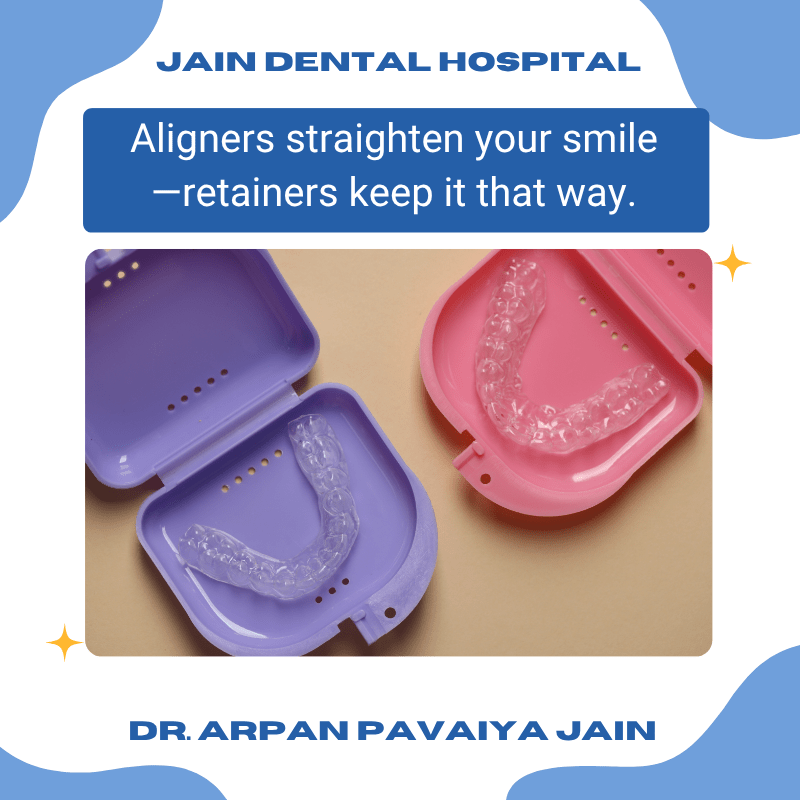
Clear aligners actively straighten your teeth, while retainers lock that beautiful new smile in place. Both are absolutely essential tools for achieving and maintaining long-term oral health.
Do not leave your smile to chance. Getting a professional, evidence-based opinion is the safest way to protect your dental health.
Schedule Your Consultation Today
Choose the Right Solution for Your Smile — With Expert Guidance
Now that you understand the difference between clear aligners and retainers — from how they work to when each is needed — the next step is choosing the right option based on your dental condition and long-term goals.
Many patients are unsure whether they need active teeth straightening with aligners or simply retention to maintain their results. Making the wrong choice can delay your progress or lead to unwanted teeth shifting over time.
At Jain Dental Hospital, our experienced dentists Dr. Arpan Pavaiya Jain and Dr. Rashi Agarwal Jain provide personalized orthodontic consultations to help you make the right decision. We evaluate your teeth alignment, treatment history, and future goals to recommend whether you need clear aligners, retainers, or a combination of both.
Whether you’re planning to start your smile correction journey or want to maintain your results after treatment, getting the right guidance can make all the difference.
If you’re confused between aligners and retainers — or want a customized treatment plan — a quick consultation can give you complete clarity.
📞 Call: +91-9582535204
🌐 Visit: www.jaindentistdelhi.com
Medical Advice Disclaimer:
The information provided in this article is for general educational and informational purposes only and is not intended as professional medical or dental advice, diagnosis, or treatment. While we strive for accuracy, every patient’s dental anatomy and clinical needs are unique. Always seek the advice of your dentist or another qualified healthcare provider with any questions you may have regarding a medical condition. Never disregard professional medical advice or delay seeking it because of something you have read on this website

Dr. Arpan Pavaiya Jain, Director of Jain Dental Hospital, Indirapuram, Ghaziabad is a renowned Prosthodontist and Implantologist with over 20 years of expertise in advanced dentistry. A graduate of the prestigious King George’s Medical College Lucknow, he has performed more than 20,000 successful dental implant procedures. Dr. Jain leads a team of skilled professionals, offering state-of-the-art treatments in dental implants, clear aligners, cosmetic dentistry, orthodontics, and more. Known for his personalized care and commitment to excellence, he has earned a reputation as a trusted dental expert in Indirapuram, Ghaziabad.