What Are Dental Retainers? A Beginner’s Guide to Keeping Your Smile Straight
Congratulations on reaching the finish line of your orthodontic journey! Whether you have just had your braces removed or finished your last tray of clear aligners, revealing your new smile is a momentous occasion. However, many patients are surprised to learn that the removal of braces isn’t the end of the road—it is simply the beginning of the next crucial phase: retention.
This phase is defined by one small but mighty device: the dental retainer. Without it, the months or years you spent straightening your teeth could be undone surprisingly quickly. This phenomenon, known as orthodontic relapse, occurs when teeth gradually drift back to their original, misaligned positions. A retainer is the only line of defense to ensure your investment pays off for a lifetime.
If you are new to the world of orthodontics or are simply looking for clarity on how to maintain your results, you are in the right place. In this comprehensive guide, we will explore exactly what retainers are, why they are non-negotiable, the different types available, and how to care for them so your smile stays perfect forever.
What Is a Dental Retainer?
A dental retainer is a custom-made orthodontic appliance designed to hold teeth in their new positions after active treatment has been completed. They are fabricated based on precise molds or digital scans of your mouth, ensuring a snug and unique fit that prevents movement.
While braces and clear aligners are “active” appliances used to move teeth, retainers are “passive” appliances used to hold them still. They are typically made from plastic, metal wires, or a combination of both. Retainers are prescribed for almost every orthodontic patient—whether you had severe bite issues corrected with traditional metal braces or minor crowding fixed with clear aligners.
The primary goal of a retainer is to stabilize the teeth and the surrounding bone. After your teeth have been moved, the bone and tissues around the roots need time to rebuild and solidify. The retainer acts as a support system during this critical healing period, ensuring that the new alignment becomes permanent.
Why Are Retainers Necessary After Braces?
You might be wondering, “My teeth are straight now, so why do they want to move back?” The answer lies in the biology of tooth movement. When braces or aligners move your teeth, they stretch the periodontal ligaments—the elastic fibers that attach your teeth to the jawbone. Once the active pressure of braces is removed, these ligaments act like rubber bands, naturally wanting to pull the teeth back to their original, comfortable spots.
What Happens If You Don’t Wear a Retainer?
If you neglect to wear your retainer, the consequences can range from minor shifting to full orthodontic relapse.
- Teeth Relapse: The most immediate effect is that your teeth will begin to drift. This might manifest as a single crooked tooth or a general crowding of the front teeth.
- Bone Remodeling Issues: Orthodontics involves breaking down and rebuilding bone. Without a retainer to hold the teeth in place while the bone hardens, the teeth are unstable and highly susceptible to movement.
- Bite Changes: Shifting teeth can alter your bite (how your top and bottom teeth meet), potentially leading to jaw pain or uneven wear on your enamel.
- Reappearing Gaps: If you had treatment to close gaps (diastema), these spaces are often the first to reopen without retention.
How Fast Do Teeth Shift Without a Retainer?
The speed at which teeth shift varies from person to person, but the first year after treatment is the most critical.
- The First Few Months: This is the danger zone. Your teeth can begin to shift within days or even hours of removing your braces if a retainer isn’t worn. Significant movement can be visible within a few weeks.
- Lifelong Natural Movement: Even years later, a phenomenon called “physiologic mesial drift” causes teeth to naturally move toward the front and center of the mouth as we age. This means that without lifelong retention, some degree of shifting is almost inevitable for everyone, regardless of whether they had braces.
How Do Dental Retainers Work?
To understand how retainers work, it helps to look at the anatomy of the mouth. Teeth are not set in stone; they are set in living bone and held by flexible ligaments. Retainers work by acting as a rigid splint against these dynamic forces.
The Science Behind Teeth Stabilization
When you wear a retainer, you are essentially holding the teeth in a state of equilibrium.
- Bone Remodeling: After active treatment, the bone surrounding the roots of your teeth is softer (osteoid bone). It takes approximately 9 to 12 months for this bone to fully mineralize and harden. The retainer holds the tooth still so this calcification can happen around the tooth’s new position.
- Periodontal Ligament Adjustment: The fibers that connect the tooth to the bone need time to reorganize. Retainers prevent the elastic “rebound” effect of these fibers.
- Tissue Memory: Your gums and lips also exert pressure on your teeth. Retainers counteract the “muscle memory” of these soft tissues that might otherwise push teeth back into misalignment.
Why Retention Is a Lifelong Phase
Many orthodontists now operate under the philosophy of “retention for life.” While the bone does harden after the first year, other factors necessitate long-term wear.
- Aging Changes: As we age, our lips get tighter, which exerts more pressure on the teeth, and our bone density changes.
- Chewing Pressure: The daily forces of chewing and grinding apply stress to the teeth, encouraging movement over decades.
- Tongue Pressure: Tongue thrusting or simply the resting position of the tongue can push teeth forward over time. A retainer acts as a barrier against these constant, low-level forces.
Types of Dental Retainers (With Comparison Table)
Clear aligners have revolutionized orthodontics, using removable plastic trays to shift teeth.
- MRI Impact: These are the easiest to manage. Because they are made of medical-grade plastic, they are completely invisible to the MRI machine.
- Safety: You will simply be asked to remove your aligners before the scan, just as you would remove a retainer. There is zero risk of interference.
Which Type of Braces are Most MRI-Friendly?
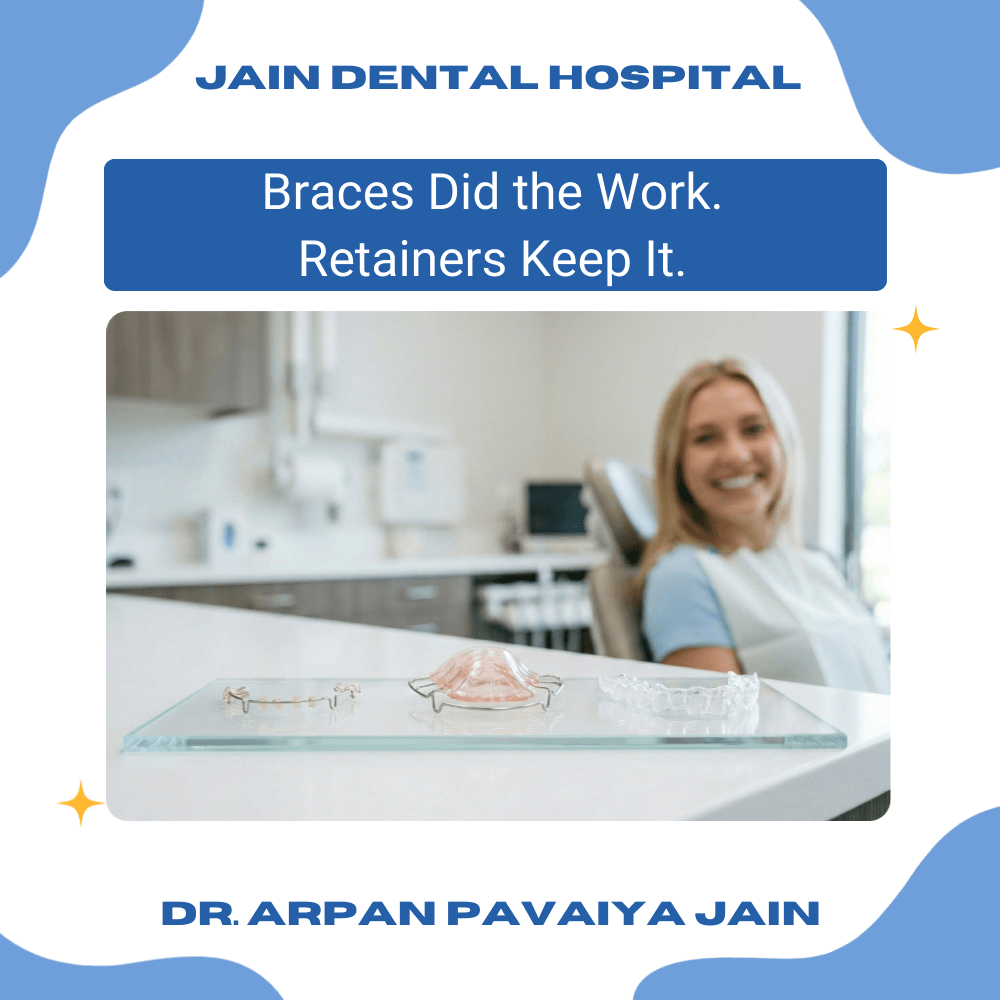
There isn’t a “one size fits all” retainer. Your orthodontist will recommend a type based on your specific treatment needs, lifestyle, and compliance history. There are three main categories of retainers.
1. Fixed (Permanent) Retainers
A fixed retainer, often called a bonded or permanent retainer, consists of a solid or braided metal wire glued to the back (tongue-side) of your teeth.
- Placement: It is most commonly bonded behind the lower front six teeth (from canine to canine), though it can sometimes be used on the upper teeth.
- Pros: The biggest advantage is compliance; you cannot forget to wear it because it is glued in. It is invisible to others and provides 24/7 support.
- Cons: Flossing requires a threader and takes more effort. Hard foods can break the bond or bend the wire. It also gathers plaque easily (calculus buildup).
- Ideal Candidate: Someone who had significant crowding or gaps in the lower front teeth, or someone who admits they will likely forget to wear a removable device.
2. Hawley Retainers (Wire + Acrylic)
The Hawley retainer is the most recognizable, traditional type of retainer. It features a hard acrylic plate that sits against the roof of your mouth (or floor of the mouth for the lower arch) connected to a metal wire that wraps around the front teeth.
- Adjustability: This is the only retainer that can be adjusted. If a tooth moves slightly, an orthodontist can tighten the wire to nudge it back.
- Durability: They are incredibly robust and can last for many years.
- Pros: Durable, adjustable, and allows the top and bottom teeth to touch naturally in the back (settling the bite).
- Cons: The metal wire is visible across the front of the smile. It can cause a lisp for the first few days of wear.
3. Clear (Essix) Retainers
Clear retainers, often referred to by brand names like Essix or Vivera, look very similar to Invisalign trays. They are molded from transparent plastic and fit snugly over the entire arch of teeth.
- Aesthetics: They are virtually invisible, making them a popular choice for adults and teens who want to maintain their smile discreetly.
- Function: They hold the teeth firmly in place but cannot be adjusted. If they crack or don’t fit, they must be replaced.
- Pros: Highly aesthetic, comfortable, and less bulky than Hawley retainers.
- Cons: They have a shorter lifespan than Hawley retainers (usually needing replacement every few years) and can warp if exposed to hot water. They also prevent the top and bottom teeth from touching naturally.
Comparison Table
| Feature | Fixed Retainer | Hawley Retainer | Clear (Essix) Retainer |
| Removable | No | Yes | Yes |
| Visibility | Invisible (behind teeth) | Visible wire across front | Nearly invisible |
| Durability | Long-term (unless wire breaks) | High (5–10+ years) | Moderate (6–24 months) |
| Cleaning Difficulty | Harder (requires floss threaders) | Moderate (brush daily) | Easy (brush/soak) |
| Best For | High relapse risk / Lower teeth | Adjustability / Durability | Aesthetics / Convenience |
How Long Do You Need to Wear a Retainer?
The timeline for wearing a retainer varies, but the general rule of thumb is “wear your retainer for as long as you want straight teeth.”
First 6–12 Months
Immediately after your braces come off, your teeth are at their most unstable. During this critical stabilization period, most orthodontists recommend full-time wear.
- This typically means wearing the retainer for 20 to 22 hours a day.
- You should only take it out to eat, brush, and floss.
- This phase allows the bone to remodel and harden around the roots.
Long-Term Maintenance
Once your orthodontist gives the green light (usually after the first year), you can switch to night-time wear.
- Wearing your retainer while you sleep (every night) is usually sufficient to maintain alignment.
- After several years, some patients may be able to drop down to wearing it a few nights a week, but sticking to a nightly routine reduces the risk of forgetting it entirely.
- Orthodontists emphasize that retention is a lifetime commitment to combat natural physiological drift.
How to Clean and Care for Your Retainer?
Bacteria, plaque, and tartar build up on retainers just as they do on teeth. If not cleaned properly, a retainer can become a breeding ground for germs, leading to bad breath and even cavities.
Cleaning Removable Retainers
For both Hawley and Clear retainers, consistency is key.
- Daily Brushing: Brush your retainer every time you brush your teeth. Use a soft-bristled toothbrush and cool or lukewarm water.
- Soap vs. Toothpaste: Mild, antibacterial liquid hand soap or dish soap is often better than toothpaste. Toothpaste can be abrasive and create micro-scratches in clear plastic retainers, which clouds them and traps bacteria.
- Soaking: Use retainer cleaning tablets (like Retainer Brite or denture cleaners) once a week to kill bacteria and remove stubborn buildup.
- Temperature Check: Never use hot or boiling water. Heat will warp the plastic, ruining the custom fit.
Cleaning Fixed Retainers
Fixed retainers require a bit more dexterity to keep clean since you cannot remove them.
- Floss Threaders: Use a floss threader or “superfloss” (floss with a stiff end) to get the floss under the wire and between the teeth.
- Water Flosser: A water flosser is an excellent tool for blasting debris out from around the bonded wire and the gumline.
- Professional Cleanings: Ensure you see your dentist regularly. They can scale away hardened tartar that accumulates around the wire that you might miss at home.
What NOT to Do
To extend the life of your appliance, avoid these common mistakes:
- Don’t Eat With It: Chewing food with a removable retainer in can crack the plastic or bend the wires. It also traps food and sugar against your teeth.
- Don’t Wrap It in a Napkin: This is the #1 way retainers get lost. If you take it out at a restaurant and wrap it in a tissue, it will almost certainly get thrown in the trash. Always put it in its case.
- Avoid Heat: Do not leave your retainer in a hot car, near a heater, or in the dishwasher.
Do Retainers Hurt?
Generally, retainers should not be painful. However, you may experience some minor sensations during the adjustment period.
- Mild Tightness: When you first receive your retainer, or if you haven’t worn it for a few days, it may feel tight. This is normal and means the retainer is doing its job of holding or slightly guiding teeth back.
- Soft Tissue Tenderness: Hawley retainers can sometimes rub against the roof of the mouth or gums. If a sharp edge is digging in, do not try to fix it yourself.
- When to Call: If you experience sharp pain, bleeding gums, or severe pressure that doesn’t subside after a few minutes, contact your orthodontist. A retainer should never cause significant pain.
How Much Do Dental Retainers Cost?
The cost of retainers varies by location, the complexity of the case, and the material used. Often, the first set of retainers is included in the total cost of your orthodontic treatment, but replacements will cost extra.
(Note: These are estimated ranges and vary by dental provider).
- Fixed Retainer Cost: Typically ranges from $250 to $500 per arch (top or bottom).
- Hawley Retainer Cost: Usually falls between $150 and $350 per arch.
- Clear (Essix) Retainer Cost: Generally ranges from $150 to $300 per arch, though some subscription services or bulk packages may offer them at different rates.
Replacement Costs: Since clear retainers wear out faster, many offices offer “lifetime” or bulk replacement programs that can lower the long-term cost. Always ask your provider about replacement fees upfront.
Can a Retainer Move Teeth Back into Place?
This is a common question for those who stopped wearing their retainer for a while. The answer is: it depends on how much they have moved.
- Minor Shifting: If your teeth have only shifted slightly (e.g., you missed a week or two), wearing your retainer might feel tight and may be able to nudge the teeth back into position. In this case, wear it full-time for a few days until it fits comfortably again.
- Significant Shifting: If your retainer does not fit or you have to force it, do not force it. Forcing a retainer onto shifted teeth can damage the retainer or even harm your teeth and gums.
- Not a Substitute for Braces: Retainers are designed to hold teeth, not move them. If your teeth have relapsed significantly, you may need a short course of braces or aligners to correct them before getting a new retainer.
Common Problems with Retainers
Being aware of potential issues can help you troubleshoot before they become expensive problems.
- Smell: If your retainer smells bad, it has a buildup of plaque bacteria. Deep clean it immediately using a soak solution.
- Breakage: Clear retainers can crack, and Hawley wires can snap. A broken retainer cannot hold your teeth properly.
- Tight Fit: If the retainer feels tight every night, it means your teeth are trying to move aggressively during the day. You may need to increase your wear time (e.g., wear it for a few hours in the evening + while sleeping).
- Speech Changes: A temporary lisp is common with Hawley retainers. The best way to fix it is to talk more. Read aloud or sing to help your tongue adapt to the appliance.
- Loss: Losing a retainer is common. Always keep your case with you and establish a designated spot for your retainer at home.
When Should You See Your Orthodontist?
You don’t need to see your orthodontist as often during the retention phase, but you shouldn’t disappear completely.
- Loose Fixed Retainer: If the bond on your fixed retainer breaks, the wire can poke your tongue, or worse, the tooth detached from the wire can start to shift while the others stay still. Call your ortho immediately.
- Cracked Plastic: A crack reduces the structural integrity of the retainer. It needs to be replaced.
- Teeth Shifting: If you notice your teeth moving despite wearing your retainer, your retainer may have stretched out or warped.
- Persistent Discomfort: Any rubbing, bleeding, or pain should be addressed professionally.
Frequently Asked Questions (FAQ)
Do you have to wear retainers forever?
Yes. As orthodontists say, “retention is forever.” While you may eventually reduce wear to a few nights a week, stopping completely will almost certainly lead to some degree of shifting due to natural aging processes.
Can you eat with a retainer?
No. You should always remove removable retainers before eating. Chewing can break the appliance, and food gets trapped, leading to decay. You should also avoid drinking hot or sugary beverages with them in.
Can retainers straighten teeth?
Generally, no. Retainers maintain alignment; they do not create it. However, “spring aligners” (a specific type of retainer) can sometimes correct very minor relapse, but this is limited.
How long can you go without wearing one?
In the first year, even a few days can cause shifting. After your teeth have stabilized (years later), you might go a week without noticeable movement, but it is risky. If it feels tight when you put it back in, you went too long.
Why does my retainer smell?
It smells because of bacteria accumulation. Saliva contains minerals that can harden into tartar on the retainer. Regular brushing and weekly soaking are required to keep it fresh.
Conclusion: Retainers Protect Your Orthodontic Investment
Your smile is an investment of time, money, and effort. The dental retainer is the insurance policy that protects that investment. While it may feel like a chore to wear a piece of plastic or wire every night, it is a small price to pay for a lifetime of straight, healthy teeth.
By understanding the importance of retention, choosing the right type for your lifestyle, and committing to proper care, you can ensure that the day you got your braces off remains a permanent victory. If you have any doubts about your retainer fit or notice your teeth shifting, contact your orthodontist immediately. Staying proactive is the best way to keep your smile looking its best for years to come.
Schedule Your Consultation Today
Protect Your Smile After Braces — With the Right Retainer Guidance
If you’ve recently completed your braces or clear aligner treatment, this is the most important phase for protecting your results. Even minor lapses in retainer wear can lead to unwanted shifting — sometimes faster than expected. Clear instructions, the right type of retainer, and proper follow-up care make all the difference in maintaining long-term alignment.
At Jain Dental Hospital, Dr. Arpan Pavaiya Jain and Dr. Rashi Agarwal Jain follow a scientifically structured retention protocol tailored to each patient’s orthodontic history. From selecting the ideal fixed or removable retainer to monitoring stability and preventing relapse, we ensure your investment in orthodontic treatment delivers lifelong results.
If you need a new retainer, are unsure about wear duration, or have noticed slight shifting — we encourage you to schedule a consultation before minor changes become major corrections.
📞 Call: +91-9582535204
🌐 Visit: www.jaindentistdelhi.com

Dr. Arpan Pavaiya Jain, Director of Jain Dental Hospital, Indirapuram, Ghaziabad is a renowned Prosthodontist and Implantologist with over 20 years of expertise in advanced dentistry. A graduate of the prestigious King George’s Medical College Lucknow, he has performed more than 20,000 successful dental implant procedures. Dr. Jain leads a team of skilled professionals, offering state-of-the-art treatments in dental implants, clear aligners, cosmetic dentistry, orthodontics, and more. Known for his personalized care and commitment to excellence, he has earned a reputation as a trusted dental expert in Indirapuram, Ghaziabad.