Is MRI Safe With Dental Implants? A Complete Medical & Dental Perspective
Many patients feel anxious when they hear they need an MRI scan. The concern often grows if they already have dental implants. A common question quickly follows: Is MRI safe with dental implants?
This fear is understandable. MRI machines use powerful magnetic fields. People naturally wonder if metal inside the body could move, heat up, or cause damage.
The good news is reassuring. In most cases, MRI and dental implants safety is well established in modern medicine. Today’s implants are carefully designed with medical compatibility in mind. However, understanding why they are safe helps remove confusion and online myths.
This article provides a complete medical and dental perspective. We will explain how MRI works, what dental implants are made of, whether implants can move or heat up, and when precautions are necessary. By the end, you will have clear, evidence-based answers — without alarm or uncertainty.
What is an MRI Scan and How Does It Work?
An MRI (Magnetic Resonance Imaging) scan is a medical test that uses strong magnets and radio waves to create detailed pictures of the inside of the body. Unlike X-rays or CT scans, MRI does not use radiation. Instead, it relies on a powerful magnetic field that temporarily aligns tiny particles called hydrogen atoms inside your body. A computer then converts those signals into clear images.
The reason people worry about dental implants during MRI is simple: magnets attract certain metals. However, not all metals behave the same way. Materials like iron, nickel, and cobalt are ferromagnetic, meaning they are strongly pulled by magnets. In contrast, materials like titanium and zirconia are non-ferromagnetic or paramagnetic. This means they do not get pulled or moved by the MRI magnet. That difference is the key to understanding MRI and dental implants safety.
Let’s briefly look at the primary materials used in modern dental implants and how they respond to magnetic fields.
Primary Materials Used in Modern Dental Implants
1) Titanium
Titanium is the most common material used in dental implants. It is classified as paramagnetic, meaning it has a very weak response to magnetic fields and is not attracted to them. In practical terms, this means titanium implants do not move, shift, or become dislodged inside the mouth during an MRI scan. This property makes titanium dental implants MRI safety well supported by decades of clinical use.
2) Titanium Alloys
Many implants use titanium combined with small amounts of other elements to increase strength. These alloys remain non-ferromagnetic, so they behave the same way as pure titanium in an MRI environment. They are stable within the jawbone due to a biological process called osseointegration, where bone fuses tightly around the implant. Because of this strong bond and their weak magnetic interaction, MRI does not cause movement or structural damage.
3) Zirconia (Ceramic Implants)
Zirconia is a high-strength ceramic material and contains no metal at all. It is completely non-magnetic and does not react to magnetic fields. Since it lacks metallic properties, it cannot be attracted, heated, or shifted by MRI magnets. This makes zirconia implants highly compatible with MRI scanning and often preferred by patients who want a metal-free option.
In summary, modern dental implants are designed using materials that do not behave like traditional magnetic metals. The MRI machine’s magnetic field simply does not have enough effect on titanium or zirconia to create movement or danger.
What Are Dental Implants Made Of?
Before answering in detail whether is MRI safe with dental implants, it is important to understand what a dental implant actually is. Many people imagine a large metal screw sitting loosely in the jaw. In reality, modern implants are carefully engineered medical devices. They are made from biocompatible materials designed to fuse with bone and remain stable for decades. This section explains the structure of dental implants, the materials used, and why those materials are chosen for both long-term oral health and medical compatibility.
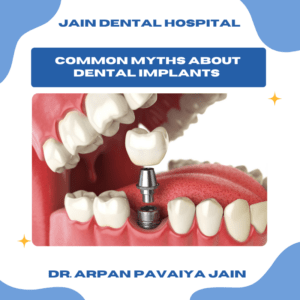
A dental implant typically has three parts:
Implant Fixture (The Root Replacement)
This is the portion placed inside the jawbone. It acts like an artificial tooth root. Over time, it bonds with the bone through a process called osseointegration, which creates strong, permanent stability.
Abutment (The Connector Piece)
The abutment connects the implant fixture to the visible crown. It sits above the gumline and supports the artificial tooth.
Crown (The Visible Tooth)
This is the part that looks and functions like a natural tooth. It is usually made from ceramic, porcelain, or zirconia for strength and aesthetics.
MRI scan with metal implants
Now let’s explore the materials used in the implant fixture itself, since this is the part that raises concerns about MRI scan with metal implants.
1. Titanium: The Gold Standard
Titanium has been used in medicine for over 50 years. It is strong, lightweight, and highly resistant to corrosion. Most importantly, it is biocompatible, meaning the body accepts it without causing harmful reactions.
When placed in the jaw, titanium forms a direct bond with bone. This fusion prevents movement and provides long-term stability. Because titanium is non-ferromagnetic, it does not behave like iron in a magnetic field. This is why can MRI affect dental implants is usually answered with reassurance when titanium is involved.
2. Titanium Alloys: Enhanced Strength
In some cases, titanium is combined with small amounts of other elements to improve durability. These titanium alloys are often used in situations where extra strength is needed, such as full-arch restorations.
Despite being blended with other elements, these alloys remain non-ferromagnetic. They maintain the same weak magnetic response as pure titanium. Consequently, they remain stable during MRI procedures and do not pose movement risks.
3. Zirconia: The Metal-Free Alternative
Zirconia implants are made from a high-performance ceramic material. They contain no metal at all and are often chosen by patients seeking a holistic or metal-free option.
Zirconia is completely non-magnetic. It does not conduct electricity and does not respond to magnetic fields. Because of this, it is considered highly compatible with MRI technology. Patients researching are dental implants magnetic often feel reassured when learning about zirconia.
Modern implant materials are selected not only for strength and appearance but also for safety in medical environments. Their design considers long-term health needs, including future imaging tests.
Titanium vs Zirconia: Which Is Safer for MRI?
To make this clearer, here is a side-by-side comparison of titanium and zirconia implants from both a medical and MRI safety perspective.
| Feature | Titanium Implants | Zirconia Implants |
| Material Type | Metal (medical-grade titanium or titanium alloy) | High-strength ceramic (metal-free) |
| Magnetic Properties | Paramagnetic (very weak magnetic response; not attracted to MRI magnets) | Non-magnetic (no interaction with magnetic fields) |
| MRI Safety Status | Considered MRI-safe / MRI-conditional under standard clinical settings | Fully MRI-compatible due to absence of metal |
| Risk of Movement in MRI | No clinical evidence of displacement due to strong bone integration | No risk of displacement |
| Risk of Heating in MRI | No significant thermal heating documented in clinical studies | No heating risk (does not conduct electrical energy) |
| Image Artifacts (Head/Neck MRI) | May cause minor localized blur near implant site | Typically produces fewer artifacts than metal |
| Osseointegration (Bone Fusion) | Excellent long-term clinical success; gold standard for 40+ years | Strong bone integration, growing long-term data |
| Clinical Track Record | Over 50 years of global research and documentation | Newer compared to titanium but clinically reliable |
| Ideal For | Most patients needing long-term durability | Patients preferring metal-free restorations |
Is MRI Safe With Dental Implants?
Bottom line: Yes, MRI is safe with dental implants in the vast majority of cases. Modern dental implants are made from materials that do not react dangerously inside an MRI machine. Patients can usually proceed with confidence. In this section, we will explain the scientific reasons behind this safety and how current medical standards are designed to protect you during imaging.
1. The “Short Answer” Reality
If you are asking, can you get an MRI with dental implants?, the answer is almost always yes. Most implants are made from titanium or zirconia, which are non-magnetic materials. This means they are not attracted to the powerful magnets inside the MRI scanner. Because of this, implants do not move, shift, or become dislodged during the scan. Patients can feel reassured knowing their restorations are stable and secure.
2. Modern MRI-Compatibility Standards
Today’s implants are developed under strict medical manufacturing guidelines. Companies design them not only for strength and bone integration but also for compatibility with medical imaging systems. Regulatory bodies require testing to confirm that implants are MRI-safe or MRI-conditional before approval. As a result, MRI and dental implants safety is not accidental—it is part of modern design standards. This forward-thinking approach ensures that dental treatment does not interfere with future healthcare needs.
3. Ferromagnetic vs. Non-Ferromagnetic (The Deep Dive)
Some metals, like iron and certain steels, are ferromagnetic. This means they strongly react to magnetic fields and can be pulled or twisted inside an MRI. These materials can pose risks in medical imaging.
In contrast, titanium is paramagnetic, which means it has only a very weak magnetic response. Zirconia is completely non-magnetic. The MRI magnet simply does not exert enough force on these materials to cause movement or heating. This scientific difference explains why modern implants behave safely during scanning.
4. When Precautions Are Still Necessary
Although implants are safe, doctors still follow careful screening protocols. A radiologist may ask additional questions if you have very old dental restorations, especially those placed several decades ago.
Precautions may also apply if you have large full-mouth metal frameworks, implant-supported dentures with extensive metal bars, or multiple mixed-metal restorations. These rarely create safety issues, but they can sometimes affect image clarity. In such cases, the imaging team may adjust the scan settings to improve results.
Clear communication between your dentist and radiologist ensures both safety and accurate imaging.
Can Dental Implants Move or Heat Up During MRI?
Even after hearing that implants are MRI-safe, many patients still worry about what they might physically feel. Two fears are common: Will my implant move? and Will it heat up inside the machine? These concerns are understandable because MRI scanners are powerful devices. However, when we look at the clinical science behind implant design and MRI physics, we see that these fears do not reflect real-world outcomes with modern dental implants. Let’s break this down clearly.
1. Do Dental Implants Move During MRI?
One of the biggest concerns is implant displacement, or movement caused by the MRI magnet. In reality, titanium is paramagnetic, meaning its response to magnetic fields is extremely weak. The magnetic force inside an MRI scanner is simply not strong enough to pull on titanium implants in any meaningful way.
More importantly, dental implants are not loose objects sitting inside the jaw. They are permanently bonded to the bone through a biological process called osseointegration. During this process, bone cells grow tightly around the implant surface, creating a strong mechanical lock. This bond is so stable that it can withstand normal chewing forces for decades. Compared to those daily biting forces, the magnetic influence of an MRI is insignificant.
2. Do Dental Implants Heat Up in MRI?
Another concern is thermal heating, or the possibility that the implant could warm up during the scan. MRI machines use radiofrequency energy, and some medical devices—such as long wires or leads—can sometimes act like antennas and absorb that energy. When that happens, heat may build up.
Dental implants do not behave this way. They are short, compact, and firmly anchored in bone. They do not have the length, looped structure, or electrical configuration required to concentrate radiofrequency energy. Because of this, they do not act like antennas. Clinical measurements show that temperature changes around titanium implants during MRI are minimal and remain well within safe biological limits.
3. Clinical Research and Real-World Evidence
Decades of clinical research support these findings. Studies evaluating displacement and thermal heating in patients with titanium dental implants have consistently shown no significant movement or dangerous temperature increase. MRI safety testing is part of medical device evaluation standards worldwide.
In everyday practice, millions of patients with dental implants have safely undergone MRI scans. Radiology teams monitor safety closely, and documented complications involving dental implant movement or overheating are exceedingly rare. This long track record reinforces what science already tells us: modern dental implants remain stable and safe inside MRI environments.
Will Dental Implants Affect MRI Image Quality?
While MRI safety with dental implants is well established, image quality is a separate technical topic. MRI scans aim to produce very precise pictures of soft tissues. In some cases, dental implants can create small visual disturbances in these images. These disturbances are called image artifacts. They are not dangerous and do not affect the patient, but they can slightly interfere with how certain areas appear on the scan—especially when imaging the head, face, or neck.
1. Dental Implants MRI Artifacts (Understanding Image Artifacts)
An image artifact is a small area on an MRI image that looks blurred, stretched, or empty. This distortion happens because metal can slightly disturb the local magnetic field. Even non-magnetic metals like titanium can change how signals return to the scanner. The result may be a shadow or visual gap near the implant. Importantly, this does not damage the implant or the body; it only affects how the image appears on the screen.
2. Head and Neck MRI Considerations
Artifacts are more noticeable when the scan area is close to the mouth or jaw. For example, a brain, sinus, or facial MRI may show mild distortion near the lower face. This happens because the implant is physically close to the region being scanned.
In contrast, if you are having an MRI of the knee, shoulder, spine, or abdomen, dental implants have no effect at all. The distance between the implant and the scan area prevents any interaction. This is why most MRI scans remain completely unaffected by dental work.
3. Radiologist Adjustments and Imaging Techniques
Modern radiology does not rely on raw images alone. Radiologists use advanced software and scanning methods designed to manage metal-related distortion. One common approach is called metal artifact reduction, which adjusts how the machine collects and processes signals.
These techniques help “clean up” the image by reducing blurring and shadows. Radiologists may also adjust scan angles or sequences to improve clarity. Because of this, accurate diagnosis is still possible even when implants are present.
4. The Role of Communication
Clear communication plays a key role in image quality. When you tell the MRI technician about your dental implants, they can plan the scan more effectively. This includes choosing the right settings and imaging techniques from the start.
Providing details about implant type or location allows the radiology team to optimize results. This simple step helps ensure the clearest possible images while maintaining safety and comfort throughout the scan.
When Should You Inform Your Doctor Before an MRI?
Even though MRI and dental implants safety is well established, open communication with your healthcare team is still essential. MRI screening is a standard safety process for every patient, not just those with implants. By sharing complete and accurate information, you help the radiologist plan the scan properly. This ensures optimal image quality, avoids delays, and prevents unexpected technical adjustments during the procedure.
1. Disclosing All Dental Restorations
When completing your MRI screening form, mention all dental restorations, not just implants. This includes crowns, bridges, metal fillings, orthodontic retainers, and removable dentures. While most of these materials are safe, they can sometimes create minor image artifacts during head or neck scans.
Providing a full list allows the radiology team to adjust imaging settings if needed. It also prevents confusion if small distortions appear on the scan. Transparency helps ensure both safety and accurate interpretation.
2. Recently Placed Implants
If your implant was placed within the last few weeks, inform your doctor or MRI technician. While the MRI magnet does not cause implant displacement, your surgical site may still be healing. The concern is not magnetic movement but overall post-surgical comfort and stability.
During early healing, swelling or tenderness may still be present. Your healthcare provider may simply confirm that healing is progressing normally before proceeding. In most cases, MRI can still be safely performed, but disclosure ensures careful clinical judgment.
3. The Importance of Documentation
If possible, keep a record of your implant’s brand or material. Many patients receive an implant card from their dentist after surgery. This documentation can be helpful if questions arise at the imaging center.
Knowing whether your implant is titanium or zirconia provides reassurance to the radiology team. Although modern implants are generally MRI-safe, having clear information speeds up the screening process and reduces uncertainty.
4. Understanding the Medical History Checklist
You may notice that MRI forms ask detailed questions about metal in the body. This includes pacemakers, joint replacements, surgical clips, and dental work. These questions are part of universal safety protocols, not a sign of danger.
The MRI environment is carefully controlled, and technicians must verify compatibility for every patient. By answering honestly and thoroughly, you support a smooth, efficient scan. This structured screening process is one reason MRI remains one of the safest imaging tools available.
Special Situations: Are There Any Risks?
Modern dental implants are considered safe in MRI environments. However, medicine always evaluates each patient individually. Certain complex dental situations or older restorations may require a closer look before imaging begins. These scenarios are rare, but understanding them helps patients feel informed and prepared. Let’s review the few cases where additional attention may be appropriate.
1. Older Dental Implants (Pre-2000s)
Dental implants placed before the early 2000s were still generally made from titanium. However, manufacturing standards and material documentation were not as standardized as they are today. Some older systems may have used mixed alloys with slightly different compositions.
Even in these cases, implants are usually non-ferromagnetic and remain safe in MRI machines. The main concern is not safety but confirming the material type. If records are available, sharing them with the imaging center provides reassurance and avoids unnecessary delays.
2. Implant-Supported Dentures
Implant-supported dentures are different from fixed implant crowns. The implants anchored in the jaw are typically titanium and safe for MRI. However, the removable denture portion often contains a metal framework, clips, or attachment bars.
These removable components must be taken out before entering the MRI suite. This is standard procedure, similar to removing jewelry or glasses. Once the denture is removed, the implants themselves remain stable and safe during the scan.
3. Multiple Metal Restorations
Some patients have a combination of braces, bridges, crowns, fillings, and multiple implants. While each item may be safe individually, the cumulative presence of metal can increase the likelihood of image artifacts during head or neck scans.
This does not create physical danger. Instead, it may slightly affect image clarity in specific areas. Radiologists are trained to adjust scan settings and apply metal artifact reduction techniques to manage these situations effectively.
4. Patients with Other Metallic Medical Devices
Dental implants rarely interact with other medical devices such as pacemakers, joint replacements, or surgical clips. Each device is evaluated separately under MRI safety guidelines. Titanium dental implants do not interfere with the function of these devices inside the scanner.
The key factor is full disclosure. When all devices are documented during screening, the radiology team ensures compatibility and selects appropriate scanning parameters. This coordinated approach keeps the process safe and controlled.
Overall, these special situations are uncommon and manageable. With proper communication and standard MRI screening protocols, even complex cases are handled safely and professionally.
MRI vs. CT Scan: Which Is Safer for Patients With Dental Implants?
Both MRI and CT scans are powerful diagnostic tools. However, they work in very different ways. Because of this, they interact with dental implants differently. This section compares MRI and CT imaging so patients can understand why a doctor may recommend one over the other. The goal is not to label one as “better,” but to explain how each serves a specific medical purpose.
1. Magnetic Fields vs. Radiation
An MRI uses a strong magnetic field and radiofrequency energy to create images. This is why questions arise about metal inside the body. The concern is whether the magnet could cause movement or heating. As discussed earlier, titanium and zirconia implants are non-ferromagnetic, so they remain stable.
A CT scan, on the other hand, uses radiation in the form of X-rays. There is no magnetic interaction at all. This means there is zero risk of magnetic pull or heating with CT imaging. However, CT involves exposure to ionizing radiation, while MRI does not.
2. Image Clarity and “Streak” Artifacts
Both MRI and CT can show metal-related distortions, but they look different. In MRI, implants may cause mild blur or signal voids called image artifacts. These usually appear near the implant site during head or neck scans.
In CT scans, metal can cause bright lines known as streak artifacts. These streaks happen because metal blocks or scatters X-ray beams. While CT streak artifacts can sometimes be more visible than MRI blur, modern CT software often reduces this effect significantly.
3. When CT May Be Preferred
CT scans are often preferred when doctors need detailed images of bone. For example, facial fractures, sinus anatomy, or jawbone structure are often clearer on CT imaging. CT is also faster than MRI, which may be helpful in emergency situations.
Some patients feel reassured knowing there is no magnetic field involved. However, the decision is usually based on diagnostic need, not implant safety. If soft tissue evaluation is required, MRI may still be the better option.
4. The Overall Safety Verdict
For patients with dental implants, both MRI and CT are considered safe. MRI involves magnets but no radiation. CT involves radiation but no magnetic interaction. The presence of dental implants does not automatically rule out either test.
The final choice depends on what the doctor needs to see. Bone problems often favor CT. Soft tissue or neurological conditions often favor MRI. In both cases, dental implants rarely limit your diagnostic options.
What Do Dentists and Radiologists Recommend?
The safest medical outcomes happen when healthcare professionals work as a team. Dentists focus on oral health and implant stability, while radiologists focus on diagnostic imaging accuracy and safety. When these two fields communicate clearly, patient care becomes smooth and predictable. This section summarizes the shared professional consensus on managing dental implants during MRI scans.
1. The Consensus Perspective
Both dental and radiology associations agree on one key point: modern titanium and zirconia implants are safe for MRI. These materials are non-ferromagnetic and have been tested extensively in medical environments. Over decades of use, no consistent evidence has shown harmful displacement or dangerous thermal heating in implant patients.
Because of this strong scientific foundation, dentists routinely reassure patients who ask, “Is MRI safe with dental implants?” Radiologists follow standardized MRI screening protocols that already account for common devices like dental implants. The consensus is clear, calm, and evidence-based.
2. Importance of Implant Documentation
Dentists often recommend keeping your implant documentation card or treatment record. This small detail can make the MRI screening process faster and more efficient. The imaging center may ask about the implant material, brand, or placement date.
Having documentation removes uncertainty. While most implants are MRI-compatible, confirming that your restoration is made of titanium or zirconia provides additional reassurance. It also prevents unnecessary repeat questions or scan delays.
3. Coordinated Medical–Dental Care
In rare cases where questions arise, coordination is simple. A brief phone call between your dentist and the radiology clinic can clarify material composition or implant design. This collaborative approach ensures confidence on both sides.
Coordinated care is especially helpful for patients with complex restorations or older implants. Instead of guessing, healthcare providers verify the details directly. This protects both safety and image quality.
4. Post-MRI Follow-Up
In most situations, no dental follow-up is needed after an MRI. Implants do not loosen or weaken because of scanning. However, if you ever feel unsure, your dentist can perform a quick clinical check.
A simple examination can confirm that the implant remains stable and comfortable. This extra step is rarely required, but it offers peace of mind for cautious patients. Professional reassurance strengthens trust in both dental and medical care.
Conclusion: Final Medical & Dental Verdict
Modern dental implants are safe, stable, and highly compatible with MRI technology. Titanium and zirconia materials do not behave like magnetic metals. They do not shift, overheat, or weaken during scanning. Clinical research and decades of real-world experience confirm this reassuring reality.
If you are scheduled for an MRI, communicate openly with your doctor. Inform the imaging team about your dental restorations. Keep your implant documentation available if possible. These simple steps ensure smooth coordination and optimal image quality.
Key Points to Remember
- Titanium and zirconia implants are non-ferromagnetic and MRI-compatible.
- Dental implants do not move or significantly heat during MRI.
- Minor image artifacts may occur only in head or neck scans.
- Clear communication with your healthcare team ensures optimal results.
If you still have concerns or are considering implants and want personalized guidance, we are here to help.
Frequently Asked Questions (FAQ)
It is natural to have quick, specific questions before any medical scan. Many patients want short, direct answers they can trust. Below are evidence-based responses to the most common concerns about MRI and dental implants safety.
Can I get an MRI immediately after dental implant surgery?
Yes, in most cases you can — but timing should be discussed with your doctor.
MRI does not cause implant movement. However, if your surgery was very recent, the area may still be healing. Your surgeon may confirm that swelling and tenderness are under control before scheduling the scan. The concern is healing comfort, not magnetic risk.
Are titanium implants 100% MRI safe?
Titanium implants are considered MRI-safe or MRI-conditional under medical guidelines.
“MRI-safe” means the device poses no known hazards in the MRI environment. “MRI-conditional” means it is safe under specific scanner conditions, which standard hospital MRI machines meet. Titanium is non-ferromagnetic, so it does not move or heat in a clinically significant way during scanning.
Can MRI damage dental implants?
No, MRI does not damage properly placed dental implants.
Titanium and zirconia are strong, stable materials. The magnetic field does not weaken the implant structure or its bond with bone. Millions of implant patients have safely undergone MRI scans without structural problems.
Do I need to remove dental implants before an MRI?
No, dental implants are permanent and cannot be removed for a scan.
They are surgically anchored into the jawbone through osseointegration. Unlike jewelry or removable dentures, implants stay in place. MRI facilities expect patients to have permanent dental restorations and screen for them routinely.
Schedule Your Consultation Today
Understand MRI Safety With Dental Implants — Before Your Scan
If you have dental implants and are scheduled for an MRI, it’s completely natural to want clarity before the procedure. Questions about movement, heating, or image interference can create unnecessary anxiety. The good news is that modern titanium and zirconia implants are designed to remain stable and MRI-compatible — but individualized evaluation always matters.
At Jain Dental Hospital, Dr. Arpan Pavaiya Jain and Dr. Rashi Agarwal Jain follow a scientifically grounded, evidence-based approach to implant dentistry. We carefully document implant materials, provide guidance for medical imaging situations, and coordinate with radiology teams when needed to ensure complete safety and confidence.
If you would like reassurance about your dental implants before an upcoming MRI — or if you are considering implants and want long-term medical compatibility clarity — we invite you to schedule a consultation.
📞 Call: +91-9582535204
🌐 Visit: www.jaindentistdelhi.com

Dr. Arpan Pavaiya Jain, Director of Jain Dental Hospital, Indirapuram, Ghaziabad is a renowned Prosthodontist and Implantologist with over 20 years of expertise in advanced dentistry. A graduate of the prestigious King George’s Medical College Lucknow, he has performed more than 20,000 successful dental implant procedures. Dr. Jain leads a team of skilled professionals, offering state-of-the-art treatments in dental implants, clear aligners, cosmetic dentistry, orthodontics, and more. Known for his personalized care and commitment to excellence, he has earned a reputation as a trusted dental expert in Indirapuram, Ghaziabad.