Mini Dental Implants vs Traditional Implants: Which Is Right for You in 2025?
Deciding between Mini Dental Implants vs Traditional Implants can feel overwhelming, especially when you’re already coping with the challenges of missing teeth or uncomfortable dentures. Both options aim to restore your smile’s function and confidence, but they differ in important ways — from design and procedure to cost, comfort, and long-term results.
This guide breaks down everything you need to know about mini dental implants vs traditional implants so you can make an informed decision based on your unique situation. Whether you’re comparing bone density requirements, healing time, or implant longevity, we’ll help you understand which solution aligns with your health needs and lifestyle.
What Are Mini Dental Implants?
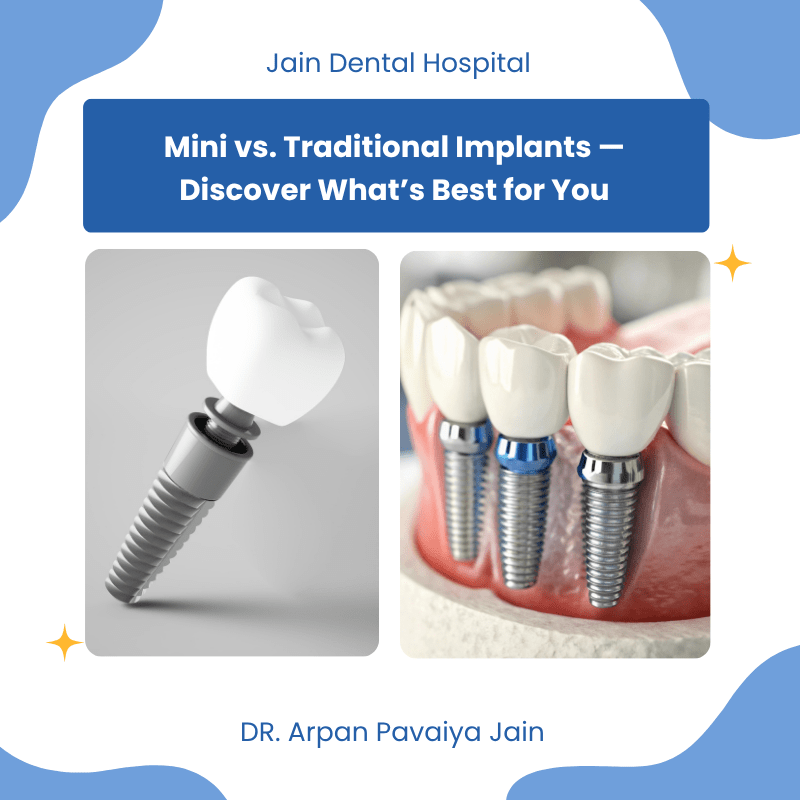
Mini dental implants (MDIs) are smaller versions of traditional implants, typically less than 3mm in diameter. They consist of a one-piece titanium screw with a ball-shaped end that protrudes slightly from the gum line. A rubber O-ring attached to your denture or crown fits over this ball, locking the restoration securely in place.
Because of their narrow design, mini implants are often called narrow diameter implants (NDIs) or small diameter implants (SDIs). They’re most commonly used to stabilize lower dentures, though they can also replace single teeth in certain situations.
Key Advantages of Mini Implants
Minimally invasive procedure
Mini implants require less drilling and smaller incisions compared to traditional implants. In many cases, the procedure can be completed in a single visit with only local anesthesia and no sutures.
Shorter healing time
Recovery is faster because the procedure is less invasive. Many patients return to normal activities within days rather than weeks or months.
Lower cost
Mini implants are generally more affordable than traditional implants due to the simplified procedure and reduced materials.
Works well with low bone density cases
If you’ve experienced significant jawbone loss from wearing dentures for years or from gum disease, mini implants may still be an option. They don’t require as much bone structure as traditional implants and can often be placed without bone grafting.
Limitations of Mini Implants
Not suitable for all bite forces
Mini implants are best for areas with lighter chewing pressure, such as front teeth or denture stabilization. They may not withstand the intense forces exerted on back molars.
Longevity considerations
While mini implants can last many years with proper care, they typically have a shorter lifespan than traditional implants—averaging 5 to 10 years compared to 15 to 25+ years for standard implants.
Limited use in full-arch restorations
Although mini implants can support dentures effectively, they’re not the ideal choice for full-arch reconstructions requiring maximum stability and durability.
What Are Traditional Dental Implants?
Traditional dental implants are larger and more robust than mini implants, with diameters ranging from 3.4mm to 5.8mm. They consist of two parts: a titanium post surgically placed into the jawbone and an abutment that connects the post to the crown, bridge, or denture.
The placement process involves multiple stages. First, the titanium post is inserted into the bone socket where a tooth is missing. Over the next few months, the bone grows around the implant in a process called osseointegration, creating a strong foundation for the restoration.
Benefits of Traditional Implants
Strong stability
Traditional implants offer superior strength and can handle high bite forces, making them suitable for replacing molars and supporting complex restorations like bridges or full arches.
Long-lasting solution
With proper care, traditional implants can last 15 years or more—often a lifetime. Their larger surface area distributes force more evenly across the jawbone, reducing stress and wear.
Suitable for most case complexities
Whether you need to replace a single tooth, multiple teeth, or an entire arch, traditional implants provide versatility and reliability.
Drawbacks of Traditional Implants
Higher cost
Traditional implants involve more materials, surgical expertise, and time, making them more expensive upfront than mini implants.
Longer healing and bone integration time
The osseointegration process typically takes 3 to 6 months before the final restoration can be placed. This means a longer wait before you have fully functional teeth.
May require bone grafting in some cases
If you don’t have enough bone density to support a traditional implant, your dentist may recommend a bone graft procedure to strengthen the jawbone first.
Mini Dental Implants vs Traditional Implants: Side-by-Side Comparison
| Feature | Mini Dental Implants | Traditional Dental Implants |
| Diameter | 1.8–3mm | 3.4–5mm |
| Surgery Type | Minimally invasive | Surgical; may require bone graft |
| Healing Time | Weeks | 3–6 months |
| Stability Level | Moderate | Very high |
| Best For | Denture stabilization, limited bone | Single tooth/full-mouth reconstructions |
| Cost | Lower | Higher |
| Longevity | 5–10 years average | 15–25+ years |
Cost Comparison: What to Expect in Different Regions
The cost of dental implants varies widely depending on location, complexity of your case, materials used, and the expertise of your dentist.
Mini Dental Implants:
- United States: $500–$1,500 per implant
- United Kingdom: £400–£1,200 per implant
- Australia: AUD $800–AUD $2,000 per implant
- India: ₹15,000–₹40,000 per implant
Traditional Dental Implants:
- United States: $1,500–$6,000 per implant (including crown)
- United Kingdom: £1,200–£3,000 per implant
- Australia: AUD $3,000–AUD $7,000 per implant
- India: ₹30,000–₹80,000 per implant
Keep in mind that these are approximate ranges. Additional procedures like bone grafting or tooth extraction will increase costs. Check with your insurance provider to see if dental implants are covered under your plan.
Who Should Choose Mini Dental Implants?
Mini dental implants are ideal for patients who:
Have low bone density
If you’ve worn dentures for years or experienced significant bone loss due to gum disease or trauma, mini implants may work without requiring a bone graft.
Want quick restoration
Because the procedure is minimally invasive and healing time is shorter, you can often have functional teeth within days rather than months.
Need denture support
If you struggle with loose lower dentures that slip or cause discomfort while eating or speaking, mini implants provide excellent stabilization at a lower cost than full-arch traditional implants.
Prefer less invasive treatment
Elderly patients or those with medical conditions that make extensive surgery risky may benefit from the simpler mini implant procedure.
Who Should Choose Traditional Implants?
Traditional implants are better suited for patients who:
Need strong bite force support
If you’re replacing molars or back teeth that endure heavy chewing pressure, traditional implants offer greater stability and durability.
Prioritize long-term durability
Younger individuals looking for a permanent solution that will last decades should opt for traditional implants.
Require full-arch reconstruction
For complex cases involving multiple missing teeth or entire arches needing replacement with bridges or implant-supported dentures, traditional implants provide superior strength and reliability.
Both Procedures: What to Expect Step-by-Step
Consultation
Your dentist will evaluate your oral health through X-rays or 3D imaging to assess bone density and determine which type of implant suits your needs.
Imaging and Planning
Detailed scans help create a customized treatment plan tailored to your jaw structure and restoration goals.
Surgical Placement
For mini implants, the procedure typically involves minimal incisions and can be completed in one visit under local anesthesia. For traditional implants, surgery is more involved and may require sedation.
Healing Timeline
Mini implants often allow same-day loading of restorations with quick recovery times measured in days or weeks. Traditional implants require 3 to 6 months for osseointegration before placing the final crown or bridge.
Success Rates, Durability & Real-World Outcomes
Both mini and traditional dental implants have high success rates when performed by experienced professionals. Studies show that over 90% of both types remain functional after years of use.
However, success depends on several factors:
- Proper oral hygiene
- Regular dental checkups
- Avoiding smoking
- Managing conditions like diabetes that affect healing
Traditional implants generally outperform mini implants in terms of longevity due to their larger size and better force distribution across the jawbone.
Which Option Is Better for You? A Decision Framework
Use this checklist to guide your decision:
✅ Choose Mini Implants if:
- You have limited bone density
- You need quick results
- You’re stabilizing dentures
- Budget is a major concern
- You prefer minimally invasive treatment
✅ Choose Traditional Implants if:
- You need maximum strength
- You’re replacing molars or multiple teeth
- Long-term durability matters most
You have adequate bone structure
Ready to Restore Your Smile?
Deciding between mini dental implants vs traditional implants depends on factors like bone density, budget, healing time preferences, and how much force your replacement teeth need to handle long-term.
Mini implants offer speed and affordability with minimal invasiveness—ideal for denture stabilization or low-pressure areas like front teeth. Traditional implants deliver unmatched strength and longevity—perfect for molars or full-arch reconstructions requiring maximum durability.
The best way forward? Schedule a consultation with an experienced implant dentist who can assess your unique situation and recommend a personalized treatment plan tailored to your needs.
Frequently Asked Questions
Are mini implants safe?
Yes! Mini implants are made from biocompatible titanium just like traditional implants. When placed by an experienced dentist following proper techniques, they’re safe and effective for appropriate cases.
Do mini implants hurt less than traditional implants?
Generally yes—mini implant placement is less invasive with smaller incisions. Most patients experience minimal discomfort during recovery compared to traditional surgery.
Can mini implants replace molars?
Mini implants aren’t typically recommended for molars because they don’t withstand heavy chewing forces as well as traditional options do.
How soon can I eat after either procedure?
With mini implants supporting dentures, many patients eat soft foods within hours or days. For traditional implants requiring osseointegration first, you’ll follow a gradual diet progression over several months.
Can mini implants be upgraded later?
It depends on your bone health at that time. Discuss long-term goals upfront with your dentist so you choose the best solution from the start rather than needing future replacements.
Schedule Your Consultation Today
See the Clear Difference Between Mini and Traditional Dental Implants
Now that you understand the key differences between mini dental implants and traditional implants, take the next step toward restoring your confident smile with expert guidance.
At Jain Dental Hospital, Indirapuram, Ghaziabad, we use advanced implant technology to provide personalized solutions — whether you need quick, minimally invasive mini implants or long-lasting traditional implants.
Led by Dr. Arpan Pavaiya Jain, and Dr. Rashi Agarwal Jain our experienced team ensures every implant procedure is precise, comfortable, and tailored to your dental goals.
Don’t let confusion about which implant is right for you hold you back — get professional advice and discover the best treatment plan for your smile.
📞 Call us at +91-9582535204 or visit www.jaindentistdelhi.com to schedule your dental implant consultation today.
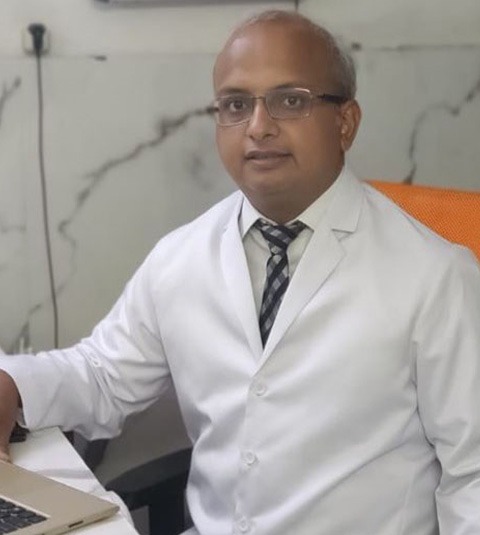
Dr. Arpan Pavaiya Jain, Director of Jain Dental Hospital, Indirapuram, Ghaziabad is a renowned Prosthodontist and Implantologist with over 20 years of expertise in advanced dentistry. A graduate of the prestigious King George’s Medical College Lucknow, he has performed more than 20,000 successful dental implant procedures. Dr. Jain leads a team of skilled professionals, offering state-of-the-art treatments in dental implants, clear aligners, cosmetic dentistry, orthodontics, and more. Known for his personalized care and commitment to excellence, he has earned a reputation as a trusted dental expert in Indirapuram, Ghaziabad.