Zirconia vs Titanium Dental Implants: Which One Is Right for You?
Key Takeaways
- Titanium dental implants are the traditional industry standard with decades of proven clinical success.
- Zirconia implants offer a modern, metal-free alternative with excellent aesthetic appeal.
- Titanium implants are generally considered more durable for high-pressure chewing areas like molars.
- Zirconia implants often provide a more natural appearance, especially for front teeth and thin gum tissue.
- Both implant materials are highly biocompatible and designed to integrate with the jawbone.
- Patients with concerns about metal sensitivity may prefer zirconia implants.
- Titanium implants usually have more restorative flexibility and long-term clinical research.
- Zirconia implants may accumulate less plaque and support gum aesthetics in certain cases.
- Treatment cost can vary depending on implant brand, case complexity, bone condition, and restoration type.
The best implant option is not universal—it should be chosen based on personalized clinical evaluation and treatment goals.
Quick Summary
Choosing between zirconia and titanium dental implants depends on your oral health needs, cosmetic goals, and long-term treatment priorities. Titanium implants remain the most widely used option because of their exceptional strength, long clinical history, and high success rates. In contrast, zirconia implants are gaining popularity among patients looking for a metal-free, highly aesthetic solution that blends naturally with the gums and teeth.
Both implant materials are considered safe, biocompatible, and effective when placed by an experienced implant dentist. Titanium is often preferred for complex restorations and back teeth due to its durability, while zirconia may be ideal for patients concerned about aesthetics, metal sensitivity, or holistic dental preferences.
The right choice ultimately depends on factors such as:
- Jawbone condition
- Implant location
- Smile aesthetics
- Bite pressure
- Budget
- Personal preferences
- Dentist recommendation
A professional consultation and detailed treatment evaluation are essential before selecting the most suitable implant material for your case.
Losing a tooth brings up a lot of questions, but perhaps the most overwhelming is deciding how to replace it permanently. You know you need a dental implant to restore your bite and protect your jawbone, but now you face a new dilemma: selecting the right material. Make the wrong choice, and you might deal with visible grey lines near your gums, material fractures under heavy chewing pressure, or even rare allergic reactions.
Fortunately, you do not have to guess. Dental implants have evolved significantly over the past few decades. While titanium has served as the traditional standard for tooth replacement, zirconia has recently emerged as a modern, metal-free alternative. Patients frequently compare these two options based on appearance, potential allergies, long-term durability, and holistic dentistry preferences.
This comprehensive guide breaks down everything you need to know about zirconia vs titanium dental implants. By understanding the clinical facts, benefits, and drawbacks of each material, you can choose the best dental implant material for your unique smile.
What are titanium dental implants and how do they work?
Titanium dental implants have been the foundation of restorative dentistry since the 1960s. When you choose a titanium implant, you are relying on a material with decades of extensive research and documented clinical success.
Material Composition
- Medical-grade titanium: These implants are manufactured from highly regulated titanium alloys. Manufacturers blend titanium with small amounts of other elements to maximize structural strength and prevent corrosion.
- Biocompatible metal: Titanium is highly biocompatible, meaning the human body accepts it without treating it as a foreign object. This prevents rejection and ensures the implant remains stable in your jaw over time.
How Titanium Implants Work
- Osseointegration process: Once placed in your jaw, titanium triggers a biological process called osseointegration. Bone cells actively grow and attach directly to the microscopic pores on the surface of the titanium post.
- Fusion with jawbone: This fusion process typically takes three to six months. Once completed, the titanium implant acts exactly like a natural tooth root, providing an incredibly secure anchor for your final dental crown.
Common Types of Titanium Implants
- Two-piece implants: The vast majority of titanium implants use a two-piece design. The implant post sits in the bone, and a separate connector piece (the abutment) attaches to the top. This allows your dentist to customize the angle of your final tooth.
- One-piece implants: In some specific clinical situations, dentists use a single-piece titanium implant where the post and abutment are fused together. This design requires less surgical time but offers fewer customization options.
Advantages of Titanium Implants
- High success rate: Clinical studies consistently show titanium implant success rates between 92.5% and 98% over a 10-year period.
- Extremely durable: Titanium flexes slightly under pressure, which helps it absorb heavy chewing forces without fracturing.
- Suitable for most cases: Because of their two-piece design and structural resilience, titanium implants work well for single teeth, implant-supported bridges, and full-mouth restorations.
- Widely researched: Decades of clinical data provide dentists with highly predictable outcomes and proven surgical protocols.
Potential Drawbacks
- Metal visibility near gums: If you have naturally thin or receding gum tissue, the silver-grey color of the titanium might show through, creating a dark shadow near the gumline.
- Rare allergy concerns: While extremely uncommon, a very small percentage of the population (roughly 0.6%) may experience titanium hypersensitivity or localized inflammation.
What are zirconia dental implants and how do they work?
Zirconia dental implants represent the latest advancement in metal-free dentistry. They offer a highly aesthetic and biocompatible alternative for patients who want to avoid metal materials entirely.
Material Composition
- Ceramic-based implant: Zirconia (zirconium dioxide) is a highly durable, crystal-like ceramic. While it is derived from the element zirconium, the manufacturing process oxidizes it into a completely non-metallic ceramic state.
- Metal-free option: Because it contains no metal ions, zirconia is considered an entirely metal-free dental implant. This makes it a popular choice in holistic dentistry.
How Zirconia Implants Work
- Bone integration process: Just like titanium, zirconia integrates directly with your jawbone. The ceramic surface allows bone tissue to grow around and fuse to the implant, securing it firmly in place.
- Natural tooth-colored appearance: The integration happens beneath the gums, but the visible portion of the zirconia implant remains bright white, mimicking the natural color of a tooth root.
Advantages of Zirconia Implants
- Better aesthetics: The bright white color of zirconia eliminates the risk of grey shadows showing through thin gum tissue.
- White color blends naturally: Because the material closely matches the color of natural teeth, it provides a seamless look, especially in highly visible areas of your smile.
- Metal-free solution: Zirconia provides peace of mind for patients with severe metal allergies or those seeking holistic dental care.
- Less plaque accumulation potential: The smooth ceramic surface of zirconia resists bacterial adhesion. This can lead to less plaque buildup and a lower risk of inflammation around the implant.
Potential Drawbacks
- Less long-term research compared to titanium: While short-term success rates are very high, zirconia does not yet have the 30-plus years of clinical tracking that titanium enjoys.
- Can be more brittle under extreme pressure: Zirconia is exceptionally hard, but it lacks the flexibility of titanium. Under sudden, extreme biting forces, the ceramic is slightly more prone to micro-fractures.
- Fewer customization options: Many zirconia implants are manufactured as a one-piece system. This limits your dentist’s ability to adjust the angle of the implant once it is placed in the jaw.
Zirconia vs titanium dental implants: what are the key differences?
Choosing the best dental implant material requires comparing how each option performs across several critical categories. Here is a detailed breakdown of how zirconia and titanium compare in real-world clinical applications.
Appearance and Aesthetics
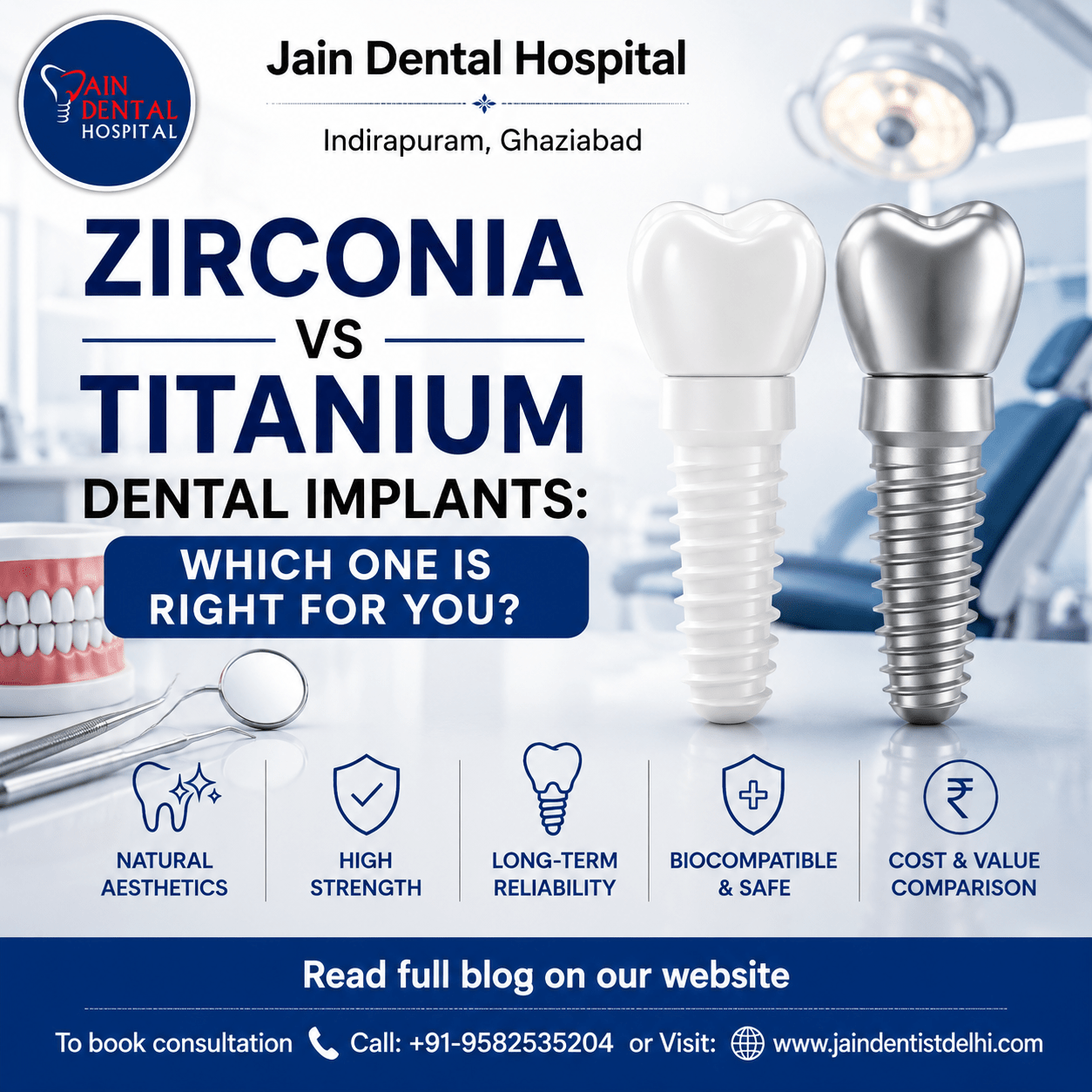
Aesthetics play a massive role in patient satisfaction. Zirconia implants are naturally white, which means they look exactly like a real tooth root. If your gums recede over time, a zirconia implant will remain virtually unnoticeable. Titanium implants are grey. While the crown on top will look like a real tooth, the titanium root can create a dark tint through thin gums. Choose zirconia if aesthetic perfection in the visible smile zone matters most to you.
Strength and Durability
Both materials are exceptionally strong, but they handle stress differently. Titanium possesses high tensile strength and slight flexibility. This allows it to absorb the heavy, grinding forces of your back teeth without breaking. Zirconia features incredible compressive strength, making it very hard to crush. However, its rigid ceramic nature makes it slightly more brittle and susceptible to fracture if exposed to sudden, sharp impacts.
Biocompatibility and Allergies
Your body will accept both materials very well. Titanium has an outstanding track record of biocompatibility, though a fraction of patients may experience metal sensitivity. Zirconia is 100% hypoallergenic and non-corrosive. If you have a known history of skin reactions to metal jewelry, zirconia provides a completely safe, sensitivity-free alternative.
Osseointegration and Healing
Healing timelines are nearly identical for both materials. Both titanium and zirconia require roughly three to six months to fully fuse with your jawbone. Titanium has a slight edge in initial stability due to its two-piece design, which allows the implant to remain buried under the gums during the primary healing phase.
Plaque and Bacteria Resistance
Maintaining healthy gums around your new implant is crucial for long-term success. Studies indicate that zirconia’s ultra-smooth ceramic surface makes it difficult for plaque and bacteria to adhere. This can result in healthier gum tissue and a reduced risk of peri-implantitis (gum disease around the implant). Titanium also maintains healthy gums, provided you practice excellent daily oral hygiene.
Comfort and Patient Experience
Both implants feel exactly like natural teeth once the healing process is complete. You will not feel sensitivity to hot or cold foods with either material. However, patients with thin gum tissues often report that zirconia feels more natural aesthetically, as they do not have to worry about a metallic shadow appearing when they smile.
Cost Comparison
Cost is a major factor for most patients. Zirconia implants typically cost 20% to 30% more than titanium implants. This price difference stems from the complex manufacturing process required to mill high-strength ceramic. For example, average dental implant costs in regions like India range between 18,000 to 58,000 INR for titanium, while zirconia falls on the higher end of that spectrum. Factors like bone grafting, specialized abutments, and the final crown material will also impact your total treatment cost.
Longevity and Success Rate
Titanium remains the undisputed leader in long-term data. Its clinical success rate hovers around 97% over a decade, with many implants lasting a lifetime. Zirconia implants show similar success rates in the short term (five to ten years), but long-term data spanning multiple decades is still being gathered.
Quick comparison table: zirconia vs titanium implants
| Feature | Titanium Implants | Zirconia Implants |
| Material | Metal alloy | Ceramic |
| Color | Silver/Gray | White |
| Durability | Very High (flexible) | High (rigid) |
| Aesthetics | Good | Excellent |
| Research History | Extensive (50+ years) | Limited (15+ years) |
| Allergy Risk | Rare (approx. 0.6%) | Minimal (hypoallergenic) |
| Cost | Moderate | Higher |
| Best For | Most patients, back teeth | Cosmetic preference, metal allergies |
Which implant is better for front teeth?
Front teeth require absolute aesthetic perfection. Because these teeth are constantly visible when you smile or speak, any discoloration near the gumline can ruin the natural look of your restoration.
Zirconia is generally the better option for front teeth. Human gum tissue is naturally translucent. When a dark grey titanium post sits behind thin gums, it can cast a shadow. Zirconia’s bright white color blends perfectly with your natural tissue, ensuring your smile looks flawless even if your gums change shape slightly over the years. Choose zirconia if cosmetic appearance is your top priority for visible teeth.
Which implant is better for back teeth?
Your back molars do the heavy lifting when it comes to chewing and grinding food. The material replacing these teeth must be able to withstand immense bite pressure day after day.
Titanium is usually the preferred choice for back teeth. Its slight flexibility allows it to absorb and distribute heavy chewing forces without cracking. While zirconia is incredibly hard, its rigidity makes it slightly more prone to fracture under the continuous stress of the back jaw. Choose titanium if you need maximum durability and fracture resistance for your molars.
Are zirconia implants safer than titanium?
A common myth is that titanium implants are dangerous because they are made of metal. This is categorically false. Both titanium and zirconia are fully FDA-approved and recognized as safe, biocompatible materials by the global dental community.
Titanium does not rust or degrade harmfully in the body. However, zirconia is technically “safer” only in the context of rare metal allergies. If you have no metal sensitivities, both implants offer incredibly safe, reliable, and health-promoting solutions for tooth replacement.
Who should choose zirconia dental implants?
- Patients wanting metal-free dentistry: If you prefer a holistic approach to your healthcare and want to keep metals out of your body, zirconia is the ideal choice.
- Patients concerned about aesthetics: If you are replacing a front tooth and demand the most natural-looking result possible, zirconia’s white color delivers superior aesthetics.
- Thin gum tissue cases: If your dentist determines you have thin or translucent gums, zirconia prevents the grey shadowing associated with titanium.
- Holistic dentistry patients: Those looking for materials that resist plaque buildup and promote optimal gum health often lean toward ceramic options.
Who should choose titanium dental implants?
- Patients needing maximum durability: If you grind your teeth or need to replace heavy-chewing molars, titanium provides the required strength and flexibility.
- Complex implant restorations: If you require angled implants to accommodate low bone volume, titanium’s two-piece design gives your dentist the necessary flexibility.
- Full-mouth implant cases: For procedures like All-on-4, titanium is the proven standard for supporting a full arch of teeth.
- Budget-conscious patients: Because titanium is more widely produced and utilized, it generally offers a more cost-effective treatment plan.
What do dentists recommend most?
Despite the rise of ceramic alternatives, titanium remains the industry standard. Dentists heavily favor titanium because of its 50-year track record, unparalleled flexibility in complex surgical cases, and proven ability to last a lifetime.
However, the popularity of zirconia is growing rapidly. Many dentists now recommend zirconia specifically for cosmetic cases in the front of the mouth or for patients with documented metal allergies. Ultimately, your dentist will recommend the material that best aligns with your jawbone density, bite alignment, and personal health goals.
Questions to ask your implant dentist
To ensure you make the right choice, bring these specific questions to your initial consultation:
- Which implant material best suits the current density of my jawbone?
- Which option is statistically likely to last longer in my specific case?
- Am I a good clinical candidate for zirconia implants, or is my bite too heavy?
- What are the daily maintenance requirements for the material you recommend?
- What is the total treatment cost, including the post, abutment, and final crown?
Frequently Asked Questions (FAQ)
Are zirconia implants better than titanium?
Neither material is universally better. Zirconia is better for aesthetic front teeth and patients with metal allergies. Titanium is better for heavy-chewing back teeth, complex full-mouth restorations, and patients seeking a material with decades of proven long-term data.
Do zirconia implants last as long as titanium?
Current short-term studies show zirconia implants last just as well as titanium over five to ten years. However, titanium has over 50 years of clinical tracking proving it can last a lifetime, whereas zirconia is a newer technology with less long-term data.
Can titanium implants cause allergies?
Yes, but it is extremely rare. Studies show that a very small portion of population may have an allergic reaction or sensitivity to titanium. If you have a known history of severe metal allergies, your dentist can perform a patch test prior to surgery.
Are zirconia implants more expensive?
Yes. Zirconia implants typically cost 20% to 30% more than titanium implants. The higher price is due to the complex manufacturing processes required to create high-strength, medical-grade ceramic.
Which implant looks more natural?
Zirconia implants look more natural. Because the implant post is bright white, it perfectly mimics a natural tooth root. This prevents the dark grey shadows that titanium implants can sometimes cast through thin gum tissue.
Which dental implant has a higher success rate?
Both implants share incredibly high success rates. Titanium boasts a success rate of 95% to 98% over a ten-year period. Early data shows zirconia implants share a similar success rate, though titanium remains the most predictable option due to extensive research.
Are zirconia implants good for molars?
While zirconia can be used for molars, dentists often prefer titanium for back teeth. Molars endure massive chewing forces, and titanium’s slight flexibility prevents it from fracturing under pressure. Zirconia is more rigid and slightly more prone to cracking in high-pressure areas.
How long do dental implants last?
With excellent daily oral hygiene and regular dental checkups, titanium dental implants can last a lifetime. The dental crown attached to the implant may need replacement every 10 to 15 years due to normal wear and tear.
Conclusion: Which Dental Implant Should You Choose?
Both zirconia and titanium dental implants offer fantastic, life-changing solutions for missing teeth. Titanium remains the undisputed gold standard for durability, complex restorations, and long-term peace of mind. Zirconia offers an incredible, modern alternative for patients prioritizing flawless aesthetics, metal-free materials, and optimal gum health.
Ultimately, the best implant for you depends entirely on your specific oral condition, cosmetic goals, and budget. Choosing the right material requires a personalized evaluation of your bone structure and bite force.
Schedule Your Consultation Today
Restore Your Smile with the Right Dental Implant Choice
Now that you understand the differences between zirconia and titanium dental implants — from aesthetics and durability to safety and long-term performance — the next step is finding out which option is best suited for your smile, oral health needs, and lifestyle.
At Jain Dental Hospital, experienced implant dentists Dr. Arpan Pavaiya Jain and Dr. Rashi Agarwal Jain provide personalized implant consultations to help patients choose the most suitable treatment with confidence. Whether you are looking for a highly aesthetic metal-free solution or a long-lasting implant option with proven strength, our team will guide you with honest, evidence-based recommendations tailored to your case.
Take the next step towards a healthier, confident smile with expert implant guidance.
📞 Call: +91-9582535204
🌐 Visit: www.jaindentistdelhi.com
Medical Advice Disclaimer:
The information provided in this article is for general educational and informational purposes only and is not intended as professional medical or dental advice, diagnosis, or treatment. While we strive for accuracy, every patient’s dental anatomy and clinical needs are unique. Always seek the advice of your dentist or another qualified healthcare provider with any questions you may have regarding a medical condition. Never disregard professional medical advice or delay seeking it because of something you have read on this website

Dr. Arpan Pavaiya Jain, Director of Jain Dental Hospital, Indirapuram, Ghaziabad is a renowned Prosthodontist and Implantologist with over 20 years of expertise in advanced dentistry. A graduate of the prestigious King George’s Medical College Lucknow, he has performed more than 20,000 successful dental implant procedures. Dr. Jain leads a team of skilled professionals, offering state-of-the-art treatments in dental implants, clear aligners, cosmetic dentistry, orthodontics, and more. Known for his personalized care and commitment to excellence, he has earned a reputation as a trusted dental expert in Indirapuram, Ghaziabad.