Dental Implants vs Dental Bridges: Which Tooth Replacement Option Is Right for You?
Key Takeaways
- Dental implants and dental bridges are both effective solutions for replacing missing teeth, but they differ significantly in cost, durability, treatment time, and long-term oral health benefits.
- Dental implants replace both the tooth root and crown, making them the most natural-feeling and long-lasting tooth replacement option.
- Dental bridges provide a faster and more affordable non-surgical solution, especially for patients who are not ideal candidates for implants.
- Implants help preserve jawbone density and facial structure, while bridges do not prevent bone loss beneath the missing tooth area.
- Traditional bridges require adjacent healthy teeth to be reshaped for support, whereas implants function independently without affecting neighboring teeth.
- Dental implants generally last 20–25 years or longer with proper care, while bridges often require replacement after 10–15 years.
- Choosing between implants and bridges depends on factors such as bone health, budget, oral condition, treatment goals, and healing preferences.
- A professional dental consultation with CBCT imaging is essential for determining the best tooth replacement option for your specific needs.
Quick Summary
Dental implants and dental bridges are two of the most common solutions for replacing missing teeth. Dental implants offer a permanent, highly durable solution that preserves jawbone health and feels most like a natural tooth. Dental bridges, on the other hand, provide a quicker and more budget-friendly restoration without surgery.
While implants typically involve a higher upfront cost and longer healing time, they often provide better long-term value and oral health benefits. Bridges remain an excellent option for patients seeking faster treatment or those who may not qualify for implant surgery. The right choice ultimately depends on your oral health, lifestyle, budget, and long-term dental goals.
Losing a tooth can make simple daily activities feel incredibly difficult. Chewing your favorite foods becomes painful, speaking clearly takes extra effort, and you might find yourself hiding your smile in photos. These physical and emotional frustrations can take a heavy toll on your daily confidence.
Ignoring a missing tooth only makes the situation worse over time. The empty space allows your surrounding teeth to shift out of place, altering your bite alignment. More importantly, the jawbone beneath the missing tooth begins to shrink, which can eventually change your facial structure and lead to further tooth loss.
Fortunately, modern restorative dentistry offers excellent solutions to restore your smile and your oral health. Dental implants and dental bridges are the two most reliable methods for single tooth replacement options. This comprehensive guide will help you compare dental implants vs dental bridges, understand the costs and benefits of each, and determine the best tooth replacement option for your long-term health.
Why Replacing Missing Teeth Is Important
Deciding to replace missing teeth permanently is about much more than just aesthetics. Your teeth work together as a complex system, and losing even one tooth disrupts that balance. Understanding the medical implications of tooth loss will help you see why prompt treatment is so crucial.
- Bone loss and jaw deterioration: Your jawbone relies on the roots of your teeth for stimulation. When a tooth is lost, the bone in that area stops receiving pressure from chewing. The body slowly begins to reabsorb this unused bone, leading to significant jaw deterioration over time.
- Teeth shifting and bite problems: Teeth naturally support one another to stay in their proper positions. An empty space gives adjacent teeth room to drift or tilt. This shifting disrupts your bite alignment, which can cause jaw pain, uneven tooth wear, and a higher risk of cracking healthy teeth.
- Speech and chewing difficulties: Even a single missing tooth can change how you articulate words or chew food. You might naturally start chewing on only one side of your mouth. This overworks those specific teeth and muscles, leading to discomfort and premature dental wear.
- Facial appearance and confidence impact: Your teeth support your lips and cheeks. As the jawbone deteriorates and teeth shift, your face can take on a sunken, prematurely aged appearance. Replacing the tooth maintains your natural facial structure and restores your self-esteem.
- Long-term oral health complications: Empty spaces in your mouth create hard-to-reach pockets where food particles and plaque easily accumulate. This significantly increases your risk of developing severe gum disease and experiencing decay in your remaining healthy teeth.
What Are Dental Implants?
Dental implants represent the gold standard in restorative dentistry. They offer a comprehensive solution that mimics the structure of a real tooth from the root to the crown.
Definition of Dental Implants
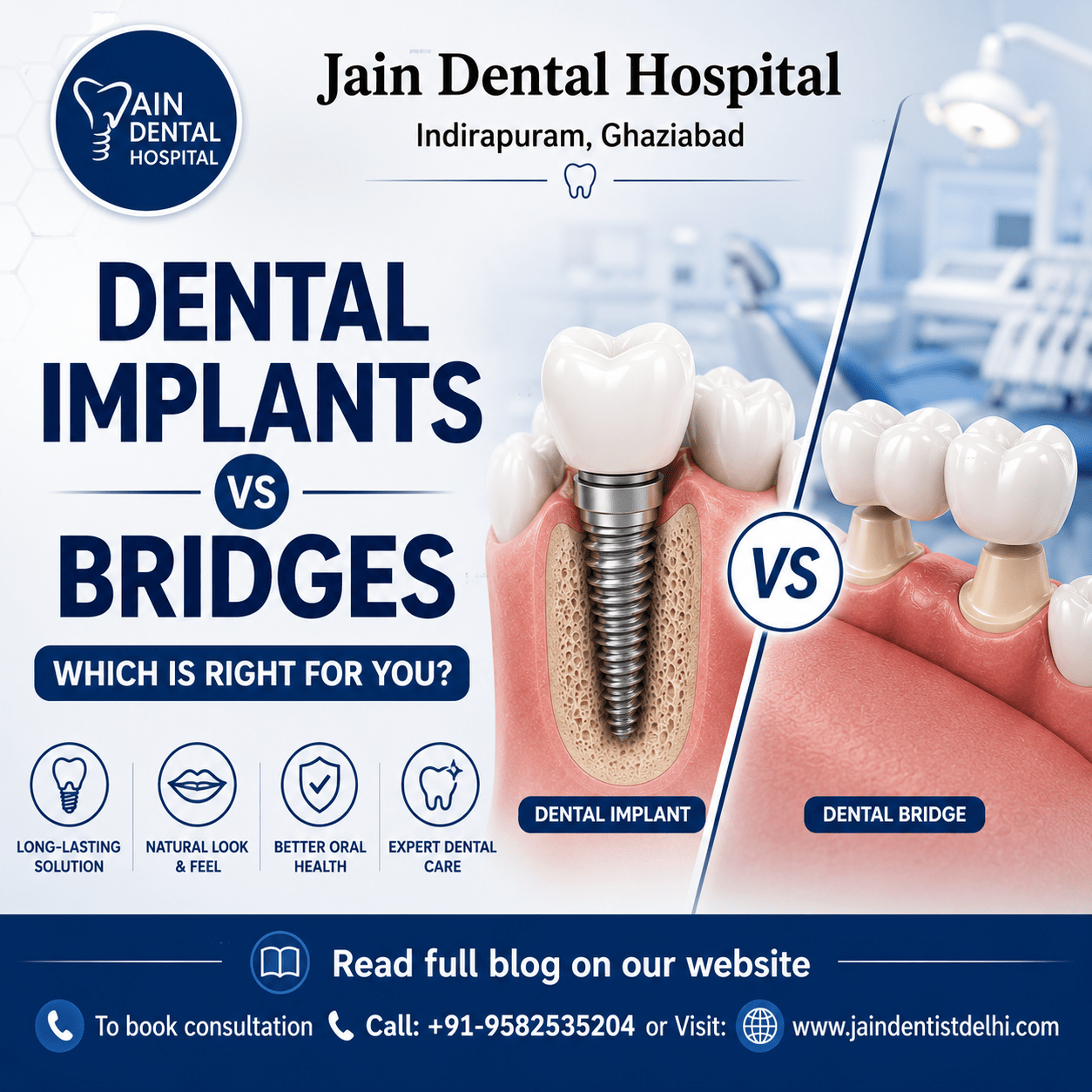
A dental implant is a permanent, surgically placed titanium or zirconia post that sits inside your jawbone. This post acts as an artificial tooth root. Because the implant fuses directly with your living bone, it provides unparalleled stability and prevents the bone loss commonly associated with missing teeth.
Components of a Dental Implant
- Implant post: This is the small screw, typically made of biocompatible titanium, that the dentist surgically places directly into your jawbone to replace the missing root.
- Abutment: This is a small connector piece that sits just above the gumline. It securely fastens the final crown to the implanted post.
- Crown: This is the visible, artificial tooth. It is custom-crafted from high-quality porcelain or ceramic to match the exact shape, color, and size of your natural teeth.
How the Dental Implant Procedure Works
- Consultation and imaging: Your dentist will take 3D CBCT scans to evaluate your bone density. This ensures you have enough healthy jawbone to support the implant safely.
- Implant placement surgery: During a minor surgical procedure, the dentist precisely places the titanium post into your jawbone. Local anesthesia ensures you remain completely comfortable.
- Healing and osseointegration: Over the next three to six months, the jawbone grows around and bonds to the implant. This crucial biological process is known as osseointegration.
- Final crown placement: Once the implant is fully fused and stable, the dentist attaches the abutment and secures your custom-made crown.
Types of Dental Implants
- Single tooth implant: This involves one post and one crown to replace a single missing tooth without touching the neighboring teeth.
- Multiple tooth implants: If you are missing several teeth in a row, two implants can support a fixed bridge between them, eliminating the need for individual implants for every tooth.
- Full mouth implants: This option replaces an entire upper or lower arch of teeth using a strategic series of implants to support a full fixed denture.
- All-on-4 implants: This specific technique uses just four angled implants to support a complete arch of teeth. It is highly effective for patients who have suffered significant bone loss.
What Are Dental Bridges?
Dental bridges offer a reliable, non-surgical way to fill the gap in your smile. They have been used successfully for decades to restore chewing function and appearance.
Definition of Dental Bridges
A dental bridge is a fixed prosthetic device that spans the empty space left by a missing tooth. Unlike an implant, a bridge does not replace the tooth root. Instead, it relies on your existing natural teeth (or sometimes implants) on either side of the gap for support and stability.
Types of Dental Bridges
- Traditional bridge: This is the most common type. It features a false tooth (pontic) held in place by dental crowns cemented onto the healthy teeth on both sides of the gap.
- Cantilever bridge: Dentists use this when there is only one healthy tooth available next to the gap. The false tooth is supported by a single crown.
- Maryland bridge: This conservative option uses a metal or porcelain framework bonded to the backs of adjacent teeth, rather than using full crowns.
- Implant-supported bridge: Instead of being supported by natural teeth, this bridge is anchored by dental implants. It is ideal for replacing three or more missing teeth in a row.
How a Dental Bridge Procedure Works
- Tooth preparation: The dentist must permanently remove a layer of enamel from the healthy teeth adjacent to the gap. This ensures the supportive crowns will fit properly over them.
- Impressions and temporary bridge: The dentist takes precise digital or physical impressions of your teeth to create the custom bridge. You will wear a temporary bridge while the permanent one is manufactured.
- Permanent bridge placement: A few weeks later, the dentist removes the temporary device. They check the fit, color, and bite of the permanent bridge before cementing it firmly into place.
Dental Implants vs Dental Bridges: Key Differences
Choosing between a dental bridge vs implant requires looking at how each option impacts your daily life. Let us explore the medical and practical differences between these treatments.
Appearance and Natural Look
Both options provide beautiful results, but dental implants generally look more natural. Because an implant emerges directly from the gums just like a real tooth, the gumline aesthetics are flawless. Bridges sit on top of the gums, which can sometimes create a slight shadow or visible gap over time as the jawbone naturally changes shape.
Durability and Lifespan
When considering how long dental implants last, the statistics are highly favorable. A well-maintained dental implant can last 20 to 25 years, or even a lifetime. The crown on top may need replacement after 15 years. Conversely, how long dental bridges last is typically shorter. Most bridges require replacement every 10 to 15 years due to wear or decay under the supporting crowns.
Comfort and Functionality
Dental implants provide the exact same bite force as natural teeth. You can eat hard or crunchy foods with total confidence. Bridges restore chewing efficiency well, but they do not have the same deep structural stability as implants. Some patients notice a slight difference in speech clarity when adjusting to a new bridge.
Bone Preservation
This is a critical medical distinction. Dental implants actively prevent bone loss because the titanium post stimulates the jawbone. Bridges only replace the visible portion of the tooth. Because there is no artificial root stimulating the bone beneath the bridge, the jawbone will slowly deteriorate over time.
Impact on Adjacent Teeth
Dental implants are standalone restorations. They do not rely on or damage your neighboring teeth. Traditional dental bridges require the dentist to grind down perfectly healthy adjacent teeth to hold the supportive crowns. This permanently alters those teeth and makes them more susceptible to future nerve damage or decay.
Healing Time and Treatment Duration
If you want fast results, a dental bridge is the better option. The entire process takes only two to three weeks. A dental implant requires a much longer commitment. You must wait several months for the bone to heal and fuse around the implant before receiving your final crown.
Maintenance and Oral Hygiene
You brush and floss a dental implant exactly like a natural tooth. Dental bridges require specialized cleaning techniques. Because the false tooth is connected to the crowns, you cannot use normal string floss. You must use a floss threader or water flosser to clean underneath the bridge and prevent gum disease.
Success Rate and Reliability
According to 2025 clinical data, dental implants boast an impressive 94% to 97% success rate. They are incredibly reliable. Dental bridges are also highly successful, but the most common complications involve the supporting natural teeth failing due to decay or excessive biting pressure over time.
Cost Comparison: Dental Implants vs Dental Bridges
Understanding the dental implant vs bridge cost is a major factor for most patients. It helps to view this through both short-term and long-term financial lenses.
Initial Cost Difference
Dental bridges are more affordable upfront. In 2026, a standard three-unit dental bridge costs between $2,000 and $5,000. A single dental implant costs between $3,000 and $6,000 or more. Implants cost more initially because they require specialized 3D imaging, precision surgical placement, and highly customized premium materials.
Long-Term Value
While bridges cost less today, they often cost more over a lifetime. A bridge will likely need to be replaced at least once or twice, doubling or tripling its lifetime cost. Because dental implants rarely need to be replaced, they almost always offer superior cost-effectiveness and better long-term value.
Insurance and Financing Options
Dental insurance is far more likely to cover a significant portion of a dental bridge. Many insurance plans still classify dental implants as a cosmetic procedure, though this is slowly changing. Regardless of coverage, most dental clinics offer flexible monthly payment plans to make implants highly accessible for budget-conscious patients.
Pros and Cons of Dental Implants
Understanding the pros and cons of dental implants will help you weigh the clinical benefits against the necessary time investment.
Advantages of Dental Implants
- Long-lasting solution: They boast a 97% success rate and can easily last a lifetime with routine dental care.
- Natural feel: They are anchored securely in the bone, functioning exactly like the teeth you were born with.
- Bone preservation: The titanium post stimulates jaw tissue, halting the natural bone loss that follows tooth extraction.
- No damage to neighboring teeth: Your surrounding healthy teeth remain completely untouched and structurally intact.
Disadvantages of Dental Implants
- Higher cost: The advanced surgical techniques and premium materials require a larger initial financial investment.
- Surgical procedure required: The treatment involves minor oral surgery, which is not suitable for patients with severe health complications.
- Longer healing period: You must wait three to six months for osseointegration to occur before your smile is permanently restored.
Pros and Cons of Dental Bridges
Reviewing the pros and cons of dental bridges will highlight why this treatment remains a popular and effective choice for many patients.
Advantages of Dental Bridges
- Faster treatment: You can completely restore your smile and chewing function in just two to three weeks.
- Lower upfront cost: The procedure is highly budget-friendly and frequently covered by standard dental insurance policies.
- Non-surgical option: Patients who cannot undergo surgery or lack sufficient bone density can still replace their missing teeth safely.
Disadvantages of Dental Bridges
- Shorter lifespan: You will likely need to pay for a replacement bridge every 10 to 15 years.
- Adjacent tooth preparation: Perfectly healthy teeth must be permanently filed down, weakening their natural enamel structure.
- Bone loss risk: Because the jawbone receives no root stimulation, it will gradually shrink beneath the artificial tooth.
Who Is a Good Candidate for Dental Implants?
- Not every patient qualifies for surgery. Good candidates for dental implants generally have healthy gums and adequate jawbone density to support the titanium post. They are typically non-smokers, or smokers who are willing to quit during the healing phase, as smoking drastically increases the risk of implant failure. Ideal candidates are those seeking a permanent, standalone tooth replacement and who are willing to commit to the multi-month healing process.
Who Is a Good Candidate for Dental Bridges?
A dental bridge is an excellent alternative for patients who lack the necessary bone volume for an implant and do not wish to undergo bone grafting surgery. It is highly suitable for patients with medical conditions that slow down surgical healing, such as uncontrolled diabetes. Furthermore, a bridge is ideal for individuals looking for a quicker restoration or those who need a more budget-friendly immediate solution.
Dental Implants vs Bridges for Front Teeth
When replacing a highly visible front tooth, aesthetic considerations are paramount. A dental implant is usually the best tooth replacement option here. It allows the gum tissue to drape naturally around the crown, creating a flawless smile line. Bridges can look excellent, but over time, bone loss under the bridge may cause a slight gap to form between the gums and the false tooth, which is easily visible when you smile.
Dental Implants vs Bridges for Molars
Molars handle the vast majority of your bite force and chewing pressure. Because stability is the most critical factor for back teeth, dental implants are highly recommended. An implant distributes the heavy chewing forces directly into the jawbone, just like a natural molar. A bridge places all that heavy bite force onto the two supporting teeth, which can cause them to fracture under the stress over time.
Which Option Lasts Longer?
Based on current clinical data, dental implants easily outlast dental bridges. An integrated implant post can remain perfectly stable for 25 years or more. A dental bridge has an average lifespan of 10 to 15 years. The durability of either option depends heavily on your daily oral hygiene routine, your diet, and whether you grind your teeth at night.
Which Tooth Replacement Option Feels More Natural?
Patients consistently report that dental implants feel more natural. Because an implant is rooted directly into the jaw, it delivers normal bite sensation and zero movement while eating. A dental bridge feels very secure, but because the false tooth sits above the gums and connects to adjacent teeth, it can occasionally feel slightly different when you run your tongue across it.
Common Myths About Dental Implants and Bridges
There is a lot of misinformation online regarding restorative dentistry. Let us clear up a few of the most common misunderstandings so you can make decisions based on facts.
Implants Are Painful
Many patients assume drilling into the jawbone is agonizing. In reality, the jawbone has very few nerve endings. Most patients report that the implant surgery causes less discomfort than a standard tooth extraction. Over-the-counter medication usually manages any minor post-procedure soreness.
Bridges Always Look Fake
Modern dental materials are incredibly advanced. Today’s high-quality porcelain or ceramic bridges mimic the exact translucency and color of natural enamel. When crafted by an experienced dentist, a bridge blends perfectly with your existing smile.
Dental Implants Fail Frequently
This is entirely false. Clinical statistics from 2025 show that dental implants have a global success rate of over 94%. As long as you follow your dentist’s aftercare instructions and maintain good oral hygiene, implant failure is exceptionally rare.
Bridges Require Too Much Maintenance
While it is true that you cannot use standard string floss on a bridge, cleaning them is not overly complicated. Using an inexpensive water flosser or a simple floss threader adds only a few seconds to your nightly routine and keeps the bridge perfectly clean.
Questions to Ask Your Dentist Before Choosing
Your consultation is the time to gather personalized medical advice. Bringing a list of specific questions ensures you leave the clinic feeling confident.
- Am I a healthy candidate for implant surgery?
- Do my 3D X-rays show enough bone density, or will I need a graft?
- What is the total estimated timeline for my specific treatment plan?
- What are the expected long-term maintenance costs for both options?
- Based on my current oral health, which option do you strongly recommend?
Dental Implants vs Dental Bridges: Quick Comparison Table
Reviewing the data side-by-side can make your decision much clearer. Here is how the two treatments compare across major factors.
| Feature | Dental Implants | Dental Bridges |
| Lifespan | 20–25+ years | 10–15 years |
| Cost | $3,000–$6,000+ per tooth | $2,000–$5,000 per bridge |
| Surgery Required | Yes | No |
| Bone Preservation | Yes | No |
| Treatment Time | 3 to 6 months | 2 to 3 weeks |
| Maintenance | Normal brushing and flossing | Requires special floss threaders |
| Natural Feel | Extremely natural | Very good, but sits above gums |
How to Choose Between Dental Implants and Dental Bridges
Choosing the right option requires balancing your clinical needs with your personal lifestyle. You must consider your budget today versus what you are willing to spend on replacements down the road. Evaluate your oral health condition—if your adjacent teeth already need crowns, a bridge makes excellent sense. However, if your long-term goals include preserving your facial structure and investing in a permanent fix, an implant is the clear winner.
Why Professional Consultation Matters
Reading about dental implants vs dental bridges is a great first step, but only a dentist can provide an accurate diagnosis. A professional consultation involves advanced CBCT scans that reveal the hidden health of your jawbone. Your dentist will evaluate your unique bite alignment, review your medical history, and create a customized treatment plan tailored specifically to your clinical needs and financial goals.
Frequently Asked Questions (FAQ)
Are dental implants better than bridges?
Clinically, dental implants are usually considered the better long-term option. They do not damage adjacent teeth, they actively prevent jawbone loss, and they last significantly longer than bridges. However, bridges remain a better option for patients who cannot undergo surgery or need faster results.
Which is cheaper, dental implants or bridges?
Dental bridges are cheaper upfront, typically costing between $2,000 and $5,000. Dental implants cost more initially, ranging from $3,000 to $6,000. However, implants are often cheaper over a lifetime because they rarely need replacing.
How long do dental implants last compared to bridges?
With proper oral hygiene, dental implants can last a lifetime, though the attached crown may need replacing after 15 to 20 years. Dental bridges typically need to be entirely replaced every 10 to 15 years.
Can a dental bridge be replaced with implants later?
Yes. If your dental bridge eventually fails, or if you decide you want a permanent solution, a dentist can remove the bridge and place an implant. However, you may require a bone graft first if the jawbone has deteriorated beneath the old bridge.
Do dental implants look more natural than bridges?
Yes. Because dental implants emerge from the jawbone and through the gum tissue exactly like a natural tooth root, they provide the most natural-looking gumline aesthetics available.
Is getting a dental implant painful?
No. The implant procedure is performed under local anesthesia, ensuring you feel no pain during the surgery. Post-operative discomfort is generally mild and easily managed with standard over-the-counter pain relievers.
What happens if I do not replace a missing tooth?
Failing to replace a missing tooth allows the surrounding teeth to shift into the empty space, which ruins your bite alignment. It also causes the jawbone to deteriorate over time, leading to facial sagging and further tooth loss.
Can smokers get dental implants?
Smokers can get implants, but smoking drastically increases the risk of implant failure and severe infections. Dentists strongly advise patients to quit smoking several weeks before surgery and throughout the entire healing process to ensure osseointegration.
Which option is better for replacing multiple teeth?
If you are missing several teeth in a row, an implant-supported bridge is often the best solution. It provides the bone-preserving benefits of implants without requiring an individual surgical post for every single missing tooth.
How do I clean a dental bridge or implant?
You care for a dental implant exactly like a real tooth—by brushing twice a day and using standard string floss. To clean a dental bridge, you must use a specialized floss threader or a water flosser to clean the space beneath the false tooth.
Conclusion: Next Steps for Your Smile
Both dental implants and dental bridges are excellent, reliable ways to replace missing teeth and restore your quality of life. Dental implants offer the ultimate long-term value, preserving your jawbone and functioning exactly like natural teeth.
Dental bridges provide a faster, more affordable, non-surgical solution that beautifully restores your smile. The best choice always depends on your unique anatomy, budget, and long-term dental goals.
Schedule Your Consultation Today
Choose the Best Tooth Replacement Option for Your Smile
Now that you understand the key differences between dental implants and dental bridges — from cost and durability to comfort and long-term oral health benefits — the next step is finding the solution that best fits your smile, lifestyle, and dental needs.
At Jain Dental Hospital, Dr. Arpan Pavaiya Jain and Dr. Rashi Agarwal Jain provide personalized consultations to help patients confidently choose the right tooth replacement treatment. Whether you are looking for a long-lasting dental implant or a faster, budget-friendly bridge solution, our team will guide you with honest, patient-focused recommendations.
📞 Call: +91-9582535204
🌐 Visit: www.jaindentistdelhi.com
Medical Advice Disclaimer:
The information provided in this article is for general educational and informational purposes only and is not intended as professional medical or dental advice, diagnosis, or treatment. While we strive for accuracy, every patient’s dental anatomy and clinical needs are unique. Always seek the advice of your dentist or another qualified healthcare provider with any questions you may have regarding a medical condition. Never disregard professional medical advice or delay seeking it because of something you have read on this website

Dr. Arpan Pavaiya Jain, Director of Jain Dental Hospital, Indirapuram, Ghaziabad is a renowned Prosthodontist and Implantologist with over 20 years of expertise in advanced dentistry. A graduate of the prestigious King George’s Medical College Lucknow, he has performed more than 20,000 successful dental implant procedures. Dr. Jain leads a team of skilled professionals, offering state-of-the-art treatments in dental implants, clear aligners, cosmetic dentistry, orthodontics, and more. Known for his personalized care and commitment to excellence, he has earned a reputation as a trusted dental expert in Indirapuram, Ghaziabad.