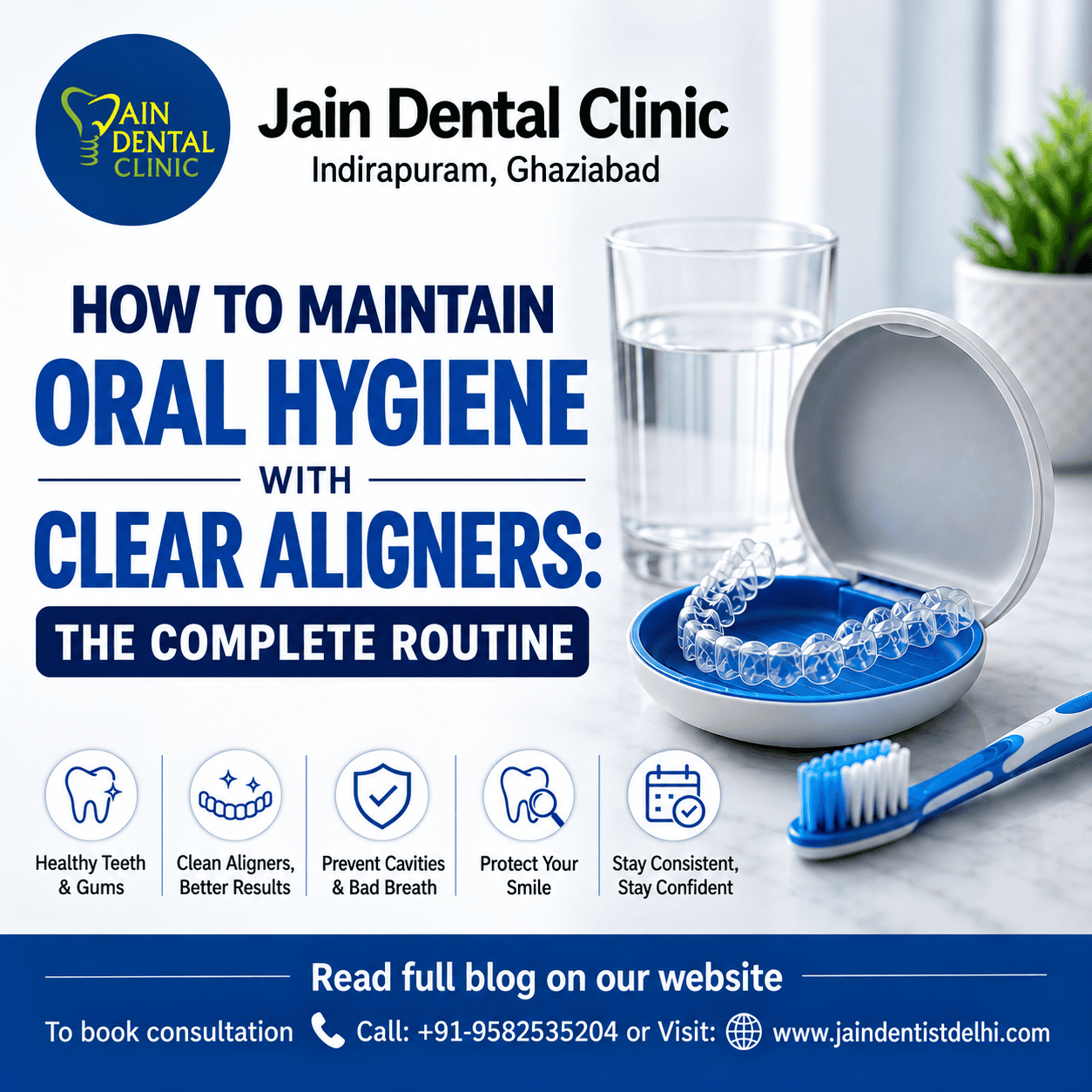
How to Maintain Oral Hygiene with Clear Aligners: The Complete Routine
- Clear aligners create a warm, enclosed environment that can increase bacterial growth if oral hygiene is neglected.
- Always remove aligners before eating or drinking anything except plain water.
- Brush your teeth for at least two minutes before putting aligners back in.
- Daily flossing is essential because aligners can trap plaque between teeth and along the gumline.
- Clean aligners twice daily using lukewarm water and clear antibacterial soap or aligner cleaning products.
- Never use hot water, harsh toothpaste, or colored mouthwash on clear aligners.
- Poor aligner hygiene can lead to cavities, gum disease, bad breath, white spots, and stained trays.
- Drinking plenty of water helps reduce dry mouth and bad breath during treatment.
- Sugary foods, sticky snacks, coffee, tea, soda, and alcohol can negatively affect aligner hygiene and stain trays.
- Carry a travel oral hygiene kit with a toothbrush, floss picks, toothpaste, and aligner case when away from home.
- Signs like bleeding gums, yellow aligners, bad breath, or tooth sensitivity indicate your oral hygiene routine needs improvement.
- Regular dental checkups and professional cleanings are important throughout clear aligner treatment for long-term oral health.
Maintaining proper clear aligner oral hygiene is essential for preventing cavities, bad breath, plaque buildup, gum problems, and stained aligners during orthodontic treatment. Because aligners cover your teeth for up to 22 hours a day, bacteria and food particles can become trapped easily if you do not follow a consistent cleaning routine.
To keep your teeth and aligners healthy, always remove your trays before eating or drinking anything except water, brush and floss thoroughly before reinserting them, and clean your aligners daily using safe, non-abrasive products. Avoid common mistakes like using hot water, wearing dirty aligners, or skipping flossing. With the right daily habits, proper products, and regular dental checkups, you can complete your clear aligner treatment with a straighter, healthier, and brighter smile.
You invest significant time and money into straightening your teeth with clear aligners, expecting a beautiful, confident smile at the end of the journey. But what happens when you notice your trays turning yellow, your breath becoming stale, or white spots forming on your teeth? Suddenly, the discreet, convenient treatment you signed up for feels like a constant source of anxiety. When food particles and bacteria become trapped under your trays, they multiply rapidly. This can lead to painful cavities, inflamed gums, and embarrassing aligner odor that completely undermines your goal of achieving a perfect smile.
The good news is that preventing these issues is entirely within your control. By establishing a proper clear aligner cleaning routine, you can protect your teeth and keep your aligners practically invisible. This comprehensive guide will walk you through exactly how to maintain oral hygiene with clear aligners. You will learn the daily steps for a pristine mouth, the best products to use, and the common mistakes to avoid so your teeth remain healthy and bright throughout your entire treatment.
Why is oral hygiene important during clear aligner treatment?
Understanding how clear aligners change the environment inside your mouth is the first step to protecting your teeth. When you wear aligners, you are placing a physical barrier over your teeth for up to 22 hours a day. This changes how your mouth naturally cleans itself, making an oral hygiene with clear aligners a top priority.
How do clear aligners affect your oral environment?
Clear aligners create a snug, warm space around your teeth. While this is perfect for shifting them into place, it also creates an ideal environment for bacteria if not managed properly.
- Reduced saliva flow when trays are worn: According to the American Dental Association (2025), aligners limit the natural flow of saliva over your teeth. Saliva is your mouth’s natural defense mechanism, washing away food particles and neutralizing harmful acids. Without it, your teeth are left vulnerable.
- Food particles trapped between teeth and aligners: If you do not brush after eating, any lingering food debris becomes locked tightly against your enamel. This acts as an all-day buffet for bacteria.
- Increased risk of bacterial growth: The dark, moist, and enclosed space under an aligner accelerates bacterial reproduction. This rapid growth can lead to serious oral health complications if left unchecked.
What problems are caused by poor clear aligner hygiene?
Failing to clean your teeth and trays effectively can derail your orthodontic progress and cause lasting damage.
- Tooth decay: When bacteria consume trapped sugars, they produce acid. Because saliva cannot reach the teeth to wash this acid away, the enamel weakens, leading to cavities.
- Gum disease: Plaque buildup along the gumline causes inflammation. Over time, this can lead to gingivitis, characterized by red, swollen, and bleeding gums.
- White spots on teeth: Also known as decalcification, these chalky white spots occur when minerals are stripped from the enamel. They are often permanent and become highly visible once treatment is complete.
- Yellow aligners and unpleasant odor: Bacteria and plaque buildup on the plastic trays cause them to turn cloudy, yellow, and emit a foul smell. This completely defeats the purpose of wearing “invisible” braces.
What is the ideal daily oral hygiene routine with clear aligners?
A structured daily routine is the foundation of clear aligner oral hygiene. By following these steps consistently, you can keep your teeth healthy and your aligners crystal clear.
Step 1 – Remove aligners before eating or drinking
You must take your clear aligners out before consuming anything other than plain water. This is a non-negotiable rule of treatment.
- Why eating with aligners is harmful: Chewing food with your trays in place can easily crack, warp, or scratch the plastic. Furthermore, food gets mashed into the aligner material, making it incredibly difficult to clean.
- Drinks that can stain or damage trays: Hot beverages like coffee and tea can physically warp the plastic, ruining the custom fit. Dark liquids like red wine and soda will permanently stain the material.
- Importance of rinsing after beverages: If you must drink a sugary or acidic beverage (with trays removed), always rinse your mouth thoroughly with water afterward. This helps neutralize acids before you put your aligners back in.
Step 2 – Rinse your mouth after every meal
Rinsing is a simple but highly effective way to remove loose debris before you begin brushing.
- Preventing food debris buildup: Vigorously swishing water around your mouth dislodges large food particles from between your teeth.
- Reducing acid exposure before reinserting aligners: Water helps balance the pH levels in your mouth. This prevents you from trapping active acids against your enamel when you put your trays back in.
Step 3 – Brush teeth properly before wearing aligners again
Brushing teeth with clear aligners requires diligence. You must ensure all surfaces are completely clean before sealing them under plastic.
- Best brushing technique for aligner users: Use a soft-bristled toothbrush and non-abrasive fluoride toothpaste. Brush in gentle, circular motions, paying close attention to the spaces where your teeth meet your gums.
- Recommended brushing duration: Brush for a full two minutes. This ensures the fluoride has enough time to strengthen your enamel and all plaque is removed.
- Importance of cleaning the gumline and tongue: Bacteria love to hide along the gumline and on the surface of your tongue. Gently brushing these areas significantly reduces bad breath and plaque formation.
Step 4 – Floss daily to remove hidden plaque
Flossing during clear aligner treatment is absolutely essential. A toothbrush simply cannot reach the tight spaces between your shifting teeth.
- Why flossing is critical during orthodontic treatment: If plaque is left between teeth, the aligners will press it firmly into the gums, causing rapid inflammation and decay.
- Areas aligners cannot clean: The contact points between your teeth are prime real estate for cavities. Flossing mechanically breaks up the bacterial colonies hiding here.
- Best flossing tools for convenience: If traditional string floss is difficult to manage, consider using floss picks, interdental brushes, or a water flosser for a thorough and convenient clean.
Step 5 – Clean your clear aligners correctly
Your clear aligner cleaning routine is just as important as brushing your teeth. Dirty trays will undo all your hard work.
- Gentle brushing methods: Dedicate a separate, soft-bristled toothbrush specifically for your aligners. Gently brush the inside and outside of the trays to remove soft plaque.
- Using lukewarm water instead of hot water: Always use lukewarm or cool water. Hot water will warp the plastic, altering the fit and potentially disrupting your treatment plan.
- Safe cleaning solutions: Use clear, unscented antibacterial soap or specialized aligner cleaning crystals. Avoid abrasive toothpastes, which create micro-scratches where bacteria can thrive.
Step 6 – Wear aligners for the recommended hours
Hygiene and wear time go hand in hand for successful treatment.
- Why consistency matters: You must wear your aligners for 20 to 22 hours every day. Removing them too frequently disrupts the gentle, constant pressure required to move your teeth.
- Relationship between wear time and treatment success: If you do not meet the wear time requirements, your teeth may not track properly with the aligners. This can prolong your treatment and require costly revisions.
What are the best products for cleaning clear aligners?
Using the right tools makes maintaining your oral hygiene with clear aligners much easier. Here is what you should keep in your dental care kit.
What are the best toothbrush recommendations?
The type of toothbrush you use impacts both your enamel and your aligners.
- Soft-bristle toothbrushes: Always choose soft bristles. Medium or hard bristles can cause gum recession and damage your enamel, especially when you are brushing three to four times a day.
- Electric vs. manual toothbrushes: Electric toothbrushes are highly recommended. They remove significantly more plaque than manual brushing and often feature built-in timers to ensure you brush for a full two minutes.
What is the best toothpaste for aligner users?
Not all toothpastes are safe for frequent use during clear aligner therapy.
- Non-abrasive toothpaste: Avoid whitening toothpastes that contain harsh abrasives like baking soda or charcoal. These can wear down your enamel with frequent brushing.
- Fluoride benefits: Choose a toothpaste containing fluoride. Fluoride actively repairs weakened enamel and provides a crucial layer of defense against cavities.
What are the best floss and interdental cleaning tools?
Because flossing is mandatory, finding a tool you actually like using is important.
- Water flossers: These devices use a targeted stream of water to blast away plaque and food debris. They are excellent for massaging gums and cleaning hard-to-reach areas.
- Interdental brushes: These tiny brushes slide effortlessly between teeth, making them perfect for removing stubborn food particles that string floss might miss.
- Floss picks: For on-the-go cleaning, floss picks are incredibly convenient. Keep a pack in your car, desk, or bag.
Which clear aligner cleaning products are safe?
Protect the clarity and structure of your trays by using approved cleaning agents.
- Cleaning crystals: These are designed specifically for clear aligners. Dissolving them in water creates a soaking solution that breaks down plaque and kills odor-causing bacteria.
- Aligner foams: Foams can be pumped directly into your trays before you put them in your mouth. They slowly clean the aligners and freshen your breath while you wear them.
- Retainer cleaning tablets: Mild retainer or denture cleaning tablets can be used for a deep clean. Always ensure they are non-abrasive and safe for clear plastic.
How do you clean clear aligners properly?
Knowing how to clean clear aligners properly ensures they remain invisible and odor-free from day one to the day you switch to a new set.
What is the best daily cleaning routine for aligners?
A consistent schedule keeps bacterial growth at bay.
- Morning cleaning: Bacteria accumulate on your trays while you sleep. Upon waking, remove your aligners, brush your teeth, and gently brush the trays with clear soap and lukewarm water before reinserting them.
- Night cleaning: Before bed, perform a deeper clean. Soak your aligners in a cleaning solution for 15 minutes to break down any plaque accumulated throughout the day.
- Midday rinsing habits: Whenever you take your aligners out for a meal or snack, rinse them thoroughly under cold water before putting them in their protective case.
What should you avoid when cleaning aligners?
Certain common household items will ruin your orthodontic trays.
- Hot water: Never boil or rinse your trays in hot water. The heat will instantly warp the thin plastic.
- Colored mouthwash: Blue or green mouthwashes contain artificial dyes that will permanently tint your clear aligners.
- Harsh toothpaste: The gritty texture of regular toothpaste will scratch the plastic. These micro-scratches make the trays look cloudy and create hiding spots for bacteria.
- Soap with strong chemicals: Avoid scented or colored soaps, as they leave a bitter taste and can degrade the aligner material over time.
How can you remove odor and stains from aligners?
If your aligners start to smell or yellow, swift action is required.
- Deep-cleaning methods: If standard brushing is not enough, soak your trays in a mixture of half water and half white vinegar for 20 minutes. Brush gently and rinse thoroughly to remove mineral buildup.
Preventing discoloration naturally: The best way to prevent stains is strict adherence to the rules: never eat with them in, never drink dark liquids with them in, and clean them daily.
What foods and drinks affect oral hygiene during aligner treatment?
Your diet plays a massive role in your overall oral health, especially when undergoing orthodontic treatment.
Which foods increase plaque and staining?
Certain foods are notoriously difficult to clean off your teeth.
- Sugary snacks: Candies, chocolates, and baked goods feed bacteria. If you consume these, you must brush meticulously before putting your trays back in.
- Sticky foods: Caramel, gummy candies, and dried fruits cling to the grooves of your teeth. They are incredibly difficult to remove and easily cause cavities under aligners.
- Highly pigmented foods: Turmeric, curry, berries, and tomato sauces can stain your enamel. If you do not brush well, these pigments can transfer to your aligners.
Which drinks should you be careful with?
Beverages are a major culprit for aligner damage.
- Coffee: Highly acidic and deeply pigmented, coffee will stain both your teeth and your trays.
- Tea: Black and green teas contain tannins that aggressively stain enamel.
- Soda: The high sugar and acid content in soda rapidly dissolves enamel, leading to severe decay if trapped under aligners.
- Alcohol: Many alcoholic drinks contain high levels of sugar, and red wine is notorious for causing deep, stubborn stains.
What are teeth-friendly diet tips for aligner wearers?
You can support your oral hygiene by making smart dietary choices.
- Water intake: Drink plenty of plain water throughout the day. It keeps you hydrated, promotes saliva production, and washes away debris.
- Crunchy fruits and vegetables: Apples, carrots, and celery act as natural toothbrushes. Their fibrous texture helps scrub away plaque while you chew.
- Calcium-rich foods: Cheese, milk, and yogurt provide the calcium and phosphorus your teeth need to remineralize and stay strong against acid attacks.
What are common oral hygiene mistakes clear aligner users make?
Even with the best intentions, patients frequently make errors that compromise their treatment. Avoid these common pitfalls.
Putting aligners back without brushing
This is the most dangerous mistake you can make. Trapping food and sugar against your teeth guarantees rapid bacterial growth, leading to bad breath, cavities, and gum inflammation.
Skipping flossing
Brushing only cleans 60% of your tooth’s surface. If you skip flossing, the remaining 40% between your teeth is left covered in plaque, which the aligners will then press deeply into your gums.
Wearing dirty aligners
Putting a dirty, plaque-covered aligner over freshly brushed teeth undoes your cleaning efforts. Your aligners must be just as clean as your teeth.
Using hot water to clean trays
Many patients mistakenly believe hot water sterilizes the trays. In reality, it warps the plastic, altering the precise fit needed to move your teeth correctly.
Not replacing aligner cases regularly
Your aligner case is a breeding ground for bacteria. Wash it daily with soap and warm water, and replace it entirely every few months to ensure a hygienic storage environment.
How can you maintain fresh breath while wearing clear aligners?
Bad breath (halitosis) is a frequent complaint among clear aligner patients, but it is entirely preventable.
What causes bad breath during treatment?
When saliva flow is restricted by the plastic trays, your mouth becomes dry. A dry mouth allows sulfur-producing bacteria to thrive. These bacteria feed on microscopic food particles trapped under the aligners, producing foul-smelling gases.
What are the best tips to keep breath fresh?
You can combat aligner breath with a few simple additions to your routine.
- Hydration: Drink water constantly. Keeping your mouth moist prevents bacteria from multiplying rapidly.
- Tongue cleaning: Invest in a tongue scraper. A massive amount of odor-causing bacteria lives on the surface of your tongue. Scrape it daily for immediate freshness.
- Alcohol-free mouthwash: Use a clear, alcohol-free mouthwash. Alcohol dries out the mouth, which makes bad breath worse in the long run.
- Proper aligner cleaning: Soaking your aligners daily with specialized cleaning crystals neutralizes the odors absorbed by the porous plastic.
How do you maintain hygiene at work or traveling?
Maintaining clear aligner oral hygiene requires planning when you are away from home.
What should you carry in an aligner hygiene kit?
Create a small, portable kit that goes with you everywhere.
- Travel toothbrush: A compact brush with soft bristles.
- Mini toothpaste: A travel-sized, non-abrasive fluoride toothpaste.
- Floss picks: Easier to use on the go than traditional string floss.
- Aligner case: Never put your aligners in a napkin; always store them in a hard case.
- Cleaning tablets: Keep a few tablets handy for a midday refresh if needed.
How do you maintain hygiene when brushing isn’t immediately possible?
Sometimes, brushing immediately after a meal is impossible.
- Rinsing strategies: Go to the restroom and vigorously rinse your mouth with water. Rinse your aligners as well.
- Temporary solutions during travel: Chew a piece of sugar-free xylitol gum for five minutes (with trays out) to dislodge food and stimulate saliva, then discard the gum, rinse with water, and reinsert your trays. Brush properly as soon as you have access to a sink.
What are the signs your oral hygiene routine needs improvement?
Your mouth will give you clear warning signs if your routine is lacking. Pay attention to these symptoms.
Persistent Bad Breath
If your breath smells foul even shortly after brushing, bacteria are hiding somewhere. You likely need to improve your flossing or deep-clean your aligner trays.
Cloudy or Yellow Aligners
Aligners should remain nearly invisible for the two weeks you wear them. If they turn cloudy or yellow quickly, you are likely not brushing them well enough, or you are consuming staining beverages while wearing them.
Bleeding Gums
Healthy gums do not bleed. If you spit blood when brushing or flossing, it is a sign of gingivitis caused by plaque buildup along the gumline.
Tooth Sensitivity or White Spots
Increased sensitivity to hot or cold, or the sudden appearance of chalky white spots, indicates that acid is stripping minerals from your enamel. This is a red flag for early tooth decay.
When should you visit your dentist during clear aligner treatment?
Clear aligners require professional oversight. Do not rely solely on your at-home routine.
Importance of Regular Dental Checkups
Your orthodontist or dentist tracks your tooth movement, but they also monitor your overall oral health. Regular checkups ensure that any emerging issues, like hidden cavities, are caught early.
Professional Cleanings During Orthodontic Treatment
Schedule a professional dental cleaning every six months. Dental hygienists use specialized tools to remove hardened tartar (calculus) that a normal toothbrush cannot eliminate.
Warning Signs That Need Immediate Attention
If you experience severe tooth pain, extreme gum swelling, or if an aligner cracks and cuts your mouth, do not wait for your next appointment. Contact your dental provider immediately for an evaluation.
Frequently Asked Questions (FAQ)
Can I brush my teeth too much while using aligners?
Yes. Brushing aggressively more than four times a day can wear down your enamel and cause your gums to recede. Always use a soft-bristled brush and gentle pressure.
How often should I clean my aligners?
You should rinse your aligners every time you remove them, brush them gently twice a day (morning and night), and soak them in a cleaning solution once a day for a deep clean.
Can I use mouthwash with clear aligners?
You can use mouthwash, but avoid colored mouthwashes while wearing your trays. The dyes can stain the plastic. Opt for clear, alcohol-free mouthwashes to protect your aligners and prevent dry mouth.
Why do my aligners smell bad?
Aligners smell bad when plaque and bacteria build up on the plastic. This happens if you do not brush your teeth properly before wearing them, or if you fail to clean the trays with an antibacterial soap or cleaning crystal.
Is it okay to drink water while wearing aligners?
Yes, drinking cool or room-temperature plain water is perfectly safe. Avoid hot water, sparkling water (which can be acidic), or flavored waters while wearing your trays.
What happens if I wear dirty aligners?
Wearing dirty aligners traps bacteria against your teeth, rapidly increasing your risk for tooth decay, gum disease, permanent white spots on your enamel, and chronic bad breath.
Conclusion: Final Thoughts on Maintaining Oral Hygiene with Clear Aligners
Maintaining excellent oral hygiene with clear aligners comes down to consistency. By committing to a routine of removing your trays before eating, brushing and flossing meticulously, and cleaning the aligners daily with safe products, you protect both your oral health and your financial investment.
Discipline during this process ensures that when your treatment is complete, your newly straightened smile is perfectly healthy, bright, and free of decay or stains. Remember that your at-home care must be paired with professional oversight.
Schedule Your Consultation Today
Maintain a Healthy Smile Throughout Your Clear Aligner Treatment
Now that you understand how important clear aligner oral hygiene is — from preventing bad breath and plaque buildup to keeping your teeth healthy and your trays crystal clear — the next step is building the right daily routine with professional guidance and support.
At Jain Dental Clinic, Dr. Arpan Pavaiya Jain and Dr. Rashi Agarwal Jain help patients achieve straighter smiles while maintaining excellent oral health throughout their clear aligner journey. Whether you are planning to start aligner treatment or need expert advice on aligner care and hygiene, our team provides personalized, patient-focused dental care for long-term smile success.
📞 Call: +91-9582535204
🌐 Visit: www.jaindentistdelhi.com
Medical Advice Disclaimer:
The information provided in this article is for general educational and informational purposes only and is not intended as professional medical or dental advice, diagnosis, or treatment. While we strive for accuracy, every patient’s dental anatomy and clinical needs are unique. Always seek the advice of your dentist or another qualified healthcare provider with any questions you may have regarding a medical condition. Never disregard professional medical advice or delay seeking it because of something you have read on this website

Dr. Arpan Pavaiya Jain (BDS, MDS – Prosthodontics) is a prosthodontist and implantologist with more than 25 years of experience. He studied at KGMC Lucknow and leads Jain Dental Clinic in Indirapuram, Ghaziabad. His focus is dental implants, crowns and bridges, dentures, full mouth rehabilitation, and Invisalign clear aligners.