Can Crooked Teeth Affect Your Health? Health Problems Explained
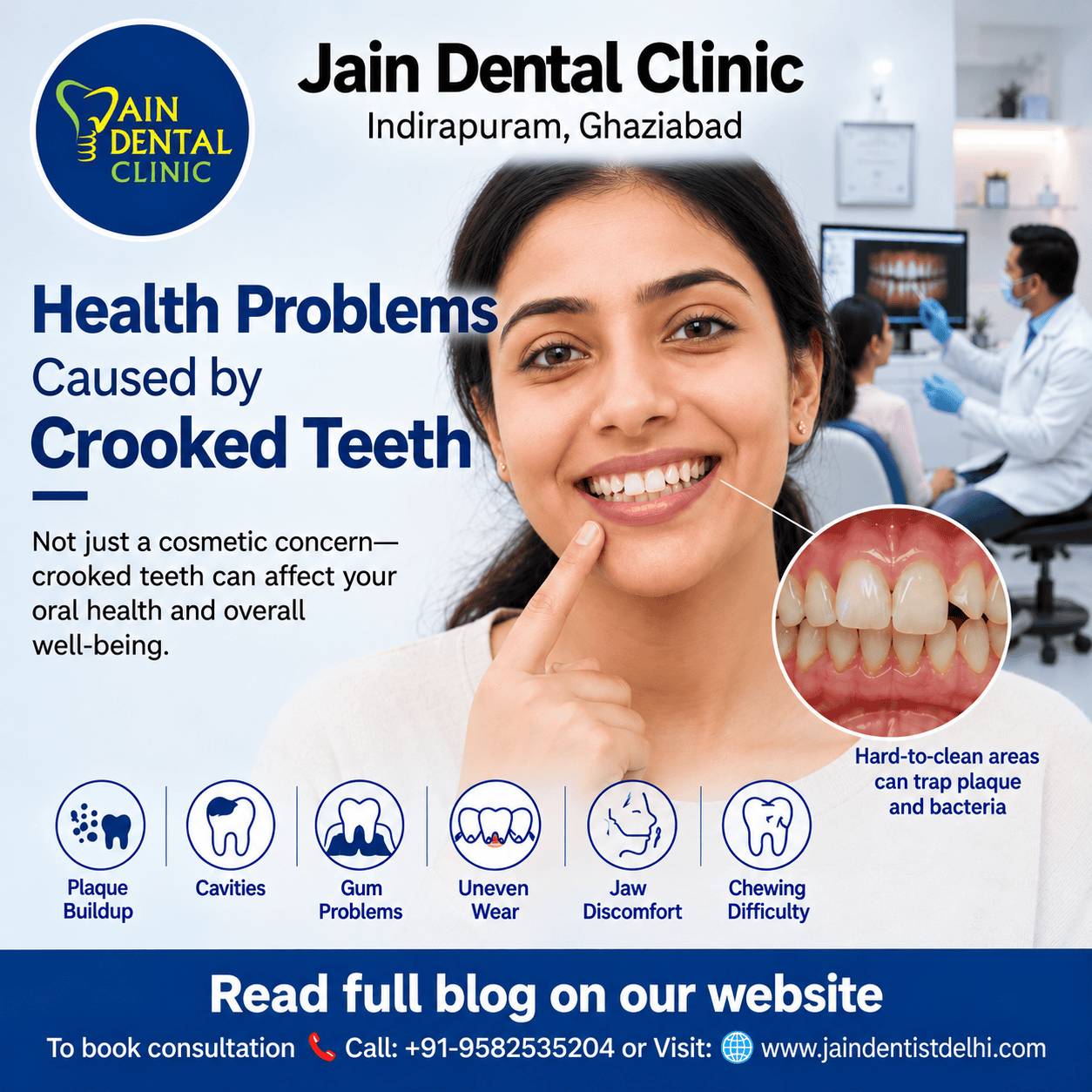
- Crooked teeth can affect your health in some cases, mainly by making oral hygiene harder and increasing the risk of plaque buildup, cavities, gum disease, bad breath, and uneven tooth wear.
- The effects depend on your specific alignment and bite. Severe crowding or bite problems may also affect chewing or contribute to jaw discomfort, but crooked teeth do not automatically cause these problems.
- Good oral hygiene is essential if you have crooked teeth. Brush twice daily with fluoride toothpaste, clean between teeth daily, and pay extra attention to crowded areas. An interdental brush or water flosser may help reach difficult areas.
If you experience frequent cavities, bleeding gums, chewing discomfort, significant crowding, or jaw symptoms, schedule a dental or orthodontic consultation to understand whether your tooth alignment is contributing to these concerns.
Are crooked teeth affecting more than the appearance of your smile? Crowding or misalignment can sometimes make brushing and flossing harder, increasing the risk of cavities, gum disease, bad breath, and other dental concerns. The potential health problems caused by crooked teeth depend on factors such as the severity of crowding, your bite, oral hygiene, and individual anatomy. This guide explains how crooked teeth may affect oral hygiene, chewing, tooth wear, gum health, and jaw function. It also looks at whether crooked teeth can affect digestion or overall health, while separating evidence-based concerns from common misconceptions. You will also learn when an orthodontic evaluation may be helpful and whether treatment is always necessary. Read the full article to understand the effects of crooked teeth and what they may mean for your dental health.
Most people assume crooked teeth are simply a cosmetic issue — something you fix for the sake of a straighter smile, not because your health depends on it. That assumption is understandable, but it does not always hold up. Tooth alignment can quietly influence how well you clean your teeth, how evenly your bite functions, and how your gums and enamel hold up over time.
None of that means crooked teeth are automatically dangerous. The potential effects depend on how crowded your teeth are, how your upper and lower jaws meet, and how well you manage your oral hygiene despite those challenges. Some people with noticeably crooked teeth maintain excellent oral health for years. Others develop persistent problems — cavities, gum inflammation, or jaw discomfort — that turn out to be connected to their alignment.
This article will walk you through what current dental evidence actually says about the health problems caused by crooked teeth. You will learn how misalignment can affect your oral hygiene, which dental problems it may contribute to, whether it can influence chewing or jaw function, and how to know when an evaluation with a dentist or orthodontist makes sense.
Can Crooked Teeth Really Affect Your Health?
It helps to separate what crooked teeth directly cause from what they can make more likely. These are two different things, and understanding the difference will give you a much clearer picture of your own situation.
Direct effects
It relate to tooth position itself — how crowded teeth create surfaces that are genuinely difficult to reach with a toothbrush or floss, or how misaligned bites place uneven forces on certain teeth.
Indirect effects
These are problems that may develop over time because misalignment makes daily oral hygiene and efficient chewing harder to manage. Plaque that is not removed consistently leads to decay. Gum tissue that is difficult to clean becomes vulnerable to inflammation.
Crooked teeth do not guarantee either outcome. What they do, in some cases, is raise the difficulty level of keeping your mouth healthy. Whether that matters in your specific case depends on a few key factors:
- The severity of crowding or rotation. Mild crowding creates different risks than severe overlapping.
- How your upper and lower teeth meet. Bite alignment affects how forces are distributed across your teeth when you chew.
- Your oral hygiene habits. Consistent, thorough cleaning can significantly reduce risk even with imperfect alignment.
- Your gum health. Gums that are already inflamed are more vulnerable to the added challenge of misaligned teeth.
- Your individual anatomy. Tooth size, jaw structure, and enamel thickness all play a role.
So how much does alignment actually matter? That depends on where you fall on that spectrum — and an honest answer requires looking at the specific problems that misaligned teeth may contribute to.
What Health Problems Can Be Caused by Crooked Teeth?
This section covers the core dental and functional concerns that are genuinely associated with tooth misalignment. Each one is real — but none of them is inevitable. The purpose here is not to predict what will happen to you, but to explain the mechanisms so you can make informed decisions about your care and proactively prevent long-term malocclusion complications.
Higher Risk of Tooth Decay and Cavities
When teeth overlap or crowd against each other, they create narrow gaps and tight contact points that a toothbrush cannot easily penetrate. Floss can be difficult to pass through without shredding or snapping, which means those surfaces often stay inadequately cleaned.
Plaque buildup in hard-to-clean areas is the central concern. Plaque (the sticky film of bacteria that forms on teeth throughout the day) feeds on sugars and produces acids that gradually break down tooth enamel (the protective outer layer of a tooth). When plaque sits in contact with enamel long enough without being removed, it begins to cause decay. A study of orthodontic patients consistently shows that crowded teeth are associated with higher plaque scores in specific areas — not because the person is brushing carelessly, but because certain surfaces are structurally inaccessible.
If you have crooked teeth and find yourself getting frequent cavities despite brushing regularly, the alignment of your teeth may be contributing to the problem, even if it is not the only factor.
Gum Disease and Gum Inflammation
Gum disease (periodontal disease) begins with plaque accumulating along and beneath the gumline. When teeth are crowded or rotated, the gumline around misaligned teeth can be irregular and harder to clean — creating areas where bacteria and food particles gather undisturbed.
Gingivitis (early gum inflammation, marked by redness, swelling, and bleeding when brushing) is the first stage. It is reversible with proper cleaning. Left unaddressed, gingivitis can progress to periodontitis (a deeper infection that damages the bone and tissue supporting the teeth). In periodontitis, the structures holding your teeth in place begin to break down. It is critical to understand that structural bone loss caused by periodontitis is biologically irreversible without advanced regenerative dental surgery. Because this bone foundation cannot simply ‘grow back’ through better brushing, early professional intervention is essential.
Crooked teeth do not cause gum disease on their own, but they can make it harder to keep the gumline clean enough to prevent it. If your gums bleed regularly when you brush, that is worth discussing with a dentist — especially if you have significant crowding.
Difficulty Maintaining Proper Oral Hygiene
Even with excellent motivation and technique, misaligned teeth present real mechanical challenges. A toothbrush head cannot change shape to fit around a rotated molar. Floss cannot pass through a contact point that is so tight it shreds or does not allow proper movement.
The surfaces most at risk are typically the areas between overlapping teeth and the gumlines around rotated or tipped teeth. These are exactly the areas where cavities and gum problems tend to develop.
Some practical tools can help — interdental brushes (small brushes designed to clean between teeth), water flossers (which use a pressurized stream of water to dislodge debris), and single-tufted brushes can all improve access in difficult areas. Your dentist or hygienist can recommend the right combination for your specific alignment. The point is that good oral hygiene is still possible with crooked teeth — it simply requires more intentional technique and, in many cases, the right tools.
Bad Breath
Persistent bad breath (halitosis) often has a bacterial origin. When plaque and food debris accumulate in areas that are difficult to clean, bacteria produce sulfur compounds — the main source of an unpleasant odor.
Crooked teeth can contribute to bad breath indirectly by creating more places where food particles and bacteria collect. Gum inflammation associated with poor cleaning can also add to the problem, as inflamed tissue tends to harbor more bacteria.
That said, bad breath has many possible causes — including dry mouth, certain foods, digestive factors, and other oral-health conditions. Crooked teeth are one possible contributing factor, not the only one. If you notice persistent bad breath that does not improve with careful brushing and flossing, a dental evaluation is the right next step.
Abnormal Tooth Wear
Your teeth are designed to distribute biting forces fairly evenly across the whole arch when you chew. When your bite is misaligned — when certain teeth make heavy contact while others barely touch — some teeth absorb more force than they were built to handle.
Enamel wear from uneven bite forces tends to develop gradually, which is why it can go unnoticed for years. You might first notice it as sensitivity in specific teeth, or as visible flattening of the biting edges. In more advanced cases, small chips or fractures can develop in heavily loaded teeth.
Not every person with crooked teeth will experience significant wear — it depends on the nature of the bite problem and how much pressure is concentrated. But if you notice that some teeth feel more worn or sensitive than others, bite alignment is worth evaluating.
Difficulty Chewing Food
Your upper and lower teeth are designed to meet in a specific way during chewing — coordinated contact across multiple teeth working together to break food down efficiently. When the bite is significantly off, some people find that chewing certain foods requires more effort, feels uncomfortable, or puts pressure on individual teeth rather than the whole jaw.
Significant bite problems can reduce chewing efficiency — meaning food is less thoroughly broken down before being swallowed. This does not automatically cause digestive disease, but it does mean the digestive system receives less prepared food to work with. For the vast majority of people with mildly or moderately crooked teeth, chewing is not meaningfully affected. In cases of severe crowding or significant bite discrepancy, the impact can be more noticeable.
Jaw Pain and TMJ-Related Symptoms
The temporomandibular joint (TMJ — the hinge joint connecting your jaw to your skull) is part of a complex system involving the teeth, jaw muscles, and surrounding tissues. When the bite is uneven or certain teeth are creating irregular contact, the jaw muscles may work harder to compensate — which can, in some people, contribute to discomfort.
Possible symptoms associated with jaw strain include:
- Jaw discomfort or aching, particularly after meals or in the morning
- Clicking or popping sounds when opening or closing the mouth
- Muscle fatigue in the jaw, temples, or around the ears
- Difficulty opening the mouth fully or a sense of tightness
It is important to be clear here: the relationship between tooth misalignment and temporomandibular disorders (TMD) is complex and multifactorial. Research shows that many people with significant malocclusion (misaligned bite) have no TMD symptoms at all, while some people with well-aligned teeth do experience jaw pain. Crooked teeth alone do not reliably predict TMD. However, bite problems can be one contributing factor in individuals who are already predisposed to jaw discomfort. If you are experiencing jaw symptoms, a proper evaluation is needed — not an assumption that your bite is or is not the cause.
Increased Risk of Dental Trauma in Some Cases
When the upper front teeth protrude significantly (a condition sometimes called overjet — where the upper front teeth extend forward beyond the lower teeth), those teeth are more exposed and therefore more vulnerable to injury from a fall, impact, or collision.
This risk is most relevant in children and teenagers who are physically active or participate in contact sports. Prominent front teeth that stick out without the protection of the lower lip are less shielded during a facial impact. In these cases, orthodontic treatment to reduce the protrusion may reduce the risk of traumatic tooth damage — which is a clinical reason for treatment rather than simply a cosmetic one.
Can Crooked Teeth Affect Your Digestion?
This is one of the most common questions people ask, and it deserves a straightforward answer. Chewing is the first mechanical stage of digestion — it physically breaks food into smaller pieces and mixes it with saliva (which contains digestive enzymes) before it moves to the stomach.
Significant bite problems or severe crowding can sometimes reduce how thoroughly food is broken down during chewing. If food particles are consistently larger than usual when swallowed, the digestive system has to do more of the work that chewing would normally do.
However, crooked teeth themselves do not normally cause digestive diseases, stomach conditions, or problems with nutrient absorption. The connection between misaligned teeth and digestion is real, but modest — and typically only clinically significant in cases of severe bite dysfunction, not mild or moderate crowding. If you have concerns about chewing difficulty specifically, that is worth raising with a dentist, who can assess whether your bite is actually affecting your chewing function.
Can Crooked Teeth Affect Your Overall Health?
Oral health and overall health are connected — that much is well-established in medical literature. Gum disease, in particular, has been linked to increased inflammatory markers associated with conditions like cardiovascular disease. But this relationship involves gum disease as the relevant factor, not crooked teeth themselves.
The important distinction is this: crooked teeth may make it harder to prevent gum disease by making thorough cleaning more difficult. If misalignment contributes to persistent plaque buildup and unmanaged gum inflammation, the downstream effects on overall health become highly relevant due to bacteremia—a process where localized oral bacteria enter the bloodstream.
Crooked teeth do not directly cause heart disease, diabetes, respiratory disease, or other major systemic conditions. Making that claim would go far beyond what the current evidence supports. What is accurate is that oral health — including gum health — is part of your overall health picture, and anything that makes maintaining good oral health harder deserves attention. The strongest evidence relates to oral function and dental disease, and that is where an honest discussion of risk belongs.
How Crooked Teeth Can Affect Your Daily Life
Health consequences aside, misaligned teeth can affect how comfortable and functional your mouth feels on an ordinary day. These are practical concerns that are worth naming clearly.
Difficulty Brushing and Flossing
Crowded or rotated teeth require more time and technique to clean properly. You may find that reaching certain areas takes extra effort, that floss snaps or shreds in tight contact points, or that your gum line along overlapping teeth never quite feels clean after brushing. Over time, this can become discouraging — and the temptation to shorten your oral-hygiene routine is understandable.
Food Getting Stuck Between Teeth
Misaligned teeth often create irregular gaps and tight contacts that trap food. This is uncomfortable, and it also means bacteria have a consistent food source in those areas. Some people find themselves using a toothpick or floss repeatedly throughout the day just to stay comfortable.
Discomfort While Chewing
If certain teeth are making heavier contact than others during chewing, you may feel pressure, tenderness, or awareness in those specific teeth. This is not always severe, but it can make eating less enjoyable — particularly with harder or chewier foods.
Speech Changes in Certain Cases
Teeth play a direct role in forming certain sounds. The “s,” “th,” “f,” and “v” sounds, in particular, depend on where the tongue touches or approaches the teeth. Significant misalignment can alter the position of the tongue during speech, which may produce a lisp or slight distortion in those sounds. This is more common with severe misalignment and is particularly worth addressing in children, for whom speech development is ongoing.
Self-Consciousness About Your Smile
Feeling uncomfortable about the appearance of your teeth is a valid concern — not a trivial one. Self-consciousness about smiling can quietly affect how you interact with others, whether you feel confident in professional settings, and how freely you express yourself in photographs or conversation. These quality-of-life effects are real, and they are a legitimate reason to consider your options.
What Causes Crooked Teeth?
Understanding why crooked teeth develop can help you recognize whether the same factors may affect your children — and can also explain why teeth sometimes shift with age even in people who had straight teeth in their twenties.
Genetics and Jaw Size
Tooth size and jaw size are largely inherited. When a person inherits large teeth and a relatively small jaw, crowding is often the result — there simply is not enough room for every tooth to sit in alignment. Overbites (upper teeth protruding significantly over the lower) and underbites (lower teeth sitting in front of the upper) can also run in families.
Childhood Habits
Certain repetitive habits during early childhood can gradually alter the shape of the developing jaw. Prolonged thumb-sucking beyond age three or four, extended pacifier use, and tongue thrusting (pushing the tongue against the back of the front teeth during swallowing) all place consistent pressure on the developing arch. Chronic mouth breathing can also contribute by changing the resting position of the tongue and narrowing the upper jaw over time.
Missing or Extra Teeth
When a tooth is missing, the surrounding teeth tend to drift into the available space. This shifts alignment throughout the arch. Extra teeth (called supernumerary teeth) can crowd the arch in the opposite direction, blocking other teeth from erupting properly.
Premature Loss of Baby Teeth
Baby teeth serve as space-holders for the permanent teeth developing beneath them. If a baby tooth is lost early — through decay, trauma, or extraction — the neighboring teeth can drift into that space before the permanent tooth is ready to come through. The permanent tooth then has less room to erupt straight, which can result in tilting or crowding.
Impacted or Improperly Erupted Teeth
An impacted tooth (a tooth that cannot fully emerge through the gum because another tooth or bone is blocking its path) can push neighboring teeth out of alignment. Wisdom teeth are the most common example, though other teeth can be affected too.
Changes in Tooth Position Over Time
Teeth continue to shift slowly throughout adult life — even in people who had orthodontic treatment in their teens. Natural forward pressure from the back of the mouth causes the lower front teeth to gradually crowd over years – a recognized clinical phenomenon known as mesial drift. This is why many orthodontists recommend wearing a retainer indefinitely after treatment, not just for the first year or two. If you have noticed your teeth becoming more crowded as you have gotten older, this natural drift is a likely contributing factor.
Are Crooked Teeth Always a Problem?
No — and this is an important point. Not everyone with crooked teeth will experience meaningful health consequences, and not everyone needs orthodontic treatment.
Mildly crowded or imperfectly aligned teeth are extremely common, and many people with some degree of misalignment maintain excellent oral health throughout their lives with good cleaning habits and regular dental care.
Treatment decisions are genuinely individual. A dental or orthodontic evaluation takes into account:
- Severity of crowding. Minor overlapping is very different from severe crowding that prevents effective cleaning.
- Bite. How the upper and lower teeth meet affects chewing, tooth wear, and jaw function.
- Oral hygiene. How well plaque is currently being managed, and whether certain areas are consistently being missed.
- Gum health. Whether the gums are already showing signs of inflammation or disease.
- Chewing function. Whether the bite is affecting how comfortably and efficiently you chew.
- Tooth position. Whether any teeth are particularly vulnerable to wear or trauma.
- Patient goals. What concerns the person has — whether they are functional, cosmetic, or both.
Cosmetic concern alone is also a valid reason to pursue orthodontic treatment. The desire to feel comfortable and confident in your own smile is legitimate. That said, it is useful to distinguish elective cosmetic treatment from treatment that is recommended for clinical reasons — not because one is more valid than the other, but because it helps you make an informed decision about what you actually need.
When Should You See an Orthodontist for Crooked Teeth?
If you are unsure whether your crooked teeth are affecting your oral health, an evaluation can give you a clearer picture. Consider scheduling a dental or orthodontic assessment if you experience any of the following:
- Difficulty cleaning between teeth — floss shredding, gum bleeding during brushing, or areas that always feel unclean
- Frequent cavities in teeth that seem to be developing decay despite consistent brushing
- Bleeding or swollen gums that do not improve with better cleaning
- Difficulty chewing or discomfort in specific teeth when biting
- Significant tooth crowding or noticeably overlapping teeth
- Teeth that are becoming more crooked over time, even in adulthood
- Jaw discomfort, clicking, or muscle fatigue when opening or closing the mouth
- Prominent front teeth that extend forward significantly, especially in children who are active in sports
- Concerns about your bite or smile that are affecting your comfort or confidence
What Happens During an Orthodontic Evaluation?
An evaluation is a structured assessment — not a commitment to treatment. Here is what you can typically expect:
- Dental and medical history. You will be asked about any symptoms, previous dental work, habits, and general health — all of which can be relevant to alignment.
- Examination of tooth alignment. The dentist or orthodontist examines how each tooth is positioned within the arch, noting areas of crowding, spacing, rotation, or tipping.
- Bite assessment. How your upper and lower teeth come together is evaluated — both at rest and while chewing.
- Evaluation of jaw relationship. The relationship between your upper jaw, lower jaw, and facial structure is assessed.
- Photographs and scans or X-rays, when clinically indicated. These provide a detailed view of tooth roots, bone levels, and jaw angles that cannot be seen by examination alone. Not every evaluation requires X-rays — your clinician will advise based on your specific situation.
- Discussion of suitable treatment options. If treatment is appropriate, the clinician will explain the available approaches and what each involves, so you can make a decision that fits your situation.
Can Orthodontic Treatment Improve Problems Associated With Crooked Teeth?
Orthodontic treatment moves teeth into better alignment and corrects bite problems. When misalignment is contributing to oral-health or functional concerns, treatment can address the underlying mechanical factors — making teeth easier to clean, improving how the bite distributes forces, and repositioning teeth that are in vulnerable locations.
Potential benefits of orthodontic treatment for health-related concerns may include:
- Improved oral hygiene access — straighter teeth are easier to brush and floss effectively
- More even bite function — reducing excessive force on specific teeth
- Better tooth positioning — reducing vulnerability to wear, chipping, or trauma in certain cases
- Improvement in certain types of jaw discomfort — where bite discrepancy is a contributing factor
It is also important to be honest about what orthodontic treatment does not guarantee. Straightening teeth does not automatically prevent cavities, eliminate gum disease, or resolve jaw symptoms in every case. Treatment addresses alignment — what you do with that alignment, in terms of daily hygiene and ongoing dental care, determines long-term outcomes.
Current orthodontic options include:
- Traditional metal braces — fixed brackets and wires that are highly effective for a wide range of tooth alignment and bite problems. However, while braces can shift teeth, extreme skeletal malocclusions (where the upper and lower jaw bones themselves are severely misaligned) often require orthognathic (jaw) surgery in conjunction with orthodontics to fully correct.
- Ceramic braces — tooth-colored brackets that are less visible than metal, but otherwise work in the same way
- Clear aligners — removable, nearly invisible plastic trays worn in sequence to gradually shift teeth; suitable for mild to moderate misalignment in appropriately selected cases, but not universally indicated for every type of bite problem or crowding
The right approach depends on the individual’s diagnosis, the complexity of tooth movement needed, and personal preferences. An orthodontist can explain which options are clinically appropriate for your situation.
How to Protect Your Oral Health If You Have Crooked Teeth
If you have crooked teeth and are not currently pursuing orthodontic treatment, there are practical steps you can take to reduce your risk of dental problems:
- Brush twice daily with fluoride toothpaste. Fluoride strengthens enamel and helps protect against decay. Use a soft-bristled brush and spend extra time in crowded areas.
- Pay close attention to crowded or overlapping areas. These surfaces are where plaque is most likely to build up unnoticed. Angle your brush carefully to reach the gumline around each tooth.
- Floss or use an appropriate interdental cleaning aid daily. If traditional floss is difficult to manage in tight contact points, try an interdental brush or a water flosser, which can reach areas standard floss cannot.
- Attend regular dental check-ups. Professional cleanings remove tartar (hardened plaque) that brushing alone cannot address. Your dentist can also monitor areas of concern and catch problems early.
- Do not ignore bleeding gums or persistent bad breath. These are early warning signs that deserve professional attention, not just more mouthwash.
- Ask for professional guidance on your cleaning technique. A hygienist can identify which specific areas you are missing and show you how to clean them more effectively.
Have your bite evaluated if you experience jaw discomfort, uneven tooth sensitivity, or visible wear. These are functional symptoms that warrant a clinical assessment rather than a wait-and-see approach.
Frequently Asked Questions (FAQ) About Health Problems Caused by Crooked Teeth
Can crooked teeth cause health problems?
Yes, in some cases. Crooked teeth can make cleaning harder, which raises the risk of plaque buildup, cavities, and gum disease over time. Whether problems actually develop depends on the severity of misalignment and how well oral hygiene is managed. Not everyone with crooked teeth will experience significant health consequences.
Can crooked teeth cause cavities?
Crooked teeth can contribute to cavities by creating surfaces that are difficult to clean properly. Plaque that is not removed consistently produces acids that damage tooth enamel, leading to decay. If you are getting frequent cavities despite careful brushing, your alignment may be a contributing factor worth discussing with your dentist.
Do crooked teeth increase the risk of gum disease?
They can. Crowded or rotated teeth make it harder to remove plaque from the gumline, which can lead to gum inflammation (gingivitis). If left unmanaged, gingivitis can progress to periodontitis — a deeper infection that damages the bone and tissue supporting the teeth. Regular professional cleaning helps reduce this risk significantly.
Can crooked teeth cause bad breath?
They can contribute to it. Difficult-to-clean areas between crooked teeth allow bacteria and food debris to accumulate, which produces odor. Gum inflammation can also be a source of bad breath. That said, bad breath has multiple possible causes, and alignment is only one of them.
Can crooked teeth affect chewing?
Significant bite problems or severe crowding can reduce chewing efficiency, meaning food is less thoroughly broken down before being swallowed. Mild to moderate crooked teeth usually do not cause meaningful chewing difficulty. If you notice discomfort or awkwardness when biting or chewing specific foods, a bite evaluation is a reasonable next step.
Can crooked teeth cause jaw pain?
In some people, bite misalignment can contribute to jaw muscle strain and discomfort in the temporomandibular joint (the hinge connecting the jaw to the skull). However, the relationship between tooth alignment and TMJ disorders is complex — many people with crooked teeth have no jaw symptoms at all. If you are experiencing jaw pain, an evaluation will help determine whether alignment is a contributing factor.
Can crooked teeth affect digestion?
Indirectly, and only in significant cases. Chewing is the first stage of digestion, and severe bite problems can reduce how well food is broken down. Crooked teeth do not normally cause digestive disease or affect nutrient absorption. For most people, any effect on digestion from crooked teeth is minimal.
Is it necessary to straighten crooked teeth?
Not always. Treatment depends on whether misalignment is contributing to functional problems, difficulty cleaning, bite issues, or other clinical concerns. Mild crowding without functional consequences may not require treatment. If your main motivation is cosmetic, that is also a valid reason to consider orthodontics — but the decision should be yours, made with full information rather than pressure.
Can crooked teeth get worse with age?
Yes, generally. Teeth continue to shift slowly throughout adult life, even in people who had straight teeth in their twenties. The lower front teeth in particular tend to crowd progressively over time due to natural forward pressure. Untreated gum disease can accelerate this drift considerably by weakening the supporting bone.
Can clear aligners fix crooked teeth?
Clear aligners are effective for mild to moderate misalignment and spacing in appropriately selected cases. For complex crowding, significant rotations, or substantial bite correction, traditional braces may be more appropriate. Suitability depends on your specific dental situation and should be assessed by an orthodontist — not assumed based on advertising or general guidance.
Conclusion: When Crooked Teeth May Need Attention
Crooked teeth are not simply a cosmetic issue in every case — and they are not automatically a health emergency either. The truth is more nuanced than either extreme suggests.
Here is what the evidence actually supports:
- Crooked teeth can make oral hygiene more difficult, raising the risk of plaque buildup, cavities, and gum disease in some people — particularly where crowding is significant.
- Bite misalignment can contribute to uneven tooth wear and, in some cases, jaw muscle discomfort — though the relationship with TMJ disorders is complex and not predictable from alignment alone.
- Chewing efficiency can be affected by severe bite problems, but crooked teeth do not normally cause digestive disease.
- The strength of the evidence is clearest for oral health consequences — cavities, gum disease, and tooth wear — rather than broader systemic effects.
- Many people with crooked teeth maintain good oral health with careful hygiene, the right tools, and regular dental care.
- Whether you need treatment depends on your specific situation, not on a general rule about what crooked teeth always cause.
If you have been wondering whether your crooked teeth might be affecting your dental health, the most useful thing you can do is get a professional assessment. A dentist or orthodontist can examine your specific alignment, bite, and gum health — and give you an honest picture of whether any of your current concerns are connected to your tooth position.
Schedule Your Consultation Today
Understand How Crooked Teeth May Affect Your Health with a Professional Dental Evaluation
Now that you understand the potential health problems caused by crooked teeth—from difficulty maintaining oral hygiene and cavities to gum disease, tooth wear, chewing problems, and possible jaw discomfort—the next step is understanding whether your tooth alignment is affecting your oral health. Since every patient’s teeth, bite, and oral-health needs are different, a professional dental or orthodontic evaluation can help identify whether misalignment is contributing to your concerns and whether treatment is appropriate.
At Jain Dental Clinic, Dr. Arpan Pavaiya Jain and Dr. Rashi Agarwal Jain can assess your teeth, bite, gum health, and overall oral condition and explain their findings in clear, simple terms. Whether you are experiencing frequent cavities, bleeding gums, difficulty cleaning, chewing discomfort, or concerns about increasingly crooked teeth, our team can help you understand the possible causes and discuss whether orthodontic treatment, including clear aligners, may be suitable for your individual needs.
📞 Call: +91-9582535204
🌐 Visit: www.jaindentistdelhi.com
Medical Advice Disclaimer:
The information provided in this article is for general educational and informational purposes only and is not intended as professional medical or dental advice, diagnosis, or treatment. While we strive for accuracy, every patient’s dental anatomy and clinical needs are unique. Always seek the advice of your dentist or another qualified healthcare provider with any questions you may have regarding a medical condition. Never disregard professional medical advice or delay seeking it because of something you have read on this website

Dr. Arpan Pavaiya Jain (BDS, MDS – Prosthodontics) is a prosthodontist and implantologist with more than 25 years of experience. He studied at KGMC Lucknow and leads Jain Dental Clinic in Indirapuram, Ghaziabad. His focus is dental implants, crowns and bridges, dentures, full mouth rehabilitation, and Invisalign clear aligners.