Why Are Teeth Crooked Again After Braces?
- Yes, teeth can become crooked again after braces. This happens because the bone, ligaments, and gum fibres around your teeth continue adapting after treatment, while natural changes can affect tooth position over time.
- Orthodontic relapse has several causes. Inconsistent retainer use, natural ageing changes, bite pressure, grinding, and changes in gum or bone health can all contribute to teeth shifting after braces.
- Retainers help protect your orthodontic results. Follow the retainer plan provided by your orthodontist, and never force a retainer that suddenly feels tight or no longer fits properly.
- Early assessment can make the next step simpler. Returning crowding, gaps, a changing bite, or a tight retainer are reasons to have your teeth checked before movement progresses.
If your teeth have started shifting after braces, explore the complete guide below to understand what may be causing the change and what you can do next.
If you have noticed your teeth shifting or your retainer no longer fits as it used to, schedule a consultation with a dentist or orthodontist for a professional assessment.
Seeing your teeth crooked again after braces can be frustrating, especially after months or years of orthodontic treatment. Teeth may shift because the bone, ligaments, and gum fibres around them continue adapting, while natural changes can affect their position over time. This movement is called orthodontic relapse. In this guide, you will learn why teeth become crooked again, the common causes of teeth shifting after braces, how retainers help maintain alignment, and the signs that may need professional attention. You will also learn what to do if your retainer feels tight, your bite changes, or crowding and gaps return. For patients in Delhi NCR and Ghaziabad, understanding these changes can help you decide when a dental or orthodontic assessment may be useful. Read the full post for detailed guidance on protecting your orthodontic results.
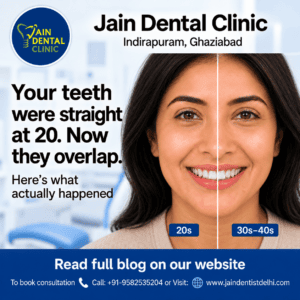
You wore braces for months, maybe even years. Then one morning you notice a tooth sitting slightly out of line. Seeing your teeth crooked again after braces can feel unfair, and a little confusing. Many people go through exactly the same thing, and it does not mean you did anything wrong.
Here is the part most patients are never told clearly. The day your braces come off, your teeth are not locked in place forever. Orthodontists call this unwanted movement orthodontic relapse — teeth drifting away from the position braces put them in. It can happen for a few different reasons. The bone and gums around your teeth are still settling. Retainer nights get skipped. Your mouth keeps changing as you get older.
This article explains what is really going on, in plain language. You will learn why teeth move after braces, what orthodontic relapse actually means, why retainers matter so much, how long teeth can keep moving, and what to do if you spot changes. Let’s start with the question most people ask first.
Can Teeth Become Crooked Again After Braces?
Yes, teeth can become crooked again after braces. This section explains why that happens and what holds your teeth in place. Once you understand the structures around each tooth, the movement makes a lot more sense.
Your teeth are not screwed into your jaw like fence posts. They sit in a living system that responds to pressure every single day.
The jawbone — Each tooth sits in a socket in the bone. Bone is living tissue that slowly rebuilds itself, which is exactly why braces can move teeth at all.
The periodontal ligament — This is the thin, springy cushion that connects each tooth root to the bone. It absorbs chewing pressure and it also has a slight memory of where the tooth used to sit.
The gums and fibres around each tooth — Tiny elastic fibres wrap around the necks of your teeth. These fibres stretch during orthodontic treatment and can take a long time to relax into the new position.
Your lips, cheeks and tongue — These muscles press against your teeth all day, every day. Over years, that gentle pressure can nudge teeth slightly out of line.
When your braces come off, all of these structures are still adjusting. The teeth are in their new position, but the surrounding tissues have not fully settled around them yet. This is why the first months after braces matter so much.
Normal settling versus noticeable relapse
Not every change means something has gone wrong. Small movement, often called settling, is common and usually harmless. Larger, ongoing movement is what dentists mean by relapse. Here is a table showing comparison of Normal minor settling vs Noticeable relapse
| Cases | Normal minor settling | Noticeable relapse |
|---|---|---|
| How much moves | Very slight, hard to see in the mirror | Visible crowding, gaps or rotation |
| How it progresses | Settles and then stays put | Keeps getting worse over months |
| Retainer fit | Fits, maybe a little snug at first | Feels tight, hard to seat, or will not go in |
| Your bite | Feels the same when you chew | Feels uneven or different |
| What it usually means | Tissues finding their comfortable position | Teeth drifting back toward old positions |
| What to do | Keep wearing your retainer as advised | Book a check-up rather than waiting |
One important point. If your teeth have moved a little, it does not automatically mean your braces failed or that your orthodontist did poor work. Retention is a normal, expected part of orthodontic treatment, not a sign that something went wrong. Braces do the straightening. Retainers do the holding. Both jobs matter.
That said, movement that keeps increasing deserves a proper look. A dentist or orthodontist can tell you which side of this table you are on.
Why Do Teeth Become Crooked Again After Braces?
This is the heart of the matter, so let’s take it properly. Teeth rarely shift for one single reason. Usually a few smaller things stack up over time, and together they pull your smile slightly out of line.
Below are the main causes of teeth shifting after braces, explained one at a time.
Teeth Naturally Tend to Move Over Time
Teeth are designed to move. That is the whole reason braces work in the first place, and it does not switch off once treatment ends.
Think of it this way. Your tooth sits in bone, cushioned by a soft ligament that responds to pressure. Apply steady pressure and the bone slowly remodels, letting the tooth travel. Braces use this on purpose. But your mouth applies its own gentle pressure every day too.
Chewing forces — Every bite sends pressure through your teeth. Over thousands of meals, that pressure can encourage very small changes in position.
Muscle pressure from lips, cheeks and tongue — These soft tissues rest against your teeth constantly. Where the pressure is uneven, teeth may slowly lean in one direction.
Habits you may not notice — Tongue thrusting, nail biting or resting a hand against your jaw all add pressure. On their own they rarely cause much, but they can add to other factors.
Because this pressure never stops, holding teeth in place needs an ongoing plan. That plan is retention, and it is why retainers exist.
The Supporting Tissues Need Time to Adapt
When braces move a tooth, the tooth arrives at its new position before the tissues around it do. This gap between the two is a major reason for early relapse.
The bone rebuilds slowly — New bone has to form on one side of the tooth socket and dissolve on the other. This remodelling continues for months after your braces come off.
The gum fibres stay stretched — Tiny elastic fibres around each tooth get stretched during treatment. Some of these fibres take a year or longer to relax, and until then they gently pull the tooth back.
Rotated teeth carry the strongest pull — A tooth that was turned or twisted into place tends to be the most eager to spin back. Lower front teeth are a common example.
The months straight after braces are therefore the most delicate stretch of the whole journey. Teeth look finished, but underneath they are still settling.
Not Wearing Retainers as Recommended
Inconsistent retainer use is the reason dentists see most often when people find their teeth crooked again after braces. Retainers hold the teeth steady while everything around them stabilises.
The pattern is usually gradual, not dramatic. Someone wears their retainer nightly, then misses a night, then a week. Nothing seems different, so the habit quietly fades. Months later, the retainer feels tight.
Teeth shifting without a retainer often begins before you can see anything in the mirror. That is what makes it easy to miss.
Your own retainer instructions matter more than any general rule you read online. Wear time depends on your treatment, your bite and how your teeth responded, so follow the plan your orthodontist gave you.
Natural Changes in the Bite and Jaw Over Time
Your mouth keeps changing throughout adult life. These changes are normal, and they affect people who never had braces too.
Gradual crowding of the lower front teeth — Many adults notice their lower front teeth becoming slightly crowded with age. This happens widely, with or without previous orthodontic treatment.
Changes in gum and bone health — Gum disease, bone loss or general health conditions can affect how firmly teeth are held. Less support can allow more movement.
Losing a tooth or having dental work — When a tooth is removed, neighbouring teeth may drift toward the space. A new crown or filling that changes a tooth’s shape can also alter how teeth meet.
Grinding or clenching (bruxism) — Bruxism means grinding or clenching your teeth, often during sleep. The repeated pressure can contribute to wear and small positional changes.
This kind of crowding usually gets pinned on wisdom teeth. Current orthodontic thinking points elsewhere, and suggests they are rarely the main driver, though your dentist may still want to check them.
Changes in Tooth Position Can Be Gradual
Relapse is rarely sudden. Teeth moving after braces tend to drift slowly, which is exactly why so many people are surprised when they finally spot it.
You look at your smile every day, so small daily changes barely register. Then an old photo or a tight retainer makes the difference obvious all at once.
Early changes people notice first include a slight overlap between two front teeth, a small gap reopening, or a bite that feels a little different when chewing. Spotting one of these does not put you straight back in braces. It simply means your teeth are worth a look before the movement builds any further.
What Is Orthodontic Relapse?
You have seen this term a few times now, so let’s define it properly. Understanding what relapse is, and what it is not, takes a lot of the worry out of the situation.
Orthodontic relapse means unwanted tooth movement after orthodontic treatment has finished. In simple terms, your teeth drift away from the position braces or aligners put them in. It is one of the most common concerns dentists hear from former braces patients.
Relapse comes in different degrees
Not all relapse looks the same. It sits on a scale, and where you land changes what happens next.
Very mild relapse — A tooth turns slightly, or a small space starts to open. Most people only spot this when comparing old photos or when a retainer feels snug.
Moderate relapse — Crowding returns in the lower front teeth, or a visible gap reappears. This is usually noticeable in the mirror and often keeps progressing.
More significant relapse — Several teeth move, and the bite changes with them. Chewing may feel different, and cleaning between certain teeth can become harder.
The mild end is far more common than the severe end. Most people who notice their teeth relapse after braces are somewhere near the gentler side of this scale.
Relapse does not mean your braces failed
This point matters, so it is worth saying clearly. Relapse is not proof that your orthodontic treatment was done badly.
Braces have one job: moving teeth into a healthier position. Retainers have a different job: holding them there while the bone and gums catch up. When teeth drift afterwards, it usually reflects what happened during the retention phase, not a fault in the original treatment.
Think of it like physiotherapy after an injury. The treatment works, but the exercises afterwards protect the result. Skip those, and progress can slip.
Relapse versus a completely new problem
Not every change in your smile counts as relapse. Sometimes something new has developed, and it is treated differently.
Relapse — Teeth move back toward where they were before braces. Your dentist can often recognise the pattern because it mirrors your original alignment.
A new orthodontic problem — Something changes that was not there before. Losing a tooth allows neighbours to drift. Gum disease loosens support. A restoration alters how your teeth meet.
Telling these apart is not something you can reliably do at home, and that is fine. A dentist or orthodontist can compare your current alignment against your treatment records and see which pattern fits.
What Happens If You Stop Wearing Your Retainer?
Stopping retainer wear is the most common reason people find their teeth crooked again after braces. This section explains what actually happens in your mouth when retention stops, and why the timeline looks so different from person to person.
When you stop wearing your retainer, your teeth slowly begin travelling back the way they came. How quickly this happens, and how far it goes, varies a lot between people. Your treatment, your bite and how long ago your braces came off all play a part.
Why retainers matter after braces
A retainer is not an optional extra at the end of treatment. It is the part that protects everything the braces achieved.
It holds teeth steady while the bone rebuilds — New bone needs months to fully form around each tooth in its new socket. The retainer keeps the tooth still while that happens.
It resists the pull of stretched gum fibres — Those tiny elastic fibres around each tooth take a long time to relax. Until they do, they gently tug the tooth backwards.
It absorbs everyday pressure — Chewing, swallowing and muscle pressure never stop. A retainer helps spread that pressure instead of letting it push individual teeth.
Braces move your teeth. Retainers keep them there. Both stages are part of the same treatment.
How teeth shift once retention stops
The change is usually quiet rather than dramatic. Teeth shifting without a retainer tends to follow a slow, steady pattern.
It starts invisibly — The first movements are fractions of a millimetre. Nothing looks different in the mirror yet.
Old patterns return first — Teeth often drift toward the alignment they had before braces. Lower front teeth are a common early site for crowding.
Small changes build up — Each month adds a little more. Because you see your smile daily, the total change can go unnoticed for a long time.
The retainer becomes the messenger — Many people only realise anything happened when they try an old retainer and it no longer fits.
Why some people notice changes sooner than others
Two people can stop wearing retainers at the same time and get very different results. Several things explain the gap.
How recently your braces came off — Teeth are generally least stable in the first year or so after treatment, while tissues are still adapting.
What type of movement you had — Teeth that were rotated, or spaces that were closed, often show change earlier than simpler corrections.
Your bite — An uneven bite can place pressure on certain teeth, which may encourage movement.
Your gum and bone health — Healthy supporting tissue holds teeth more firmly. Gum problems can allow more movement.
Habits such as grinding — Regular clenching or grinding adds repeated pressure that can contribute over time.
This is why comparing your experience to a friend’s rarely tells you much. Their teeth are working with a different set of conditions.
Follow your own retainer instructions
You will find plenty of retainer schedules online, and they often contradict each other. Ignore them and follow the plan you were given.
Retention protocols genuinely differ between patients. Some people are advised to wear retainers full time at first and then only at night. Others are given a different pattern, or a fixed retainer bonded behind the teeth, or a combination of both. Your orthodontist based your plan on your teeth, your bite and how they responded during treatment.
One more thing worth knowing. If a retainer suddenly feels tight or will not seat properly, please do not force it. A poorly fitting retainer can put pressure in the wrong places and may affect your teeth or gums. Get it checked instead, and your dentist can tell you whether it can still be used safely.
How Long Do Teeth Move After Braces?
Most people want a number here. A month, a year, five years, and then it’s over. The honest answer is more useful than a number, and this section explains why.
Teeth can move throughout your life. There is no fixed point after braces when your teeth become permanently safe from movement. What does change is how likely movement is, and how quickly it tends to happen.
The risk changes, but it never reaches zero
Tooth movement after orthodontic treatment does not follow one flat line. It shifts in character as time passes.
The first months after braces — This is the least stable stretch. Bone is still rebuilding around each tooth and the gum fibres are still stretched, so teeth are at their most willing to move.
The first year or two — Things steadily become more settled as tissues finish adapting. Retention is usually most closely supervised during this window.
Years later — Teeth are generally more stable, but they are never fixed. Movement now tends to be slower and driven by ageing changes rather than by the braces themselves.
So the early period is the most delicate, and the years afterwards are calmer. Calmer, though, is not the same as finished.
Why movement continues for life
The reasons teeth keep moving are the same ones that affect people who never had braces at all.
Everyday pressure never stops — Your lips, cheeks and tongue press against your teeth all day, and you chew several times a day, every day.
Bone keeps remodelling — Jawbone is living tissue that rebuilds itself throughout life. That process is exactly what allows teeth to move at any age.
Your mouth changes with age — Gradual crowding of the lower front teeth is common in adults generally, whether or not they had orthodontic treatment.
Dental health changes things — Gum disease, tooth loss or new dental work can all alter how teeth are supported and how they meet.
Why retention is a long-term commitment
Because movement never fully stops, retention is best thought of as maintenance rather than a short task with an end date.
Many people are advised to keep wearing a retainer at night, in some form, for a long time. Some fixed retainers stay bonded behind the teeth for many years. What suits you depends on your treatment and your teeth, so your orthodontist’s plan is the one to follow.
It helps to reframe it slightly. You are not still recovering from braces. You are simply looking after a result, the same way you keep brushing to look after healthy gums. That mindset makes long-term retention feel much lighter.
What Are the Signs That Your Teeth Are Shifting After Braces?
Relapse is easy to miss because it happens slowly and rarely hurts. Knowing what to look for means you can catch changes early, when they are usually simpler to deal with. Here are the signs of teeth shifting after braces that people notice most often.
New or Returning Crowding
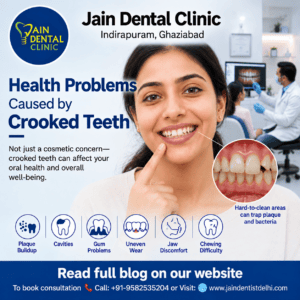
Crowding means teeth overlapping or twisting because there is not quite enough room for them to sit side by side.
This is the most common sign, and the lower front teeth are usually where it shows up first. You may see one tooth sitting slightly in front of its neighbour, or a tooth that looks a little turned.
A practical clue: flossing between two teeth suddenly feels tighter than it used to. That change in feel often comes before you can see anything.
Gaps Reappearing Between Teeth
Spaces that braces closed can slowly begin to reopen.
You might notice a thin dark line between two front teeth that was not there before. Some people spot it in photos rather than in the mirror, because a camera catches your smile from an angle you rarely see.
Small gaps often widen very gradually. If a space seems to be growing over several months, it is worth mentioning at your next appointment.
Changes in How Your Teeth Fit Together
Your bite is simply the way your upper and lower teeth meet when you close. When teeth move, that meeting point can change too.
Chewing feels different — Food may feel like it lands unevenly, or you may start favouring one side without meaning to.
Your teeth touch in a new spot — One tooth may make contact before the others when you close your mouth.
You notice new wear — A tooth edge may look slightly flattened or chipped where it now rubs against another tooth.
Bite changes matter because they involve function, not just appearance. They are always worth having looked at.
Retainer Feels Tight
A retainer that used to slip on easily may start to feel snug, or become difficult to seat properly.
This is one of the earliest and most reliable warnings. Your retainer was made to match your teeth exactly, so if the fit has changed, something has moved. Retainers do not shrink, even though it can genuinely feel that way.
Please do not force it. A tight retainer that is pushed into place can apply pressure in the wrong direction and may affect your teeth or gums. Tightness is a signal to get things checked, not a problem to solve by pressing harder. Your dentist can tell you whether the retainer is still safe to use or needs replacing.
When these signs are worth acting on
Noticing one small change does not mean you need treatment. Change that keeps progressing over months is the part that matters.
A useful habit is to take a straight-on photo of your smile every few months, in similar light. Comparing photos is far more reliable than memory, and it helps you tell real movement from an ordinary off day.
Why Do Teeth Shift Even When You Wear a Retainer?
This one frustrates people the most. You did everything you were told, wore your retainer faithfully, and your teeth still moved a little. It feels unfair, but there are clear reasons for it.
A retainer helps hold your teeth in position, but it cannot stop every change your mouth goes through over a lifetime. Understanding that limit helps you know what to expect, and when something genuinely needs checking.
What a retainer can and cannot do
Retainers are effective at their job. Knowing exactly what that job is prevents disappointment later.
What it does well — It resists the pull of stretched gum fibres, keeps teeth steady while bone rebuilds, and holds your alignment against everyday chewing and muscle pressure.
What it cannot do — It cannot stop your jaw and gums from changing as you age. It cannot prevent movement caused by gum disease, a lost tooth or a bite that puts uneven pressure on certain teeth.
So a retainer is a very good anchor, not a permanent lock. Small changes can still happen around a well-worn retainer.
Fit, condition and wear time all matter
Wearing a retainer and wearing an effective retainer are not always the same thing. A few practical issues can quietly reduce how well yours works.
The retainer has warped — Clear plastic retainers can distort if left in hot water, a hot car, or a dishwasher. A warped retainer no longer matches your teeth precisely.
It has worn thin or cracked — Retainers do not last forever. Daily use, plus grinding at night for some people, gradually wears the material down.
A fixed retainer has come loose — Bonded wires sit behind the front teeth and can debond at one point without you noticing. Teeth attached to the loose section may then move while the rest stay put.
Wear time has quietly slipped — Missing a night here and there adds up over months. Many people wear their retainer less often than they think they do.
The fit was never quite right — Occasionally a replacement retainer does not seat as accurately as the original. It can feel fine and still not hold every tooth properly.
Natural changes still happen underneath
Even with a perfect retainer, worn perfectly, your mouth keeps living its life.
Bone continues to remodel throughout adulthood. Gums change. Gradual crowding of the lower front teeth is widely seen in adults generally, including those who never had braces. Dental work such as a new crown or an extraction can alter how your teeth meet.
Retention reduces movement considerably. It does not freeze biology.
When to get it professionally checked
Some movement alongside retainer use can be normal settling. Movement that keeps progressing is a different matter.
Consider booking an assessment if your retainer has started to feel tight, if you can see teeth continuing to move month after month, if your bite feels different when you chew, or if a fixed retainer feels loose or rough to your tongue.
A dentist or orthodontist can check the fit of your retainer, the health of your gums and bone, and how your teeth are meeting. That tells you whether the retainer needs replacing, whether something else is driving the movement, or whether what you are seeing is simply your mouth settling normally.
How Can You Prevent Teeth From Becoming Crooked Again After Braces?
Most relapse is manageable when you know what to pay attention to. None of the steps below are complicated, and together they give your teeth the best chance of staying where braces put them. Here is how to prevent teeth from shifting after braces.
Wear Your Retainer as Recommended
This is the single most important habit, and it does more than everything else on this list combined.
Follow the exact plan your orthodontist gave you, not a schedule you read somewhere online. Retention protocols genuinely differ between patients, because they depend on your treatment, your bite and how your teeth responded.
A few things make the habit easier to keep:
Store it where you will see it — Keep the case next to your toothbrush, so the retainer becomes part of a routine you already have.
Always use the case — Retainers wrapped in a napkin get thrown away. It happens far more often than you would think.
Keep it away from heat — Hot water, a car dashboard or a dishwasher can warp clear plastic retainers out of shape.
Replace it promptly if lost — The longer you go without one, the more your teeth can drift in the meantime.
Keep Your Retainer in Good Condition
A retainer only works properly while it still matches your teeth exactly. A damaged one can do very little, or occasionally do harm.
Check yours from time to time for cracks, thin worn patches, or any change in shape. If you have a fixed retainer bonded behind your teeth, run your tongue along it now and then to feel for anything loose or sharp.
Get it assessed if it looks distorted, feels rough, no longer seats smoothly, or has become cloudy and brittle with age. A retainer that does not fit correctly should be checked rather than forced, because pressure applied in the wrong direction can affect your teeth and gums.
Attend Recommended Follow-Up Appointments
Follow-up visits exist so that small changes get spotted before they become large ones.
At these appointments, your dentist or orthodontist can compare your current alignment against your treatment records, check how your retainer fits, and look at your bite and gum health. That combination catches things you cannot see yourself.
Monitoring is quietly valuable. A tooth that has moved slightly is a much simpler conversation than a tooth that has moved for two years.
Pay Attention to Changes in Tooth Alignment
You see your teeth every day, which is exactly why gradual movement is so easy to miss. A little structure helps.
Take occasional photos — A straight-on smile photo every few months, in similar lighting, is far more reliable than memory.
Notice how flossing feels — Contact points that suddenly feel tighter often signal movement before anything looks different.
Trust the retainer test — If it starts feeling snug when it never used to, something has changed.
Acting early genuinely matters here. Minor movement often needs a much simpler response than movement that has been building for years.
Maintain Good Oral Hygiene
Healthy gums and bone hold teeth more securely, so day-to-day care supports your alignment as well as your general oral health.
Brush twice daily and clean between your teeth — This keeps plaque from irritating the gums that support each tooth.
Keep your retainer clean too — Rinse it after wear and clean it as advised. A dirty retainer carries bacteria straight back into your mouth.
Treat gum problems early — Gum disease can reduce the support around teeth, which may allow more movement over time.
Keep up regular dental check-ups — Cavities, gum inflammation and worn fillings can all change how teeth sit and meet.
Good hygiene will not stop every change on its own. It does, however, remove several of the things that make unwanted movement more likely.
What Should You Do If Your Teeth Become Crooked Again After Braces?
Noticing movement can be disheartening, especially after all the time you put into treatment. In most cases, though, the next step turns out to be far smaller than people fear. Here is what to do if your teeth are crooked again after braces.
Start with an assessment, not an assumption. The right response depends entirely on how much your teeth have moved and why, and that is something only a proper examination can tell you.
Do not assume you need braces again
This is the fear that stops most people from booking an appointment, and it is often unfounded.
Full retreatment is only one possibility among several. Minor movement and significant relapse are handled very differently, and many people who notice changes turn out to need something much smaller than a second round of braces.
Waiting because you dread the answer tends to work against you. Movement that continues quietly for another year usually leaves you with fewer straightforward options, not more.
What a professional assessment actually looks at
An orthodontic evaluation is a check of several things at once, not just a glance at your front teeth.
Your current alignment — Where your teeth sit now, compared against your records from the end of treatment. This shows exactly how much has changed and in what direction.
Your bite — How your upper and lower teeth meet when you close and chew. Bite problems can drive movement, and they matter for function as well as appearance.
Your retainer — Whether it still fits accurately, whether it has warped or worn, and whether a fixed retainer has come loose anywhere along the wire.
Your gum and bone health — The support around each tooth. Gum disease or bone loss needs addressing before any tooth movement is considered.
Your overall oral health — Cavities, missing teeth, worn fillings or crowns that may be affecting how your teeth sit and meet.
That full picture is what separates simple relapse from something new that has developed since your braces came off.
Possible next steps
What follows depends on your findings. These are the kinds of approaches a dentist or orthodontist may discuss with you.
A new or adjusted retainer — Where movement is very slight and your gums are healthy, updated retention may be all that is needed to hold things steady.
Repair of a fixed retainer — If a bonded wire has come loose, rebonding it can stop further movement from that section.
Limited orthodontic treatment — A shorter, more targeted course of treatment focused on specific teeth, rather than the whole arch.
Clear aligners — Removable trays that may suit some cases of post-braces movement. The next section covers this in more detail.
Full orthodontic retreatment — Occasionally appropriate where movement has been extensive, or where the bite itself needs correcting.
Treating something else first — If gum disease, a cavity or a missing tooth is contributing, that is usually addressed before any alignment work begins.
No one can tell you which of these fits your situation from a description alone, including us. Two people with what looks like identical crowding can need completely different approaches, because the cause underneath is different.
Bring your old records if you have them
One small practical tip that genuinely helps. If you still have photos, models or paperwork from your original treatment, take them along.
Comparing your teeth now against how they looked when your braces came off makes it much easier to judge how much has changed and how quickly. Even old smile photos on your phone can be useful.
Can Clear Aligners Fix Teeth That Become Crooked Again After Braces?
Clear aligners come up often in this conversation, so it is worth explaining honestly. This section covers what they are, when they may be considered, and why suitability is never something you can decide from an article.
Clear aligners may be an option for some people whose teeth have moved after braces, but they are not right for every case. Whether they suit you depends on your teeth, your bite and your oral health.
What clear aligners are
Clear aligners are removable, see-through trays that fit over your teeth and apply gentle pressure to move them gradually.
You wear a series of trays, each slightly different from the last, changing to a new set at intervals your provider decides. Because they lift out, you remove them to eat and to clean your teeth.
They are one way of moving teeth. Fixed braces are another. Neither is automatically better, and the right choice depends on what actually needs to move.
What affects whether aligners are suitable
Suitability is a clinical judgement based on several factors together, not on any single one.
How much movement is needed — Smaller, more contained corrections are generally more suited to aligners than complex ones. What counts as small is a professional assessment, not a guess in the mirror.
What kind of movement is needed — Tipping a tooth slightly is different from rotating it, moving a root, or closing a wide space. Some movements are handled more predictably by other approaches.
Your bite relationship — If the way your upper and lower teeth meet needs correcting, that may change what treatment is appropriate.
Your gum and bone health — Teeth should not be moved while gum disease is active. Gum health usually needs to be stable first.
Existing dental work — Crowns, bridges, implants and veneers can all affect how teeth respond, and implants do not move at all.
Your own goals and routine — Aligners only work while they are in your mouth. They ask for consistent daily wear, which suits some people better than others.
Why a professional assessment comes first
You cannot tell from looking whether aligners will work for you, and honestly, neither can we from here.
Two people can have crowding that looks almost identical in a photograph and still need different treatment. One may have a straightforward tooth that has tipped. The other may have a bite issue underneath that caused the movement in the first place. Treating only the visible part in that second case risks the same relapse happening again.
A proper evaluation looks at your alignment, your bite, your gums and your treatment history together. Only then can anyone tell you whether aligners are appropriate, whether something else fits better, or whether updated retention alone would do the job.
If a provider offers you aligners without examining your bite and gum health first, that is a fair reason to ask more questions.
A realistic expectation
Clear aligners are a genuine option for some cases of post-braces movement, and many people are happy with the results. They are not a universal fix, and they are not automatically needed just because teeth have shifted.
There is one more thing worth saying plainly. Whatever moves your teeth back, retention afterwards still applies. Aligner treatment does not remove the need for a retainer. Skipping retention the second time round tends to lead to the same outcome as the first.
Frequently Asked Questions (FAQ) About Teeth Becoming Crooked Again After Braces
These are the questions patients ask most often after noticing their teeth have moved. Each answer is short and direct, so you can find what you need quickly.
Is it normal for teeth to shift after braces?
Yes, some tooth movement after braces is normal. Small settling happens as the bone and gums adapt to their new positions. What matters is whether the change keeps progressing. Movement that continues over months, or a retainer that starts feeling tight, is worth having checked.
Why do teeth move after braces?
Teeth move after braces because they are held by living bone, ligaments and gum fibres that are still adapting. Stretched fibres gently pull teeth back, while daily chewing and muscle pressure add to it. Inconsistent retainer wear and natural changes with age also contribute to teeth moving after braces.
Can teeth become crooked again after orthodontic treatment?
Yes, teeth can become crooked again after orthodontic treatment. This is called orthodontic relapse, meaning unwanted movement once treatment ends. It ranges from a barely visible change to noticeable crowding or gaps. Relapse does not mean your braces failed, and early assessment usually keeps the response simpler.
Can teeth shift if I stop wearing my retainer?
Yes, teeth commonly shift when retainer wear stops. Your teeth drift gradually toward earlier positions, often starting with the lower front teeth. The change usually begins before you can see anything in the mirror. Many people only notice when an old retainer no longer fits properly.
How long do teeth continue to move after braces?
Teeth can move throughout your life, so there is no point at which they become permanently fixed. The first months after braces are the least stable, and things settle considerably after that. Movement never fully stops, which is why long-term retention is usually recommended.
Does everyone experience orthodontic relapse?
No, not everyone experiences noticeable relapse. Some degree of small settling is common, but significant movement is not inevitable. Consistent retainer wear, healthy gums and regular check-ups all reduce the likelihood. How stable your result stays depends on your treatment, your bite and your oral health.
Can clear aligners straighten teeth that have shifted after braces?
Clear aligners may suit some people whose teeth have shifted after braces, but not everyone. Suitability depends on how much and what type of movement is needed, your bite, your gum health and existing dental work. A professional assessment is needed before anyone can confirm they are appropriate.
Conclusion: Maintaining Straight Teeth After Braces Requires Long-Term Retention
Seeing your teeth crooked again after braces is disappointing, but it is rarely the setback it first feels like. Teeth are living structures in a living jaw, and gentle movement is part of how mouths work. What protects your result is not luck, but steady, long-term retention and paying attention to small changes early.
Here are the points worth carrying away from this article:
Teeth can move after braces, and that is normal biology. Bone, ligaments and gum fibres keep adapting long after treatment ends, so no result is permanently locked in place.
Orthodontic relapse has several causes, not one. Inconsistent retainer wear, natural changes with age, bite pressure, grinding and gum health can all play a part, often together.
Retainers are what hold your result. Braces do the straightening, retainers do the keeping, and both stages belong to the same treatment.
Follow your own retainer plan, not a general rule. Retention protocols differ from patient to patient, so the instructions your orthodontist gave you are the ones that apply to your teeth.
Act early, because the response depends on your situation. A tight retainer, returning crowding or a bite that feels different are all worth a professional look. Minor movement and significant relapse are handled very differently, and only an examination can tell you which one you are dealing with.
If you have noticed your teeth shifting, or your retainer no longer fits the way it used to, a check-up is a sensible next step. A dental or orthodontic assessment can look at your alignment, bite, retainer fit and gum health together, and explain what is actually happening in your case.
Schedule Your Consultation Today
Understand Why Your Teeth Have Become Crooked Again with a Professional Orthodontic Evaluation
Now that you understand why teeth can become crooked again after braces—from natural tooth movement and changes in the supporting tissues to inconsistent retainer use, bite changes, grinding, and gum or bone health—the next step is understanding why your teeth have shifted and whether the movement is minor settling or orthodontic relapse. Since every patient’s teeth, bite, retainer fit, treatment history, and oral-health needs are different, a professional orthodontic evaluation can help identify the cause of the movement and determine whether any treatment is appropriate.
At Jain Dental Clinic, Dr. Arpan Pavaiya Jain and Dr. Rashi Agarwal Jain can evaluate your current tooth alignment, bite, retainer fit, gum and bone health, and overall oral health. Whether you have noticed returning crowding, gaps, a tight retainer, a changing bite, or gradual tooth movement after braces, our team can help you understand what is happening and discuss suitable options. Depending on your individual needs, these may include an adjusted retainer, limited orthodontic treatment, clear aligners, or other appropriate care.
📞 Call: +91-9582535204
🌐 Visit: www.jaindentistdelhi.com
Medical Advice Disclaimer:
The information provided in this article is for general educational and informational purposes only and is not intended as professional medical or dental advice, diagnosis, or treatment. While we strive for accuracy, every patient’s dental anatomy and clinical needs are unique. Always seek the advice of your dentist or another qualified healthcare provider with any questions you may have regarding a medical condition. Never disregard professional medical advice or delay seeking it because of something you have read on this website

Dr. Arpan Pavaiya Jain (BDS, MDS – Prosthodontics) is a prosthodontist and implantologist with more than 25 years of experience. He studied at KGMC Lucknow and leads Jain Dental Clinic in Indirapuram, Ghaziabad. His focus is dental implants, crowns and bridges, dentures, full mouth rehabilitation, and Invisalign clear aligners.