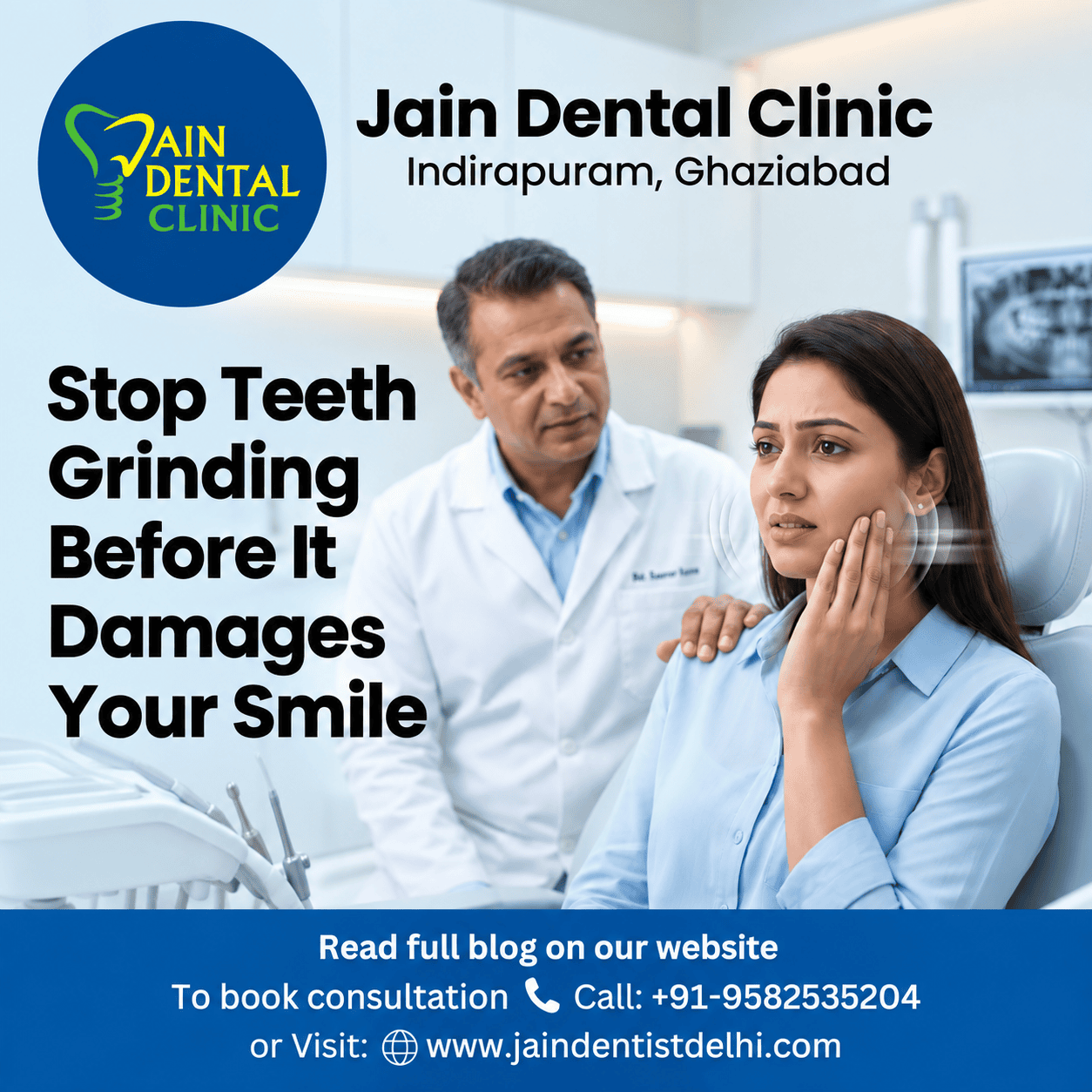
Key Takeaways Bruxism is the involuntary grinding or clenching of teeth—often during sleep—commonly triggered by stress, sleep disorders, or misaligned teeth. It frequently explains sympt
- 26, Mall Road, Near Ashiana Upvan, Ahinsa Khand 2, Indirapuram, Ghaziabad, U.P.
- info@jaindentistdelhi.com

- Call Today +91-958 253 5204
- Open Hour 09:00 AM to 09:00 PM
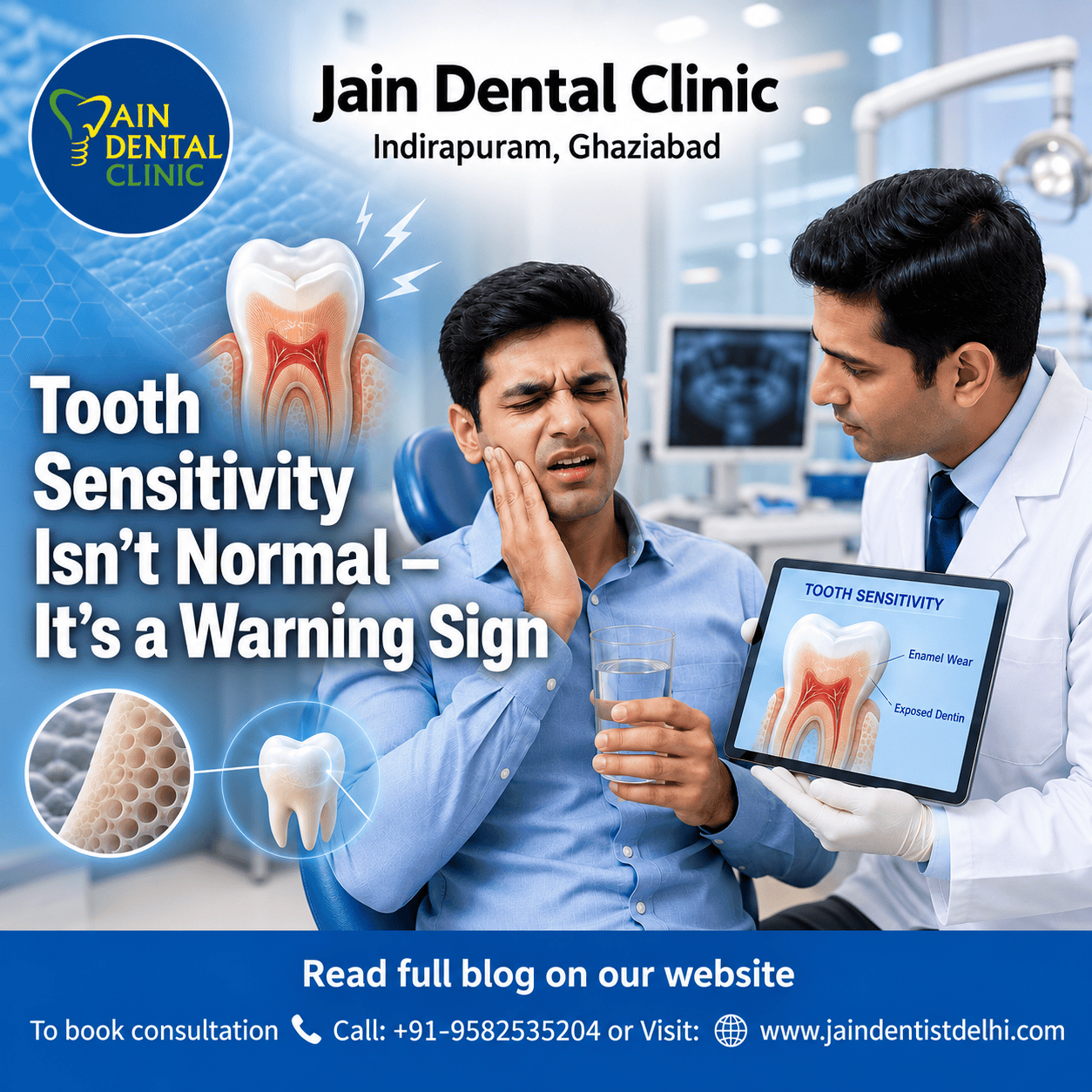
Key Takeaways Tooth enamel is the hard, protective outer layer of your teeth that prevents sensitivity, decay, and damage. However, it cannot regenerate once lost, making early care essential
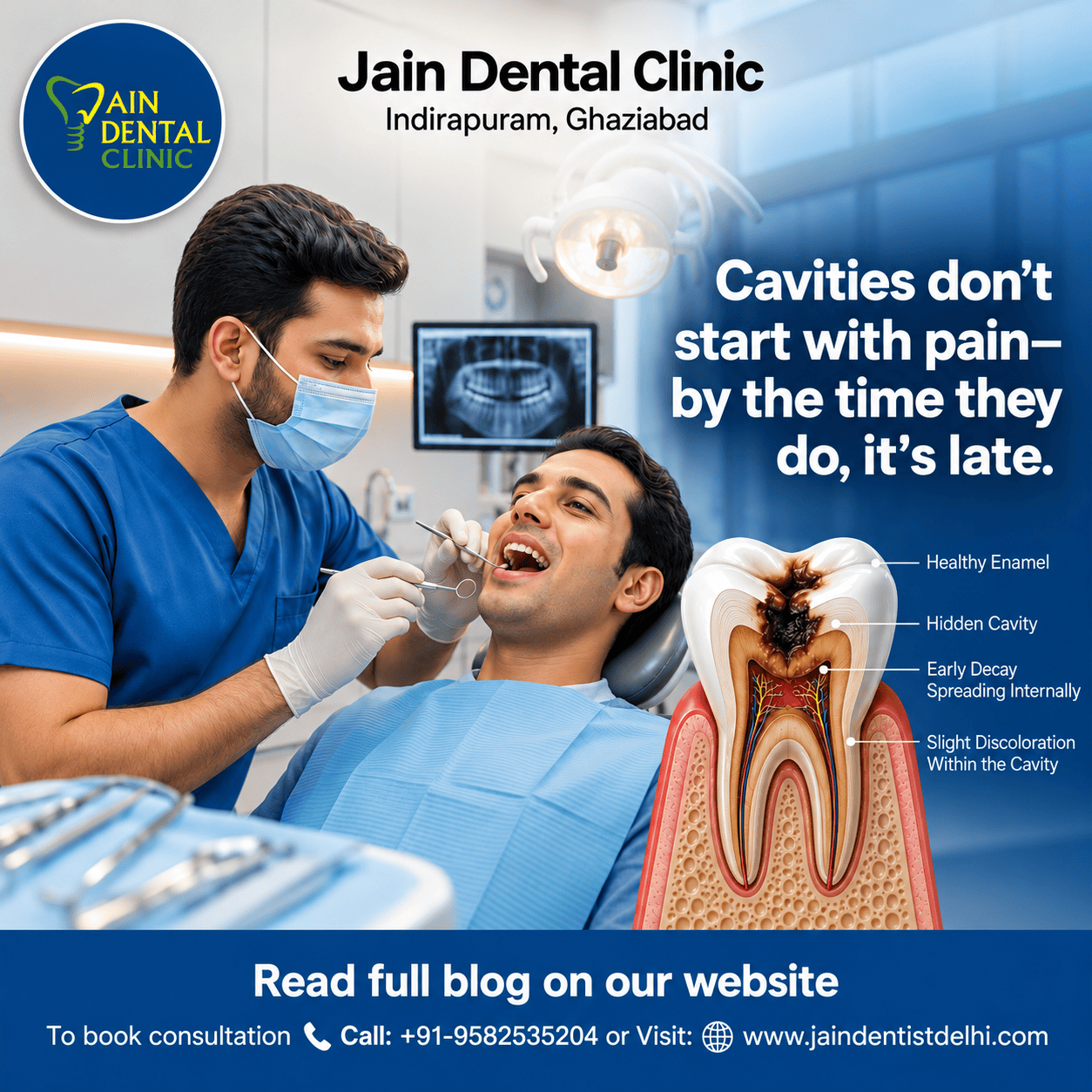
Key Takeaways Cavities are permanent holes in teeth caused by acid-producing bacteria breaking down enamel, often starting silently with mild sensitivity or white/brown spots—making early d
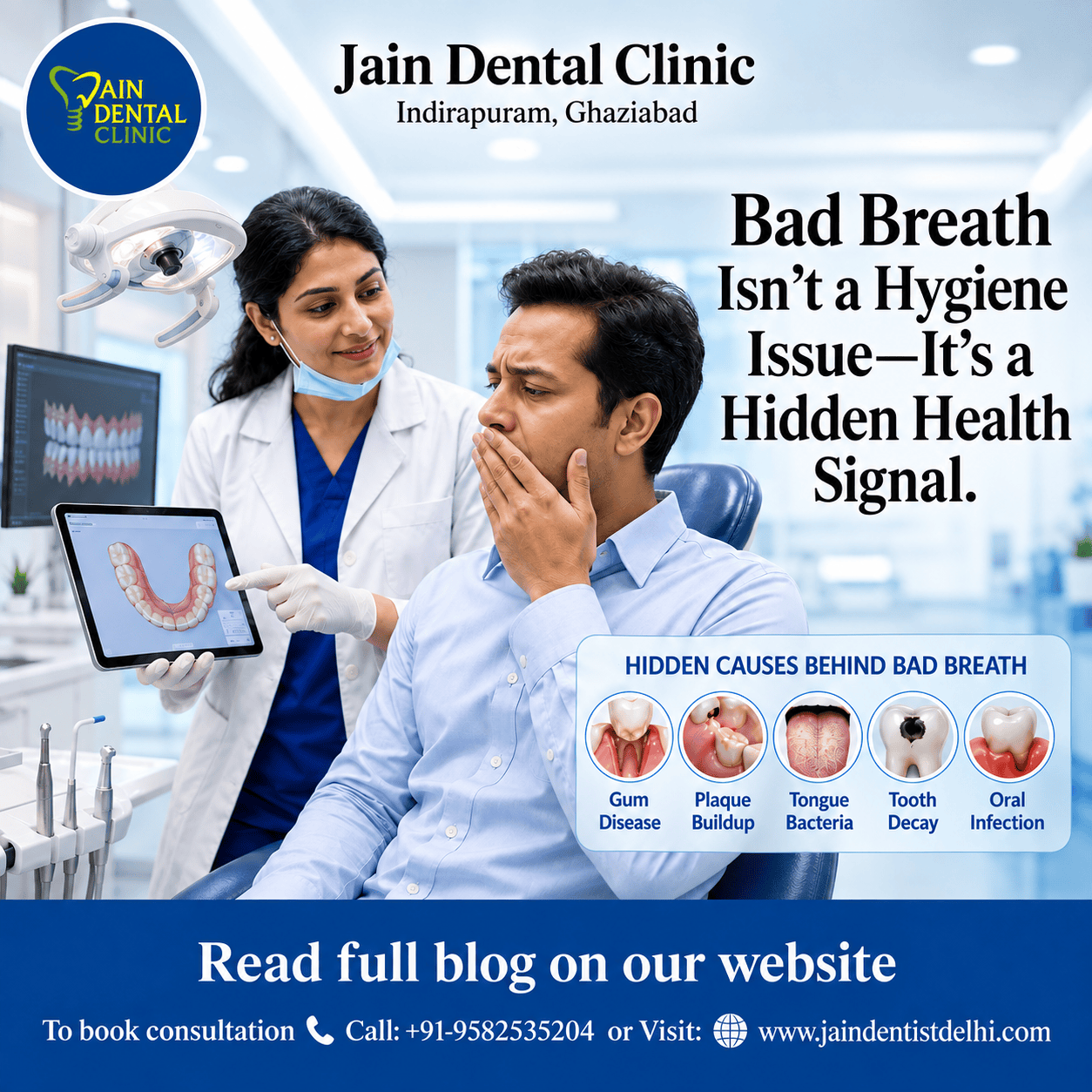
Key TakeawaysBad breath can persist even after brushing because brushing may not address its underlying cause, such as tongue bacteria, gum disease, cavities, dry mouth, tonsil stones, acid
Key TakeawaysTeeth turn yellow over time mainly because of aging, enamel thinning, surface stains, lifestyle habits, medications, genetics, or changes within the tooth. Yellow teeth do not
Key TakeawaysDental plaque is a sticky bacterial biofilm that forms continuously on teeth and can lead to cavities, gum disease, and persistent bad breath if not removed regularly. The most
Key TakeawaysYes, regular dental checkups are necessary—even if your teeth feel healthy. Early cavities, gum disease, and other oral problems can develop without pain or obvious symptoms,
Key TakeawaysHow often should you change your toothbrush? Replace your toothbrush or electric toothbrush head every 3 to 4 months, or sooner if the bristles become frayed or damaged. Why do