Clear Aligners for Overbite Correction: How Effective?
- Clear aligners for overbite correction are effective for many people. They work best for mild to moderate overbites caused by tooth position. Deep bites are harder: only about one-third to one-half of the planned correction happens the first time, so a refinement set is common.
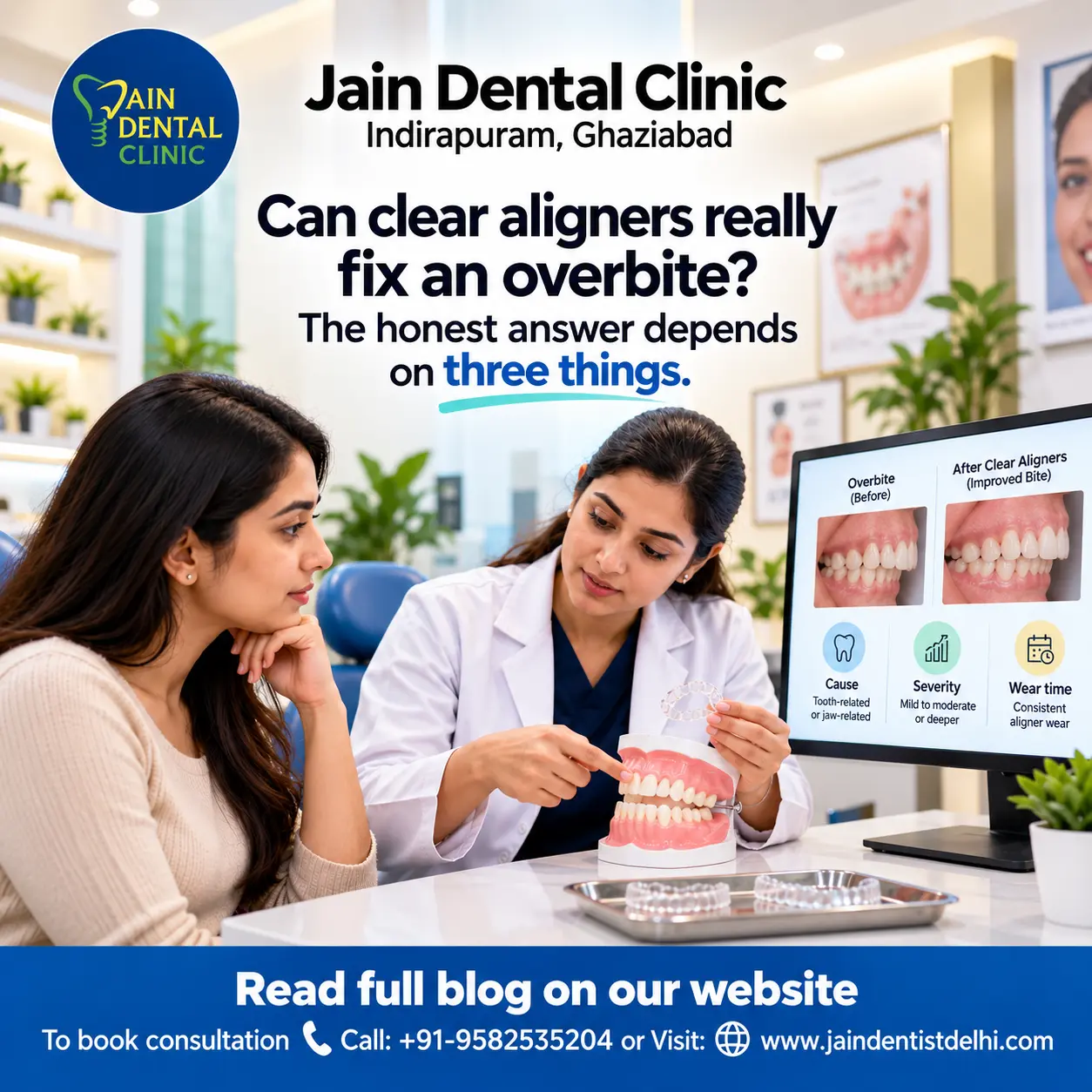
- The problem. An overbite means your top front teeth cover too much of your bottom teeth. Whether aligners can fix yours depends on three things: the cause (teeth or jaw), how deep it is, and your daily wear time.
- The treatment. A well-planned aligner treatment uses attachments, bite ramps and elastics to open the bite gradually. If your overbite is severe or comes from your jaw, braces or a combined plan may suit you better.
- Your next step. Don’t rely on photos or at-home kits. An in-person bite check with X-rays is the only reliable way to know whether aligners can fix your overbite, or your teen’s.
Notice your top teeth covering too much of your bottom teeth, or a bite that feels off? Consider booking a bite check with our dentists to find the right option for you.
Read on to see how aligners actually open a deep bite, what the research shows, and how they compare with braces.
Have you been told you have an overbite, or noticed your top front teeth cover too much of your bottom teeth? If you live in Ghaziabad or elsewhere in Delhi NCR, you may be wondering whether clear aligners can fix it without braces. This guide explains how clear aligners for overbite correction actually work, including the role of attachments, bite ramps and elastics. It also looks at what research says about clear aligners for deep bite cases, and how effective they really are. You’ll learn who is usually a good candidate, whether you’re an adult or the parent of a teen, and when braces may suit you better. It also explains why an X-ray and in-person bite check come first, and what affects the cost. Read the full post for clear, honest guidance before you choose your treatment.
Maybe your dentist told you that you have an overbite. Or you’ve noticed your top front teeth cover your bottom teeth a little too much. Now you’re wondering: can clear aligners fix it, or will you need braces?
The honest answer is yes for many people, but not for everyone. Clear aligners for overbite correction work best for mild to moderate overbites, mainly when your teeth, not your jaw, cause the problem. However, a deep bite (a large overbite) takes more work for aligners to correct, so good planning matters.
In this guide, you’ll learn how aligners fix an overbite and what research says about how well they work. You’ll also see who is a good fit and when braces may suit you better. That way, you can make a calm, well-informed choice.
Can Clear Aligners Fix an Overbite? The Short Answer
Yes, clear aligners can fix many overbites. They work best for mild to moderate overbites caused mainly by the position of your teeth. A severe overbite, or one caused by your jaw, may need braces or a combined plan instead.
If you’re asking, “Can Invisalign fix an overbite?”, the answer is the same, since Invisalign is a brand of clear aligner. Three things decide whether aligners will work for you:
- What causes your overbite. If your teeth sit in the wrong place, aligners can usually move them. If your jaw is the main cause, results are more limited, because aligners can’t reshape adult jaw bones.
- How deep your overbite is. A mild or moderate overlap is easier to fix. A very deep bite needs more planning and often extra tools.
- How well you wear your aligners. Aligners only move teeth while they’re in your mouth. You’ll need to wear them 20 to 22 hours a day.
What Counts as an Overbite (and What Doesn’t)
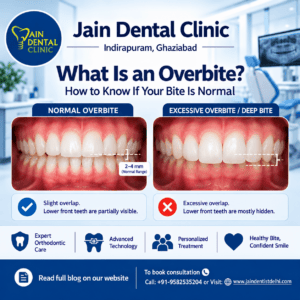
Not every overlap is a problem. Your top front teeth should normally cover about 2 to 3 mm, or roughly one-third, of your bottom front teeth. More than that is a deep overbite, or deep bite. Knowing exactly what you have helps you judge whether aligners can work.
In a severe overbite, the lower teeth can touch the gum behind the upper teeth. For the basics, see our guide on what an overbite is.
Overbite vs Overjet
An overbite is how far your top front teeth overlap your bottom ones, from top to bottom. Overjet means your top front teeth stick forward, leaving a front-to-back gap. Many people call both an “overbite,” and you can have both at once. Aligners fix them with different movements, so it helps to know which one you have.
Tooth-Caused vs Jaw-Caused Overbite: Why It Matters
A dental overbite comes mainly from where your teeth sit. Aligners move teeth, so they can often fix this type well.
A skeletal overbite (caused by jaw size or position) is harder. Aligners can’t reshape adult jaw bones, so results are less predictable, and braces or a combined plan may be needed. Both types can look the same from the outside. That’s why an X-ray matters.
What Clear Aligners Actually Do to Correct an Overbite
Fixing an overbite is about changing how your teeth meet, not just making them look straight. Tooth movement with clear aligners happens in small, planned steps. Each new set moves your teeth a little closer to a healthier bite.
The Tooth Movements That Open a Deep Bite
Deep bite correction usually combines a few of these movements:
- Moving the front teeth deeper into the gum. The aligners gently press your front teeth, called incisors, a little further into the bone. Dentists call this incisor intrusion. It reduces how much your top teeth cover your bottom teeth.
- Tipping the lower front teeth slightly forward. This brings them out from behind the upper teeth, so less of them is hidden.
- Letting the back teeth rise a little. When your back teeth sit slightly higher, your front teeth can’t close as deeply.
- Flattening the curve of the lower teeth. Many deep bites have a deep “smile” curve along the lower teeth. Levelling this curve helps the bite open.
One study of 120 adults found that most of the improvement came from moving the front teeth. The back teeth changed very little (Khosravi et al., 2017).
Attachments, Bite Ramps and Elastics
Aligners can’t make every movement alone. For overbite treatment with clear aligners, dentists often add small helpers:
- Clear aligner attachments are small, tooth-coloured bumps fixed to some teeth. They give the aligners something to grip, so they can push each tooth the right way.
- Bite ramps. These are small raised bumps on the inner side of the upper front aligners. Your lower front teeth touch them first, which keeps your back teeth slightly apart and helps the bite open.
- Elastics. These are small rubber bands hooked between your upper and lower aligners. They help pull your bite into a better position.
How Effective Are Clear Aligners for Overbite? What Research Shows
This is the question most people really want answered. In short, clear aligners work well for many mild to moderate overbites caused by tooth position. But opening a deep bite is one of the harder jobs for aligners, so planning and the right extras matter.
What the Studies Found
Here’s what research on clear aligner effectiveness for deep bites shows:
- Aligners can open a deep bite, but not always fully. A 2025 review of 18 studies found aligners can correct mild to moderate deep bites caused by tooth position. The bite opened by 0.4 to 3.8 mm. However, only 33% to 49% of the planned correction happened as planned.
- Jaw-related deep bites may respond too. A 2024 study looked at Invisalign for overbite correction in 60 adults whose deep bite came from their jaws. Aligners opened the bite about as much as braces (3.0 to 3.8 mm vs 3.1 mm). Aligner patients also had less shortening of their tooth roots. It was a small study, though.
- Teens may respond a little better. One review found lower front teeth moved more predictably in teens (63.5%) than in adults (45.3%).
Most of this research is small or low quality. So treat these numbers as a guide, not a promise.
Clear Aligners for Deep Bite: Why Refinements Are Common
Because only part of the planned movement happens the first time, dentists plan for it. They often build in overcorrection, which means planning a little extra movement. Many patients also need a refinement, an extra set of aligners made later to finish the job. Bite ramps and elastics help, too. In one study that used them, the lower front teeth reached 92% to 98% of their planned movement. Needing a refinement is normal, not a sign of failure.
What This Means for You
Here’s what the research means in real life.
You can expect:
- Gradual change. Your bite improves step by step over months, not overnight.
- A plan built for your bite. It may include attachments, bite ramps or elastics.
- Wear time to matter. Your results depend on keeping aligners in 20 to 22 hours a day.
- Retainers afterwards. They keep your corrected bite from drifting back.
You shouldn’t expect:
- Aligners to fix every overbite alone. Some cases need braces or a combined plan.
- A reliable answer from photos. Only an in-person exam and X-ray show what’s causing your overbite.
- One fixed treatment time. It depends on your bite and how well you wear your aligners.
Who Gets the Best Results From Clear Aligners for Overbite Correction?
Aligners suit many people, but not every bite. These quick checklists show where you might stand, though only an exam can confirm it.
Usually a Good Fit
You’re likely a good candidate if you have:
- A mild to moderate overbite. Smaller overlaps are easier to fix.
- An overbite caused mainly by your teeth. Aligners move teeth, so these cases respond best.
- Healthy teeth and gums. Any gum problems or cavities need treating first.
- Time to wear them. You can keep aligners in 20 to 22 hours a day and come for regular check-ups.
- A plan to wear retainers. They stop your new bite from slipping back.
When Aligners Alone May Not Be Enough
Aligners alone may not be the right choice if:
- Your overbite is severe or comes from your jaw. Adults with a jaw-size problem may need braces or a combined plan. A few also need jaw surgery.
- The movements you need are hard to predict with aligners. Some bites respond more reliably to braces.
- You can’t keep up the wear time. Aligners left in a drawer can’t move teeth.
The good news? Jain Dental Clinic offers both aligners and braces, so you’ll still have good overbite treatment options.
Clear Aligners for Teens and Adults With an Overbite
- We treat teenagers with clear aligners, and research suggests teens’ teeth may move a little more predictably. The catch is wear time, and a parent’s daily reminders make a real difference. If your teen won’t wear them consistently, braces may be safer.
- Adults. A tooth-caused overbite can often be treated at any age. Jaw limits matter more in adults, though, because the jaws have stopped growing. So base your expectations on your exam, not your age.
Clear Aligners vs Braces for Overbite: Which Works Better?
Braces and clear aligners can both correct an overbite. The real difference is which kind of overbite each one handles best. Here’s a simple way to compare them for bite correction.
| Your situation | Clear aligners | Braces |
|---|---|---|
| Mild overbite, caused by tooth position | Good fit | Also works |
| Moderate overbite | Often works, with attachments, bite ramps and elastics | Works well |
| Severe or jaw-caused overbite | Usually not enough on their own | Better choice, sometimes alongside other treatment |
| Can't wear aligners 20 to 22 hours a day | Risky, as the bite may not fully correct | Safer, because they work all day on their own |
Why do braces have the edge in harder cases? They stay fixed to your teeth, so they keep working without you having to remember them. They also give your dentist fine control over each tooth. That’s why overbite correction with braces is often the safer route for severe or jaw-related bites.
Aligners, on the other hand, are nearly invisible and removable, so eating and brushing stay easy. They also handle many mild to moderate cases well, as the research above shows.
You don’t have to work this out alone. Jain Dental Clinic offers both, so your X-ray and bite check decide which one fits. You won’t have to guess. For everyday differences like comfort, food, cleaning and cost, read our Clear Aligners vs Braces guide.
In the end, choose by the cause and severity of your overbite, not by which option looks better.
Why Overbite Treatment Starts With an X-Ray and Bite Check
You can’t tell what’s causing an overbite just by looking in the mirror. A tooth-caused and a jaw-caused overbite can look the same from the outside. That’s why a proper check comes before any aligner plan.
What Happens at Your Bite Check
X-rays show what’s happening beneath the surface, including how your jaws line up. The American Association of Orthodontists advises that treatment should include X-rays of your teeth and jaws and an in-person bite exam. At-home aligner plans based on photos skip this step.
At Jain Dental Clinic, every clear aligner treatment in Indirapuram starts with a bite check. [Check the service page URL is still live] It includes an exam by one of our dentists, X-rays, and impressions or a digital scan. The check answers four key questions:
- Teeth or jaw? This decides whether aligners alone can fix your overbite.
- Predictable movement? Some movements are harder for aligners, so your dentist checks this first.
- Extra tools? A deep bite may need attachments, bite ramps or elastics.
- Aligners, braces or both? You get an honest recommendation, even if it isn’t aligners.
What Treatment Involves if Aligners Suit You
If aligners are right for you, treatment usually follows these steps:
- Attachments are fitted. Tiny tooth-coloured bumps are bonded to a few teeth so the aligners can hold on.
- You wear your aligners. Keep them in 20 to 22 hours a day and switch sets on schedule.
- Extras are added if needed. Bite ramps or elastics help open a deep bite.
- You come for check-ups. Your dentist tracks progress and adds a refinement set if needed.
- You wear retainers. They keep your teeth steady once treatment ends.
What affects the cost? The price depends on how deep your overbite is and how many aligners you need. Refinement sets, elastics and retainers can also add to the total. Your dentist will explain the full cost once your plan is ready.
Frequently Asked Questions (FAQ)
Here are quick answers to questions patients often ask about aligners and overbites. Each one gives you the short answer first.
Can Invisalign Fix an Overbite Without Elastics?
Sometimes, yes. Mild overbites can often be fixed with aligners and attachments alone. Deeper bites usually need extra help, such as elastics or bite ramps, to open the bite fully. At Jain Dental Clinic, we often use both in overbite cases, depending on what your bite needs.
How Long Does Overbite Correction With Invisalign Take?
It depends on your bite. The main factors are how deep your overbite is, whether your teeth or jaw cause it, and how well you wear your aligners. Needing a refinement set can also add time. Your dentist can give you a personal estimate after your X-ray and bite check.
Can Aligners Straighten Crooked Teeth While Fixing an Overbite?
Yes, usually. Your dentist plans both in one treatment, so your aligners straighten your teeth while they correct your bite. This is often simpler than fixing each problem separately. Your bite check will show whether both can be handled together in your case.
Will My Overbite Come Back After Aligner Treatment?
It’s much less likely if you wear your retainers as advised. Teeth tend to drift after treatment, and retainers keep your teeth where they belong. Results can last well: one long-term study found only 10% of deep bite patients had a large overlap return after about 12 years.
Can People See Attachments and Bite Ramps?
Not easily. Attachments are small, tooth-coloured bumps, so they blend in with your teeth under clear aligners. Bite ramps sit on the inner side of your upper front aligners, so people can’t see them from the front. Most people won’t notice them in everyday conversation.
I Tried At-Home Aligners and My Bite Still Feels Off. Can It Be Fixed?
Often, yes. At-home plans are usually made from photos or impressions, without X-rays of your jaws. A proper fix starts with X-rays and an in-person bite exam to find what’s causing the problem. From there, your dentist can plan aligners, braces or a combined approach.
Can Clear Aligners Fix a Severe Overbite?
Sometimes they can improve it, especially when your teeth are the main cause. However, severe or jaw-caused overbites often need braces, elastics or a combined plan. Some adults also need jaw surgery for the best result. Your X-ray and bite check will show which option suits your bite.
Conclusion: Are Clear Aligners for Overbite Correction Right for You?
Clear aligners for overbite correction work well for many people. They do best when the overbite is mild to moderate and caused by your teeth. Deep bites are harder to fix. Still, good planning, bite ramps, elastics and refinements can make a real difference.
Your result depends on three things: what causes your overbite, how deep it is, and how well you wear your aligners. If aligners aren’t the best fit, braces or a combined plan can still give you a healthy bite.
Every overbite is different, and photos can’t show what’s going on under the surface. A personal check with a dentist is the surest way to find the right overbite correction for you.
Schedule Your Consultation Today
Wondering if clear aligners can fix your overbite? The answer depends on what’s causing it, how deep it is, and what your X-ray shows. A bite check gives you a clear, honest answer, so you don’t have to guess.
At Jain Dental Clinic in Indirapuram, Ghaziabad, Dr. Arpan Pavaiya Jain and Dr. Rashi Agarwal Jain will examine your bite, take X-rays, and explain your options in plain words. We’re an authorized Invisalign provider, and we also offer braces. So we’ll recommend what truly suits your bite, even if it isn’t aligners.
See if aligners can fix your overbite — book a bite check. Call +91-9582535204 or book online at www.jaindentistdelhi.com.
Medical Advice Disclaimer:
The information provided in this article is for general educational and informational purposes only and is not intended as professional medical or dental advice, diagnosis, or treatment. While we strive for accuracy, every patient’s dental anatomy and clinical needs are unique. Always seek the advice of your dentist or another qualified healthcare provider with any questions you may have regarding a medical condition. Never disregard professional medical advice or delay seeking it because of something you have read on this website

Dr. Arpan Pavaiya Jain (BDS, MDS – Prosthodontics) is a prosthodontist and implantologist with more than 25 years of experience. He studied at KGMC Lucknow and leads Jain Dental Clinic in Indirapuram, Ghaziabad. His focus is dental implants, crowns and bridges, dentures, full mouth rehabilitation, and Invisalign clear aligners.