Open Bite vs Underbite: What Is the Difference?
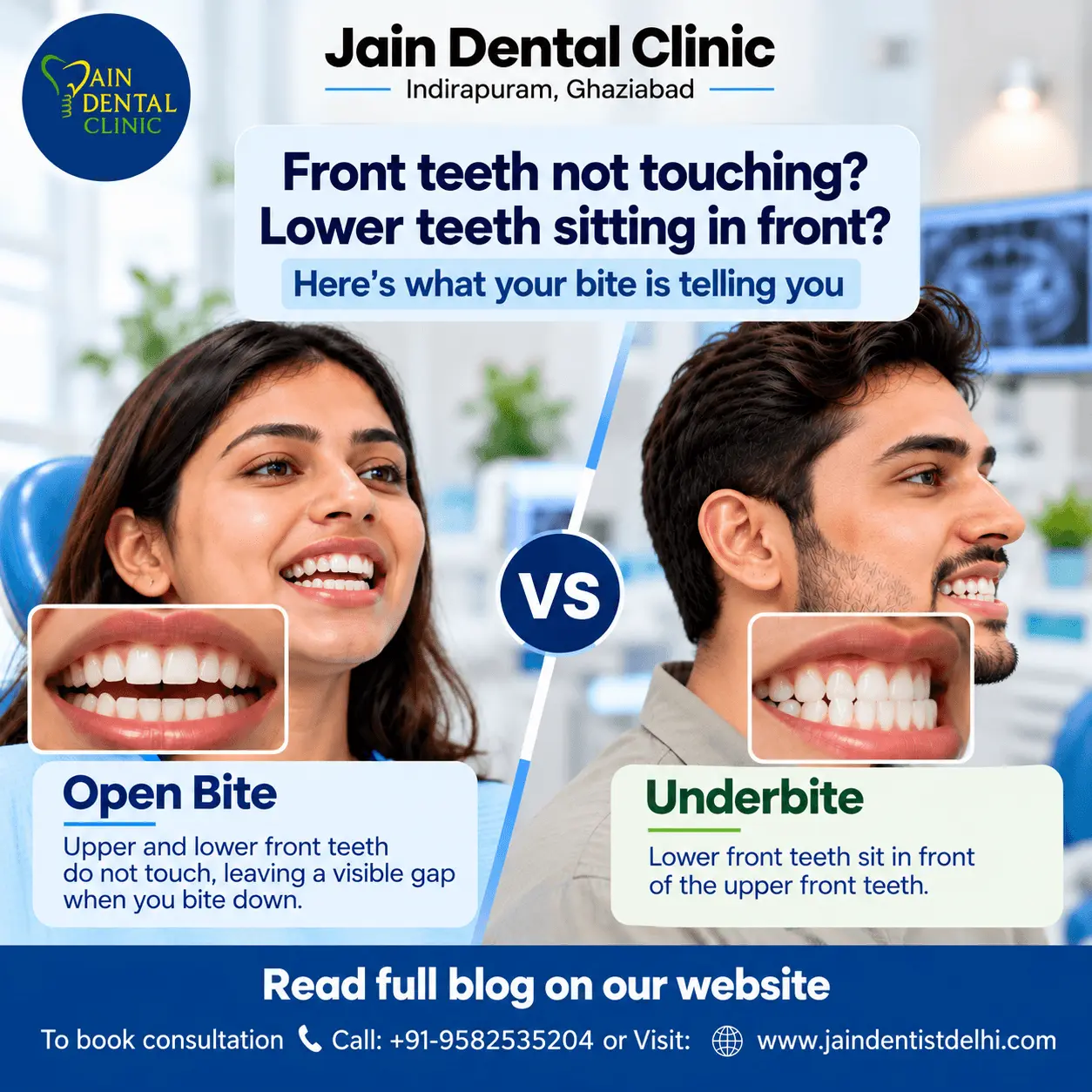
- An open bite leaves a gap between your front teeth when you bite down, while an underbite places your lower front teeth ahead of your upper teeth. Both are types of malocclusion, but their causes and treatment can differ.
- Treatment depends on whether the problem comes from your teeth, jaw bones, or both. Mild tooth-based cases may respond to clear aligners or braces, while some jaw-based cases may require growth guidance or jaw surgery.
- You can use a simple mirror check to understand your bite, but it cannot diagnose the cause. If your front teeth do not meet, your lower teeth sit in front, or biting and chewing feels difficult, arrange a professional bite assessment.
- If you notice these symptoms or your bite has changed, schedule a consultation with an orthodontist to understand what is causing the problem and which treatment options may suit you.
Want to understand what your symptoms could mean, how treatment differs, and whether clear aligners may be suitable? Read the complete guide for a deeper look at open bites, underbites, their causes, and treatment options.
When your teeth do not meet properly, you may wonder whether you have an open bite or underbite and what it means. This guide explains the open bite vs underbite difference, including common symptoms, causes, and treatment options. You will learn how an open bite leaves a gap between the front teeth, while an underbite places the lower front teeth ahead of the upper ones. The article also explains how dentists assess whether the problem is tooth-based or related to jaw growth, which can affect treatment. If you are considering open bite vs underbite treatment or wondering whether clear aligners may help, the guide explains when they may be suitable. Whether you live in Delhi NCR or Ghaziabad, understanding your bite can help you prepare for an informed orthodontic consultation. Read the full post for detailed guidance on symptoms, causes, assessment, and treatment.
You bite down, and something feels off. Maybe your front teeth don’t touch at all. or maybe your lower front teeth sit ahead of your upper ones. Which one is it, and does it matter?
Both an open bite and an underbite are types of malocclusion, the dental term for teeth that don’t line up when you bite. The open bite vs underbite difference comes down to direction. One leaves a gap. The other reverses the way your front teeth overlap.
This guide shows you how to tell the two apart, what causes each one and how they’re treated. You’ll also find a simple mirror check and an honest answer on clear aligners.
What Is the Difference Between an Open Bite and an Underbite?
An open bite is an up-and-down problem. Your upper and lower front teeth don’t touch when you close your mouth, leaving a gap. An underbite is a front-to-back problem. When you bite, your lower front teeth end up in front of the upper ones.
Knowing which one you have matters. The two start in different ways, and they are treated in different ways. Here is the open bite vs underbite comparison at a glance.
| What to compare | Open bite | Underbite |
|---|---|---|
| What goes wrong | Your front teeth don't touch when you bite | Your lower front teeth bite ahead of your upper ones |
| Which way the bite is off | Up and down (a gap) | Front to back (a reversed overlap) |
| What you see from the front | A gap between your front teeth, even with your back teeth closed | Your lower front teeth covering your upper front teeth |
| What you may see from the side | Lips that strain to close; a longer lower face in jaw-based cases | Lower lip and chin pushed forward |
| Most common cause | Habits like thumb sucking, tongue thrusting and mouth breathing, plus jaw growth | Inherited jaw size and growth |
| Speech | A lisp, mostly on "s" and "z" sounds | Some sounds may be unclear in stronger cases |
| Biting and chewing | Hard to bite through food with your front teeth | Front teeth may wear or chip; biting can feel awkward |
| Can it fix itself in young children? | Sometimes, if a habit like thumb sucking stops early | No. It often becomes more noticeable as the lower jaw grows |
| Main treatment challenge | Keeping the gap closed after treatment | Jaw-based cases in adults may need surgery |
| Can clear aligners help? | Often, in mild to moderate tooth-based cases | In mild tooth-based cases, usually with small rubber bands (elastics) |
In the table, tooth-based means the teeth are out of place. Jaw-based means the jaw bones are the cause. Each row is explained in the sections below, starting with what a normal bite looks like.
First, What Does a Normal Bite Look Like?
Before looking at what goes wrong, it helps to know what a healthy bite looks like. Most bite alignment problems are simply a change from this pattern.
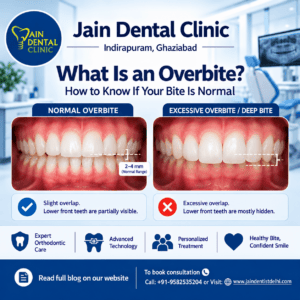
- Upper front teeth rest a little in front. When you close your mouth, they rest just in front of your lower front teeth and cover them a little.
- Back teeth meet evenly. They fit together on both sides, a bit like the two sides of a zip, and share the force of chewing.
- Small differences are normal. Very few people have a perfect bite. A slightly misaligned bite is common and often causes no problems.
What Is an Open Bite?
With an open bite, some of your top and bottom teeth stay apart when you close your mouth, leaving a gap. Many people first notice it as their front teeth not touching when biting into food. There are two main types, depending on where the gap is.
Anterior Open Bite
An anterior open bite is the most common type. Anterior simply means “front”. Your back teeth meet when you bite, but your front teeth stay apart, leaving a gap you can usually see.
Posterior Open Bite
A posterior open bite is less common. Posterior means “back”. Your front teeth meet, but some back teeth on one or both sides don’t. It’s harder to spot in a mirror, so it’s often noticed at a dental check-up.
What Is an Underbite?
An underbite means that when you bite, your lower front teeth end up ahead of your upper ones. It’s the reverse of a normal bite, where the upper teeth rest a little in front. Dentists sometimes call it a reversed bite: lower teeth in front of upper teeth, instead of the other way round.
It can be mild, with the front teeth only slightly reversed. or it can be more obvious, with the whole lower jaw and chin sitting forward.
An orthodontist is a dentist trained to straighten teeth and fix bites. In orthodontic terms, this is called a Class III bite. It’s a label for the type of bite. It doesn’t tell you how serious it is.
Like an open bite, an underbite can come from the teeth, the jaw bones, or both. This makes a big difference to treatment.
Can You Have Both an Open Bite and an Underbite?
Yes, you can. In some people, the lower jaw is set too far forward, as in an underbite. Their front teeth also don’t touch, as in an open bite. This mix is less common. It usually comes from the jaw bones, so an orthodontist needs to plan treatment with extra care.
There’s also an in-between bite that confuses many people. In an edge-to-edge bite, your upper and lower front teeth meet tip to tip. They don’t overlap the normal way, but they aren’t fully reversed either. Over time, their edges can wear or chip from meeting head-on.
Open Bite vs Underbite Symptoms
The signs of each bite can overlap, which is one reason people mix them up. Looking at open bite vs underbite symptoms side by side makes the difference clearer. A mild bite may cause few or none of them.
Signs of an Open Bite
Common open bite symptoms include:
- A visible gap. You can see a space between your front teeth, even with your back teeth closed.
- Trouble biting with your front teeth. Tearing a roti or biting into a bhutta can be hard, so you may use your side teeth instead.
- A lisp. “S” and “z” sounds, and sometimes “th”, may come out unclear. Your tongue can slip into the gap as you speak.
- Tongue pushing forward. Your tongue may press between your front teeth when you swallow. This is called tongue thrusting, and it can be both a sign and a cause of an open bite.
- Faster wear on the back teeth. Your back teeth do all the biting work, so they may wear down faster.
Signs of an Underbite
The most common underbite symptoms include:
- A forward chin and lower lip. This is often easiest to see in a side-on photo.
- Worn or chipped front teeth. Your front teeth meet at the wrong angle, so their edges may wear or chip over time.
- Awkward biting. Biting into an apple or a sandwich may feel clumsy.
- Unclear speech in some cases. A stronger underbite may affect some sounds. A mild one often doesn’t.
- A tired jaw. Your jaw may feel strained after chewing tough food. Mention it to your dentist if it happens often.
Both bites can also make you feel self-conscious about your smile. None of these signs means something is badly wrong. They just mean your bite is worth a closer look.
Open Bite vs Underbite Causes
Knowing the cause of a bite problem helps explain how it’s treated. When you compare open bite vs underbite causes, one pattern stands out. Open bites are often linked to habits. Underbites mostly come from how the jaws grow.
What Causes an Open Bite?
Most open bite causes push or hold the front teeth apart while they grow.
- Thumb or finger sucking. This is normal in babies and toddlers. It only becomes a worry if it goes on past the age of about 4.
- Long use of a pacifier or bottle. Used for years, it can sit between the front teeth and stop them from meeting.
- Tongue thrusting. We swallow hundreds of times a day. If the tongue pushes forward each time, this gentle pressure can slowly move the teeth.
- Mouth breathing. A blocked nose, allergies, or large tonsils or adenoids (tissue at the back of the nose) can lead to mouth breathing. This changes where the tongue rests, and the jaws may grow differently.
- Jaw growth and genes. Some people are born with a jaw pattern that makes the lower face longer. This can leave the front teeth apart, even with no habit at all.
- A jaw joint problem, rarely. In a few adults, an open bite appears later in life because of a problem in the jaw joint. If your bite changes suddenly, see a dentist soon.
What Causes an Underbite?
Underbite causes mostly come down to how big the jaws are and how they grow.
- Family genes. Underbites often run in families. The Habsburg royal family of Europe is a famous example, with a forward lower jaw across many generations.
- Uneven jaw growth. The upper jaw may grow too little, the lower jaw too much, or both.
- Cleft lip or palate. This gap in the lip or roof of the mouth forms before birth. It can slow down how the upper jaw grows.
- Jaw injury. A bad injury to the jaw in childhood can change how the jaws grow.
Teeth or Jaw Bones? Why the Cause Matters
The same bite can have two very different causes. A tooth-based problem, which dentists call dental, means the teeth have moved but the jaws are fine. A jaw-based problem, which dentists call skeletal, means the jaw bones have grown out of balance.
Think of a picture hanging on a wall. Sometimes the picture has slipped inside its frame. Other times the frame itself is crooked. From across the room, both look the same, but the fix is very different.
Bites work the same way. Two people can look alike in the mirror but need very different treatment.
Open Bite or Underbite? A Quick Mirror Check
All you need is a mirror and about a minute. This quick check can help you put a name to a misaligned bite before you see a dentist.
Try this simple mirror check:
- Stand in good light. Face a mirror in a bright room.
- Bite down on your back teeth. Close your mouth as you normally would, without pushing your jaw forward or back.
- Relax your lips. Part them gently so you can see your front teeth.
- Look from the front, then the side. Check how your front teeth meet. Then take a side photo to see your profile.
Here’s what you might see:
- A gap between your front teeth. If you see your front teeth not touching when biting down, you may have an open bite.
- Lower front teeth in front. This points to a possible underbite.
- Front teeth meeting tip to tip. This is likely an edge-to-edge bite.
This check helps you understand the terms. It is not a diagnosis. A mirror shows where your teeth sit, but not why.
What a Dentist Checks That a Mirror Can’t
A dentist or orthodontist looks at the full picture, not just your front teeth.
- How your teeth meet. They check how your teeth fit together at the front, back and sides.
- How your jaws line up. They check whether your upper and lower jaws are in balance.
- Your profile. Your face from the side can give clues about whether the jaw bones are involved.
- X-rays and a 3D scan. X-rays show the jaw bones and tooth roots. A 3D scan makes a detailed digital model of your bite. At Jain Dental Clinic, the first bite assessment includes both.
Together, these show whether your bite is tooth-based or jaw-based. That answer decides which treatments will work for you.
Is an Open Bite Worse Than an Underbite?
Neither one is always worse. How serious a bite is depends on the person, not on its name. A mild open bite may cause fewer problems than a strong underbite, and the other way round.
Four things decide how serious a bite is:
- How big the problem is. A small gap or slight reversal may cause no trouble. A larger one is more likely to affect chewing, speech or tooth wear.
- What’s causing it. A tooth-based bite is usually simpler to fix than a jaw-based one.
- Your age. Growing jaws in children can sometimes be guided. Adult jaws have stopped growing, so the options change.
- How it affects your daily life. Trouble eating, speaking or cleaning your teeth is a sign it’s worth treating.
Each bite also has its own challenge:
- A jaw-based underbite in an adult is usually the more complex one to treat. Some cases need jaw surgery.
- Open bite. An open bite can be harder to keep closed after treatment. This is more likely if the habit behind it carries on.
So instead of asking which one is worse, ask two questions. How does your bite affect you? And what’s causing it?
Does It Need Treatment? What Happens If You Leave It
Not always. Many mild open bites and underbites never cause real problems, and a dentist may simply keep an eye on them. Treatment is worth thinking about when your bite affects how you eat, speak, feel or care for your teeth.
If a stronger bite is left untreated, it may lead to:
- Extra wear on the back teeth (open bite). They keep doing all the chewing and may wear down faster over the years.
- Ongoing trouble biting and speaking (open bite). Adults don’t grow out of an open bite, so these problems may stay.
- Worn or chipped front teeth (underbite). Small chips and wear can slowly add up.
- A hard-working jaw (underbite). Some people notice tiredness or mild discomfort when they chew.
- Harder cleaning (both). Teeth that don’t line up leave spots that are hard to brush. Plaque, a sticky layer of germs, can build up there more easily.
People choose treatment to chew or speak more easily, to protect their teeth, or to feel more confident about their smile. All of these are good reasons. And if watching and waiting is enough, a check-up will tell you that too.
Open Bite and Underbite in Children and Teens: Will It Fix Itself?
Sometimes, but it depends on the bite. A young child’s open bite may close on its own. An underbite usually doesn’t, and it can become easier to see in the teenage years.
- Open bite in young children. If it comes from thumb sucking or a pacifier, it may close once the habit stops. This is more likely before the adult front teeth come in, at around age 6.
- Underbite in children and teens. An underbite doesn’t fix itself. The lower jaw carries on growing until the late teens, often longer in boys. So a mild underbite may look bigger with time.
- Why timing matters. While your child’s jaws are still growing, an orthodontist can sometimes guide them. After that, treatment has to work with the adult jaw as it is.
The American Association of Orthodontists advises a first bite check-up by age 7 at the latest. By then, enough adult teeth have come in to spot a problem early.
A check-up doesn’t mean braces right away. Often, the dentist just keeps an eye on growth. If you’re a teenager, this applies to you too. A check-up now can show if it’s best to act while you’re still growing.
For adults, neither bite will fix itself. Both can still be treated at any age.
Open Bite vs Underbite Treatment
Open bites and underbites are treated in almost opposite ways. That’s because one is an up-and-down problem and the other is front-to-back. The right plan depends on your bite, its cause and your age.
The goal of treatment:
- For an open bite. The aim is to close the gap so your front teeth meet. Any habit that caused it also needs fixing.
- For an underbite. The aim is to put your front teeth back in the right order. This may mean moving the lower teeth back, the upper teeth forward, or both.
Treatment options orthodontists use:
- Watching and waiting. For mild bites, especially in children, the dentist may simply check growth over time.
- Clear aligners. These clear, removable trays move your teeth step by step. They suit many mild to moderate tooth-based cases.
- Small brackets and a wire move your teeth with steady, gentle pressure. They suit a wide range of cases, including some that aligners can’t handle.
- Habit and tongue training. Simple exercises retrain where your tongue rests and how you swallow. Children may also use a small appliance to break a habit.
- Growth appliances for children. In growing children, some appliances can widen the upper jaw or help it grow forward.
- Jaw surgery for severe cases. When an adult’s jaw bones are far out of line, surgery can move them. It’s done after growth has finished and is planned with a specialist jaw surgeon. Braces or aligners are used before and after.
For adults who would rather avoid surgery, the teeth can sometimes be moved to hide the jaw difference. This is called camouflage. It can improve your bite and smile, but your face shape stays the same.
After any treatment, a retainer holds your teeth in their new place. This matters most after an open bite is closed.
Can Clear Aligners Fix an Open Bite or an Underbite?
Clear aligners can help with some open bites and underbites, but not all of them. Whether they’ll work for you depends mostly on the cause. Here’s an honest look at each.
Can Clear Aligners Fix an Open Bite?
Often, yes, for mild to moderate tooth-based open bites. Clear aligners are thin plastic trays that cover all of your teeth, including the back ones. Many orthodontists say this is one reason aligners can help with an open bite. Small tooth-coloured bumps, called attachments, may be stuck to some teeth. They help the trays grip.
A severe jaw-based open bite may need jaw surgery. Aligners or braces are then used alongside it. If a habit caused the gap, habit training is usually part of the plan too.
Can Clear Aligners Fix an Underbite?
Yes, for many mild tooth-based underbites. Aligners can move the lower front teeth back and the upper front teeth forward. They’re often used with attachments and elastics. These are small rubber bands that link the upper and lower trays.
For a jaw-based underbite in an adult, aligners alone usually can’t move the jaw. In that case, surgery is often used with aligners or braces. Growing children may need a growth appliance first.
Are clear aligners right for you? Keep these honest points in mind:
- They take daily effort. Aligners only work if you wear them 20 to 22 hours a day. You take them out only to eat, to drink anything other than water, and to brush.
- They don’t suit every bite. A good orthodontist will tell you honestly if braces would work better.
- An assessment decides. Your dentist first needs to know if your bite is tooth-based or jaw-based. Then they can tell you if aligners are a real option.
Jain Dental Clinic is an authorised Invisalign® provider and also offers braces. That means you can get an honest opinion on which option fits your bite best.
When to See a Dentist About Your Bite
You don’t need to wait for pain before getting your bite checked. A simple check-up can tell you what’s going on. It’s worth seeing a dentist if any of these sound familiar.
- Your front teeth don’t meet. This is the main sign of an open bite.
- Your lower front teeth sit in front. This is the main sign of an underbite or an edge-to-edge bite.
- Biting or chewing feels hard. You may avoid some foods or chew only with your side teeth.
- A lisp that doesn’t go away. It can sometimes be linked to how your front teeth meet.
- Your teeth look worn or chipped. This can mean your teeth are meeting the wrong way.
- Your jaw often feels tired or sore. It’s worth mentioning, especially if it happens after chewing.
- Your bite has changed. If your teeth fit together differently than they used to, get it checked soon.
- Your child still sucks their thumb after age 4. An early check can spot any effect while the teeth are still growing.
- You simply want to know. You don’t need a problem to ask a question.
Even if nothing needs doing, you’ll leave knowing where you stand.
Frequently Asked Questions (FAQ) About Teeth Straightening Pain
These are some of the questions people often ask about open bites and underbites. Each answer is kept short and to the point.
Is an open bite the same as an overbite?
No, they are almost opposites. An overbite is a deep bite, where your upper front teeth hide much of your lower ones. An open bite is the reverse, because your front teeth don’t touch at all. Both are up-and-down problems, but they sit at opposite ends of the scale.
Is it an underbite if only one or two lower teeth sit in front?
Usually not. When only one or two lower front teeth sit in front, it’s often a crossbite. That means just a few teeth bite on the wrong side. An underbite usually involves all the lower front teeth, and sometimes the whole lower jaw. A dentist can tell you which one you have.
Can an open bite come back after treatment?
Yes, it can. This is more likely if tongue thrusting or another habit carries on after treatment. Wearing your retainer as advised and working on the habit both help keep the gap closed. That’s why good treatment plans deal with the cause, not just the teeth.
Can adults fix an open bite or underbite without surgery?
Many adults can. If the problem is in the teeth, clear aligners or braces alone are often enough. If the problem is in the jaw, surgery may be needed to move it. Even then, moving the teeth to hide the jaw difference can sometimes improve your bite and smile without surgery.
How long does treatment take?
It depends on the patient. The type of bite, what’s causing it and how severe it is all affect how long treatment takes. A mild tooth-based case is usually quicker than a jaw-based one. After an assessment, your dentist can give you a time frame that fits your own case.
Conclusion: Understanding the Open Bite vs Underbite Difference
The open bite vs underbite difference is simple once you see it. An open bite is an up-and-down gap, where your front teeth don’t touch. An underbite is a front-to-back problem, where your lower front teeth sit ahead of your upper ones.
What matters most is the cause. The same bite can come from the teeth or the jaw bones. Which one it is decides how it’s treated. A young child’s open bite may close once a habit stops, but an underbite won’t fix itself. For adults, both can still be treated, and clear aligners can help with many mild, tooth-based cases.
A mirror can help you put a name to what you see, but it can’t tell you why it’s happening. That answer comes from a proper check-up. Once you know what’s behind your bite, you can choose the treatment that suits you, or simply know that nothing needs to change.
Schedule Your Consultation Today
Find Out What’s Really Behind Your Bite
Now that you know how an open bite differs from an underbite, the next step is to learn about your own bite. One is an up-and-down gap, and the other is a reversed front-to-back overlap. Habits and jaw growth play a different part in each, and the cause matters more than the name. Your treatment depends on whether the problem is in your teeth, your jaw bones or both. It also depends on how big the problem is and whether you’re still growing. Every patient is different, so a check-up with an orthodontist is the best way to find out what’s going on in your case.
At Jain Dental Clinic, Dr. Arpan Pavaiya Jain and Dr. Rashi Agarwal Jain can check how your teeth meet and how your jaws line up. With X-rays and a 3D scan, they can also tell whether your bite is tooth-based or jaw-based. Maybe you’ve noticed a gap between your front teeth. Maybe your chin looks more forward than you’d like, or biting into food feels hard. You might be wondering if clear aligners could work for you, or you might be a parent worried about your child’s thumb sucking. Whatever brought you here, our team can explain what your bite needs and talk you through suitable options. Depending on your needs, these may include clear aligners, braces, habit correction, or regular check-ups to keep an eye on things.
📞 Call: +91-9582535204 🌐 Visit: www.jaindentistdelhi.com
Medical Advice Disclaimer:
The information provided in this article is for general educational and informational purposes only and is not intended as professional medical or dental advice, diagnosis, or treatment. While we strive for accuracy, every patient’s dental anatomy and clinical needs are unique. Always seek the advice of your dentist or another qualified healthcare provider with any questions you may have regarding a medical condition. Never disregard professional medical advice or delay seeking it because of something you have read on this website

Dr. Arpan Pavaiya Jain, Director of Jain Dental Clinic, Indirapuram, Ghaziabad is a renowned Prosthodontist and Implantologist with over 25 years of expertise in advanced dentistry. A graduate of the prestigious King George’s Medical College Lucknow, he has performed more than 20,000 successful dental implant procedures. Dr. Arpan Pavaiya Jain leads a team of skilled professionals, offering state-of-the-art treatments in dental implants, clear aligners, cosmetic dentistry, orthodontics, and more. Known for his personalized care and commitment to excellence, he has earned a reputation as a trusted dental expert in Indirapuram, Ghaziabad.